Bangkok and Chiang Mai are Thailand’s two most-visited cities, and they are as different as any two cities in the same country could be. Bangkok is a megacity of 10+ million people - loud, fast, chaotic, and endlessly entertaining. Chiang Mai is a walled northern city of 200,000 - calm, green, temple-dense, and distinctly slower. Both are excellent. Which one is right for you depends entirely on what kind of trip you want.
Quick Verdict
| Category | Bangkok | Chiang Mai |
|---|---|---|
| City energy | High-octane megacity | Relaxed northern pace |
| Cost | Moderate (USD 40–70/day) | Budget-friendly (USD 30–55/day) |
| Temples | Winner - Grand Palace, Wat Pho | 300+ temples, Doi Suthep |
| Food | Winner - most diverse scene in Thailand | Excellent northern cuisine, great café scene |
| Nightlife | Winner - Sukhumvit, Silom, rooftop bars | Relaxed night bazaars, limited clubs |
| Trekking and nature | Day trips only | Direct access to mountains |
| Digital nomads | Growing fast | Winner - Southeast Asia’s top base |
| Culture depth | Imperial temples, museums | Living walled city, hill tribe access |
Planning your trip? Browse Bangkok tours → · Browse Chiang Mai tours →
Costs
Bangkok is affordable by international standards but more expensive than most Thai cities. Budget travellers staying in Khao San Road or Silom area guesthouses spend approximately THB 500–900 per night on accommodation. A solid mid-range hotel in Silom or Sukhumvit runs THB 1,500–3,000 per night. Street food from vendors and hawker centres keeps meals under THB 100–150. A typical budget day lands at THB 1,200–2,000 (USD 35–60).
Chiang Mai is one of Southeast Asia’s best-value destinations. Guesthouses in the Old City or Nimman area start at THB 350–500 per night. A quality boutique hotel runs THB 800–1,500. The Sunday Walking Street and Night Bazaar have some of Thailand’s best cheap eating - mango sticky rice for THB 40, khao soi for THB 60–80. A full day including a cooking class or temple visit lands at THB 900–1,500 (USD 27–45).
Food
Bangkok has the most diverse food scene in Southeast Asia. Yaowarat (Chinatown) alone could occupy a week - roast duck from T&K Seafood, boat noodles, dim sum from 6am. The backpacker trail along Khao San Road serves everything from pad see ew to falafel, but the real Bangkok eating happens at Or Tor Kor Market (one of the cleanest fresh markets in the country), the street vendors along Silom and Sukhumvit Soi 38, and in the exceptional fine dining scene around Sukhumvit. Jay Fai, the street food chef with a Michelin star, charges THB 1,000+ for crab omelette - book months ahead.
Chiang Mai is the home of northern Thai cuisine, which is distinctly different from central Thai cooking. Khao soi - a coconut curry noodle soup with crispy noodles on top - is the city’s signature dish, served best at Khao Soi Khun Yai (THB 60–80) or Khao Soi Lung Prakit Kad Kom. The Sunday Walking Street on Wualai Road is exceptional for northern food and snacks. The Nimman area has developed one of Thailand’s strongest café scenes. Cooking classes are a highlight - Maya Kitchen or A Lot of Thai typically cost THB 900–1,200 and include a market visit.
Temples and Culture
Bangkok holds Thailand’s most spectacular royal temples. Wat Phra Kaew and the Grand Palace complex (entry THB 500, open 8:30–15:30) requires 3–4 hours minimum and is genuinely unmissable. Wat Pho, a 10-minute walk away, houses the famous Reclining Buddha (entry THB 200) and is the original home of Thai massage. Wat Arun, across the Chao Phraya River, is best photographed from the eastern bank at sunset. The National Museum gives essential historical context.
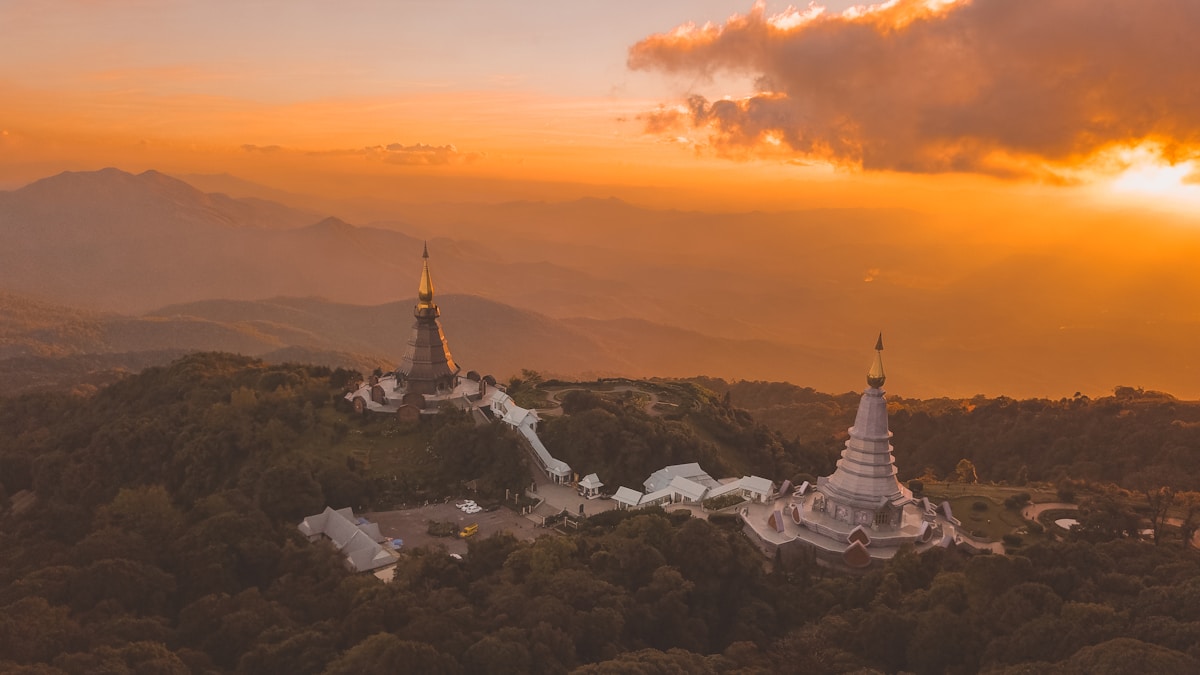
Chiang Mai’s Old City, surrounded by a moat and largely intact city walls, contains more than 300 temples within walking distance of each other. Wat Phra Singh (entry THB 50) is the city’s most important, built in the 14th century. Wat Chedi Luang has a ruined but enormous chedi and active monks. The most dramatic is Doi Suthep - a mountain temple 16 km from the city centre (tuk-tuk THB 40–60 up the mountain, entry THB 50), offering city views and a deeply atmospheric hilltop compound. Evening merit-making at city temples is free to observe and culturally rich.
Accommodation
Bangkok has the full spectrum from THB 400 Khao San Road guesthouses to the Mandarin Oriental’s THB 25,000+ river-view suites. Strong mid-range options include the Ibis Styles Bangkok Sukhumvit (THB 1,200–1,800), Hotel Once Bangkok (THB 1,500–2,200 in Silom), and the Banyan Tree (THB 5,000–8,000 on the upper floors for city views). For the full Bangkok luxury experience, the Peninsula Bangkok on the Chao Phraya is consistently excellent.
Chiang Mai has exceptional boutique hotels in the Old City and Nimman areas. Tamarind Village (THB 3,000–4,500) is set in a quiet garden just inside the Old City walls. Rachamankha (THB 4,000–6,500) is one of Thailand’s most acclaimed small hotels - 24 rooms around a courtyard library. Budget options along the Old City moat include Bodega Chiang Mai (THB 500–700 dorm, THB 900–1,200 private). The Nimman area has modern boutique options like Baan Bua (THB 1,200–1,800).
Getting Around
Bangkok’s BTS Skytrain and MRT metro system covers central Bangkok well - a day pass costs THB 140. Taxis use meters and are cheap by global standards (THB 35 flag fall, THB 40–80 for most inner-city trips). Grab (ride-hailing) is reliable and often faster. The Chao Phraya Express Boat (THB 15–30 per trip) connects riverside attractions efficiently. Traffic is serious - a 5 km taxi ride can take 40 minutes at peak hours.
Chiang Mai is small enough to cycle. Bicycle rental costs THB 50–80 per day from Old City guesthouses. The red songthaew shared taxis operate as informal buses (THB 30–50 per person) and can be hired as private taxis (THB 100–200). Tuk-tuks are plentiful but always negotiate a price first. Grab operates in Chiang Mai and is the easiest option for precise pricing.
Nightlife
Bangkok runs late and loud. The rooftop bar scene - Vertigo at the Banyan Tree, Sky Bar at Lebua (the famous Hangover 2 setting, cocktails from THB 500), Above Eleven in Sukhumvit - is among Asia’s most spectacular. Khao San Road is the backpacker party circuit until 2am. The RCA (Royal City Avenue) nightclub district and Silom’s club corridor are genuine nightlife destinations.
Chiang Mai is quieter after dark. The Night Bazaar runs nightly with live music stages. Zoe in Yellow (Moonmuang Road) is the backpacker drinking hub with multiple bars and a small dance floor. The Nimman area has a growing cocktail bar scene - Writer’s Club and The Drunken Flower are popular. Most bars close by midnight; serious clubbers should expect to be disappointed.
When to Visit
Bangkok is manageable year-round. The hot season (March–June) sees temperatures above 35°C - the city stays active because everything is air-conditioned. The wet season (July–October) brings afternoon downpours, rarely all-day rain. The cool season (November–February) is the most comfortable: low humidity, pleasant evenings, and clear skies.
Chiang Mai is best from November to February: temperatures drop to 15–20°C at night (cold by Thai standards), mornings are clear, and the city is at its most atmospheric. The Yi Peng Lantern Festival in November is one of Thailand’s most beautiful events. March–May is the burning season - smoke from agricultural burning in the north degrades air quality significantly and should be avoided if you have respiratory sensitivities.
Verdict
Go to Bangkok if: you want the full megacity experience, world-class food variety, royal temples, and maximum nightlife options - or if it is your first time in Thailand.
Go to Chiang Mai if: you want a slower pace, northern temple culture, mountain trekking, cooking classes, digital nomad infrastructure, or the cool-season atmosphere that Bangkok simply cannot offer.
For most visitors, the answer is both. The overnight train from Bangkok to Chiang Mai is one of Southeast Asia’s classic journeys - book a second-class sleeper berth (THB 700–1,000), wake up in the mountains, and you have two excellent cities for the price of one flight.
See our Bangkok city guide and Chiang Mai city guide for full destination breakdowns, or our getting around Thailand guide for transport options between cities. Browse Bangkok tours and day trips or browse Chiang Mai tours and experiences to plan activities in each city.
Plan Your Trip
Most visitors combine both cities — the two weeks in Thailand itinerary opens in Bangkok before taking the overnight sleeper to Chiang Mai, then continues south to the islands. Our dedicated Bangkok to Chiang Mai sleeper train guide covers booking, classes, and what to expect on board. For the Chiang Mai leg, the one week in northern Thailand itinerary extends the stay into Chiang Rai and Pai.
Book Your Trip
- Flights - Find the best fares to Thailand
- Travel Insurance - Get covered before you go
- eSIM - Stay connected from landing
- Car Rental - Compare prices across providers
See also: Bangkok city guide · Chiang Mai city guide · 3 days Bangkok itinerary · One week North Thailand itinerary · Bangkok vs Phuket · Chiang Mai vs Pai · Pattaya vs Phuket