Chiang Mai Travel Guide: Temples, Food, and the North
Chiang Mai travel guide: the old city's temples, elephant sanctuaries, khao soi, night markets, and the best base for northern Thailand trekking.
Guides for Chiang Mai
Chiang Mai at a glance
Chiang Mai is the capital of northern Thailand and the country’s second city by significance, if not by size. It sits in a valley at 300 metres, surrounded by forested mountains. The old city - a square moat enclosing 1.5km of lanes, temples, and markets - is the historic centre. Around it, a modern city of about 130,000 people (and more in the broader metro area) supports one of Thailand’s strongest cafe and coworking cultures.
Chiang Mai is the practical base for northern Thailand. Chiang Rai and the White Temple are a 3-hour drive north. Doi Inthanon (Thailand’s highest peak) is 60km southwest. Pai is 3 hours west by windy mountain road. The city itself rewards slower travel - a week reveals a lot more than three days.
The old city
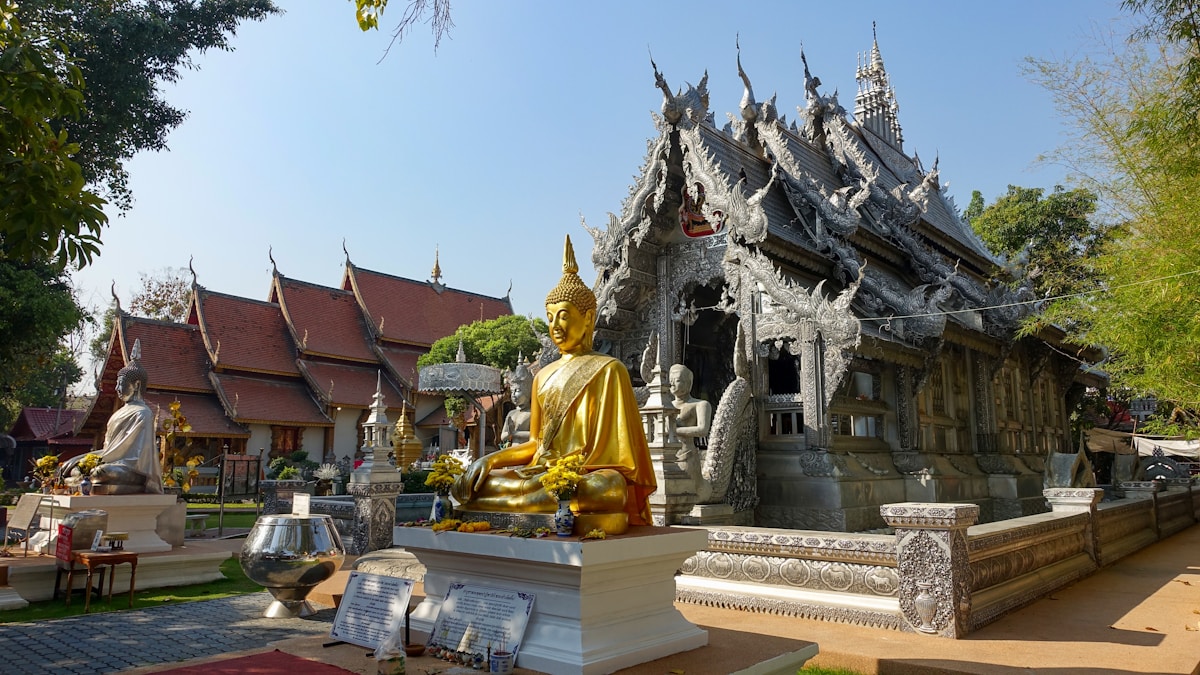
The moat is the easiest orientation point. Inside the square: Wat Phra Singh (the most important active temple), Wat Chedi Luang (partially ruined 14th-century chedi), Wat Phan Tao (teak construction, candlelit in the evenings), and dozens of smaller monasteries. Most can be visited in a two-hour loop on foot or by rented bicycle.
The Saturday and Sunday Walking Streets (different locations - Saturday on Wualai Road, Sunday on Tha Phae Road) are the best markets for northern food, handicrafts, and silverwork. Sunday Walking Street is larger and more crowded.
Elephant sanctuaries
This is the activity most visitors prioritise, and the ethical options matter. Responsible sanctuaries allow elephant interaction without riding - the animals are retired from labour or tourist camps, and the visit involves feeding, walking alongside, and observing natural behaviour. The elephant riding camps that still operate are not recommended.
Well-regarded ethical sanctuaries within 60km of Chiang Mai include Elephant Nature Park (largest and most established), Elephant Jungle Sanctuary, and Ran-Tong Elephant Care. Book in advance - most sell out weeks ahead. A day visit typically costs ฿2,500–3,500 per person. You can browse Chiang Mai tours including elephant sanctuaries, cooking classes, and temple trips to compare options and book directly. Outside peak season, cancellations mean spots open up - check our last-minute tours page closer to your visit.
Food
Chiang Mai’s food scene is distinct from central Thailand. Northern cuisine is influenced by Burmese and Yunnan Chinese cooking, with less sweetness and more earthy flavours.
Khao soi - Egg noodles in a coconut curry broth, topped with crispy fried noodles and served with pickled mustard greens, shallots, and lime. The defining dish of northern Thailand. Khao Soi Lamduan Faham and Khao Soi Mae Sai are the most-cited originals.
Sai oua - Northern-style pork sausage heavily seasoned with lemongrass, kaffir lime, and galangal. Found at market stalls and butchers throughout the old city.
Nam prik noom - Roasted green chilli dip served with sticky rice and vegetables. A staple of northern home cooking, available at Talat Warorot (the main local market).
The Saturday and Sunday Walking Streets are the best single spots for sampling northern food in one place.
Digital nomad scene
Chiang Mai has had a functioning remote work community for over a decade. Cafes with reliable fast Wi-Fi are genuinely plentiful - CAMP (Maya Mall, free Wi-Fi, 24/7 original location), Yellow (specialty coffee, strong connection), Ristr8to (espresso-focused). Coworking spaces: MANA (on the moat), Mango (old city adjacent), Hub53. A desk or hot desk costs ฿200–400 per day.
Monthly apartment costs start at around ฿8,000–12,000 ($230–340) for a decent studio near the old city. A comfortable month’s living runs ฿25,000–35,000 ($700–1,000) all-in.
Getting around
Most of Chiang Mai is navigable by hired bicycle (฿50–80/day from old city guesthouses) or rented scooter (฿200–300/day). Songthaews (red shared pickup trucks) cover most routes for ฿30–50 per person. Grab is available for fixed-price rides.
Practical information
Best time - November to February. Avoid March and April if air quality is a concern.
Getting there - Chiang Mai International Airport has direct flights from Bangkok (1 hour, frequent), Kuala Lumpur, Singapore, and other regional cities. Overnight train from Bangkok Hua Lamphong takes 12–13 hours and is a popular and scenic option (fan 2nd class: ฿400, sleeper: ฿700–1,000).
Day trips - Doi Inthanon National Park (60km, Thailand’s highest peak and impressive waterfalls). Chiang Rai and the White Temple (3 hours north). Mae Kampong village (45 minutes east, tea plantations and waterfall).
See our full Chiang Mai accommodation guide for hotel picks across every budget.
Digital nomad in Chiang Mai
Chiang Mai has the most established digital nomad community in Thailand - and by many accounts, in Southeast Asia. Coworking spaces include Punspace Nimman (1 Gbps fibre, monthly hot desk from approximately THB 3,900), MANA (moat-adjacent, THB 4,200/month), Yellow (specialty coffee + coworking), and CAMP (24/7, free Wi-Fi with purchase). Monthly cost for a comfortable mid-range setup: approximately THB 45,000–65,000 as of 2026. The Nimman and Old City neighbourhoods are the most nomad-dense; Santitham is preferred by longer-term residents wanting a quieter, more local environment.
See the full digital nomad guide to Chiang Mai for neighbourhood breakdowns, visa options, cost tables, and community resources. For monthly apartment options across Nimman, Old City, and Santitham, see our Chiang Mai long-stay accommodation guide.
Book your Chiang Mai trip: Hotels in Chiang Mai · eSIM for Thailand
See also: Temples in Chiang Mai · Cooking classes in Chiang Mai · Things to do in Chiang Mai · Elephant sanctuaries in Chiang Mai · Chiang Mai food guide · Chiang Mai neighbourhoods guide · Bangkok to Chiang Mai travel options · Bangkok vs Chiang Mai · Chiang Mai vs Pai · Best tours in Thailand
Upcoming Events in Chiang Mai
- Loy Krathong & Yi Peng Lantern Festival
chiang mai
Loy Krathong 2026 falls on 24 November. Chiang Mai's Yi Peng sky lanterns make this Thailand's most visually spectacular festival - book accommodation early.
- Wonderfruit Festival
Wonderfruit 2026: 17-21 December near Pattaya. Arts, music, and sustainability festival with international artists, food markets, and wellness activities.
Chiang Mai Flower Festival 2027: 6–8 February — Floral Parades, Garden Displays and Highlights
chiang mai
Chiang Mai Flower Festival, 6–8 February 2027: floral float parade, Queen of Flowers contest and tropical garden displays at Nong Buak Haad Park.
Book an experience
Top experiences in Chiang Mai
Explore the best tours and activities in Chiang Mai , with instant confirmation and free cancellation on most bookings.