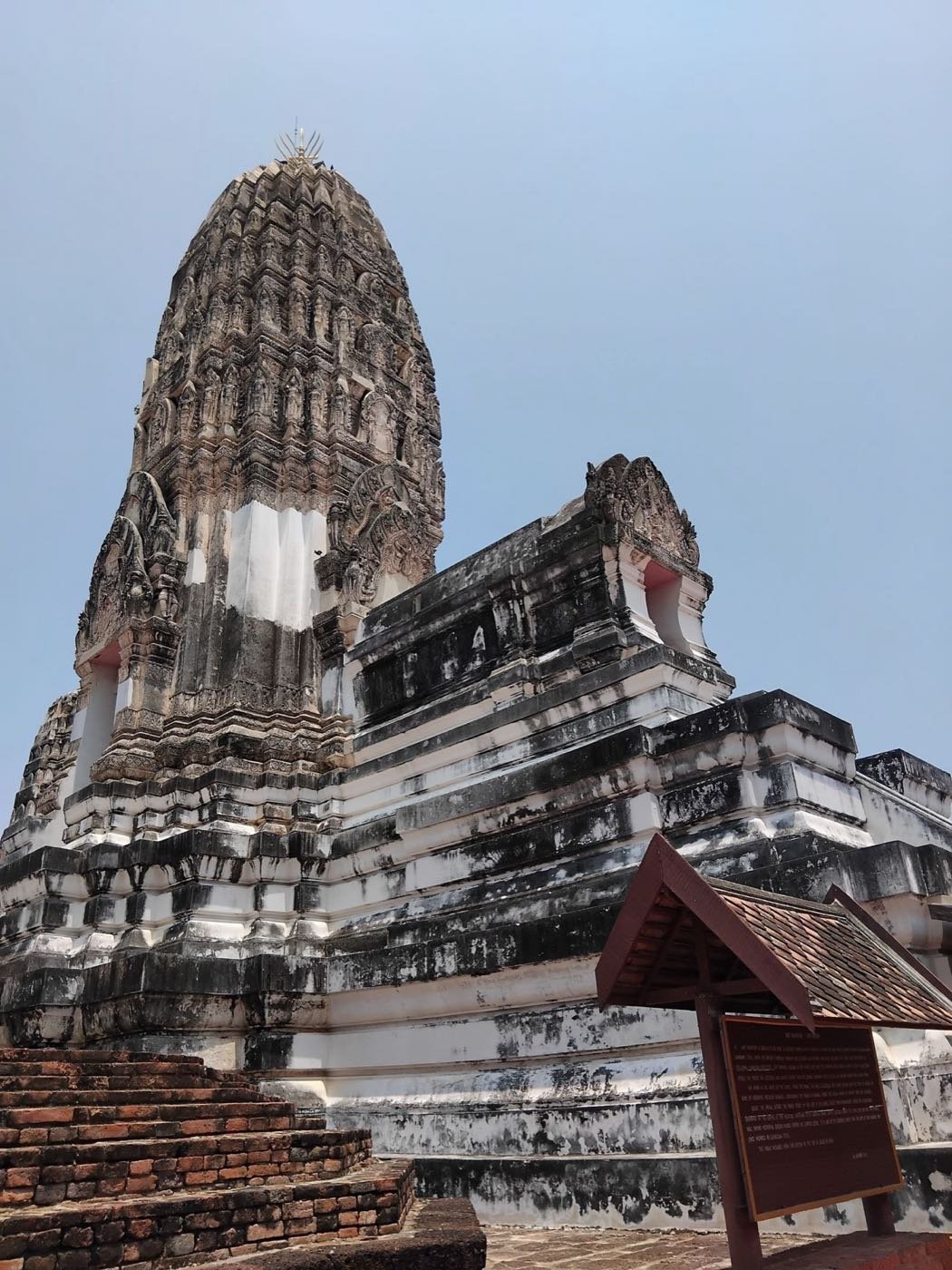
The five historical sites in Thailand we would build a trip around are Ayutthaya, Sukhothai, Phimai, Lopburi and Kanchanaburi. Together they cover Siam’s last great capital, the first Thai kingdom, a Khmer temple older than most of Bangkok, a monkey-filled Khmer ruin and the Second World War Death Railway. Each is reachable from Bangkok, and fees run THB 50-350.
Thai history runs across more than seven centuries of kingdoms, from Khmer rule through Sukhothai and Ayutthaya to the 20th-century war years. This list picks sites where the ruins or museums actually explain that story, rather than repeating the temple circuit. For active working temples, see our best temples in Thailand roundup. All fees are approximate foreign-visitor prices as of 2026 and can change.
1. Ayutthaya Historical Park
Ayutthaya was the capital of the Kingdom of Siam from 1350 to 1767 CE, when it was sacked by the Burmese army and never re-established. The ruins cover an island in the Chao Phraya river system, and the main sites are listed by UNESCO. Wat Mahathat has the famous Buddha head in tree roots. Wat Phra Si Sanphet has three bell-shaped chedis built for the ashes of three kings. Wat Ratchaburana has a large Khmer-style prang with a crypt below it.
Entry: Approximately THB 50 per temple. The Chao Sam Phraya National Museum is approximately THB 150 and holds treasure recovered from the Wat Ratchaburana crypt.
How to get there: Train or minivan from Bangkok, then tuk-tuk or bicycle around the island.
Local tip: Wat Chai Watthanaram sits on the west bank, away from the main cluster, and is best at sunset when the laterite turns gold. Our Ayutthaya temples guide lists them all, and the Ayutthaya day trip page covers transport. You can also book Ayutthaya tours.
2. Sukhothai Historical Park
Sukhothai preserves the ruins of the first Thai capital, founded in 1238 CE and at its height in the 13th and 14th centuries. The park is divided into central, north and west zones, and the central zone holds the densest group of major monuments. The site is another UNESCO World Heritage listing, with lotus ponds and Buddha images set across open lawns.
Entry: Approximately THB 100 per zone, or THB 350 for a combined pass. Bicycle hire at the gate is approximately THB 30-50 a day.
How to get there: The modern town is 12 km from the park, with songthaews at approximately THB 30-40.
Local tip: Be at the gate for 6am when the park opens. The light is soft, the air is cool and tour groups do not arrive until around 9am. From March to April, finish before noon. See the full Sukhothai guide or the historical park tour, and compare Sukhothai tours.
3. Phimai Historical Park
Phimai is a restored Khmer temple complex built between the 11th and 13th centuries, contemporary with Angkor. The central white sandstone prang is 28 metres tall and carved with Hindu and Buddhist imagery. The complex stands inside an old walled town 60 km north of Nakhon Ratchasima, and it is intact enough to show its original scale. Few foreign visitors make the trip, which is part of the appeal.
Entry: Approximately THB 100, open daily 6am to 6pm. Phimai National Museum, 300 metres from the main gate, is approximately THB 100.
How to get there: Bus or car from Nakhon Ratchasima (Korat), roughly an hour.
Local tip: Allow two to three hours, and add the Sai Ngam banyan tree, which has spread over 1,500 square metres and sits 600 metres from the complex. Our Nakhon Ratchasima guide covers getting there and where to eat.
4. Lopburi: Prang Sam Yod and the old town
Lopburi’s Prang Sam Yod is three towers of a 13th-century Khmer laterite temple, built during the reign of Jayavarman VII and now occupied by hundreds of long-tailed macaques. The old town also holds King Narai’s Palace, San Phra Kan Shrine and Wat Phra Si Rattana Mahathat, all within about 500 metres of each other. It is a Khmer-to-Siamese history lesson that fits in half a day.
Entry: Approximately THB 150 for Prang Sam Yod.
How to get there: Train from Bangkok in roughly 2.5 to 3 hours, from approximately THB 80 in third class, or bus from Mo Chit.
Local tip: Visit between 7am and 9am when the macaques are active and the crowds are thin. Keep bags closed and phones in your pocket near the monkeys, because they snatch sunglasses and earrings. Details are in our Lopburi guide, and you can compare Lopburi tours. For trains, use the State Railway of Thailand’s official booking site at dticket.railway.co.th.
5. Kanchanaburi and the Death Railway
Kanchanaburi tells the war-era chapter. The steel bridge over the River Kwai has original round-arched sections from 1943, and you can walk across it. The Thailand-Burma Railway Centre, 300 metres away, is one of the best-presented WWII museums in Southeast Asia and centres on survivor testimony. The Allied War Cemetery in town holds 6,982 graves of POWs.
Entry: The bridge and cemetery are free. The Railway Centre is approximately THB 140 and JEATH War Museum approximately THB 50.
How to get there: Train or minivan from Bangkok, around 2 to 3 hours.
Local tip: Ride the morning tourist train to Nam Tok over the Wampo Viaduct, a curved wooden trestle above the river, at approximately THB 100 round trip. Check the schedule at the station since times shift seasonally. See the Kanchanaburi guide, the day trip page and Kanchanaburi tours.
How to combine them
Ayutthaya and Lopburi pair well on a loop north of Bangkok, with Sukhothai a further leg on the road to Chiang Mai. Phimai sits on the Khorat plateau and fits with Khao Yai. Kanchanaburi is a separate west-side trip. Our one week in north Thailand itinerary links several of these stops, and the Thailand itineraries index has others.