Top Nakhon Ratchasima (Korat) Tours at a Glance
| Tour | Duration | Price (from) | Group Size | Highlights |
|---|---|---|---|---|
| Khao Yai National Park Full-Day Tour from Korat | Full day | from $42 | Small group | UNESCO park, elephants, gibbons, waterfalls |
| Phimai Historical Park & Korat Day Tour | Full day | from $35 | Small group | Phimai Khmer ruins, national museum, banyan tree |
| Khmer Temple Trail: Phimai + Phanom Rung Day Trip | Full day | from $50 | Small group | Two major Khmer complexes, lunch, guide |
Browse all Nakhon Ratchasima tours → GetYourGuide
See our full Nakhon Ratchasima guide for getting here by train and bus, and where to stay. Korat fits well into a two-week Thailand itinerary as a gateway to Isan before heading to Udon Thani or Ubon Ratchathani.
Phimai Historical Park
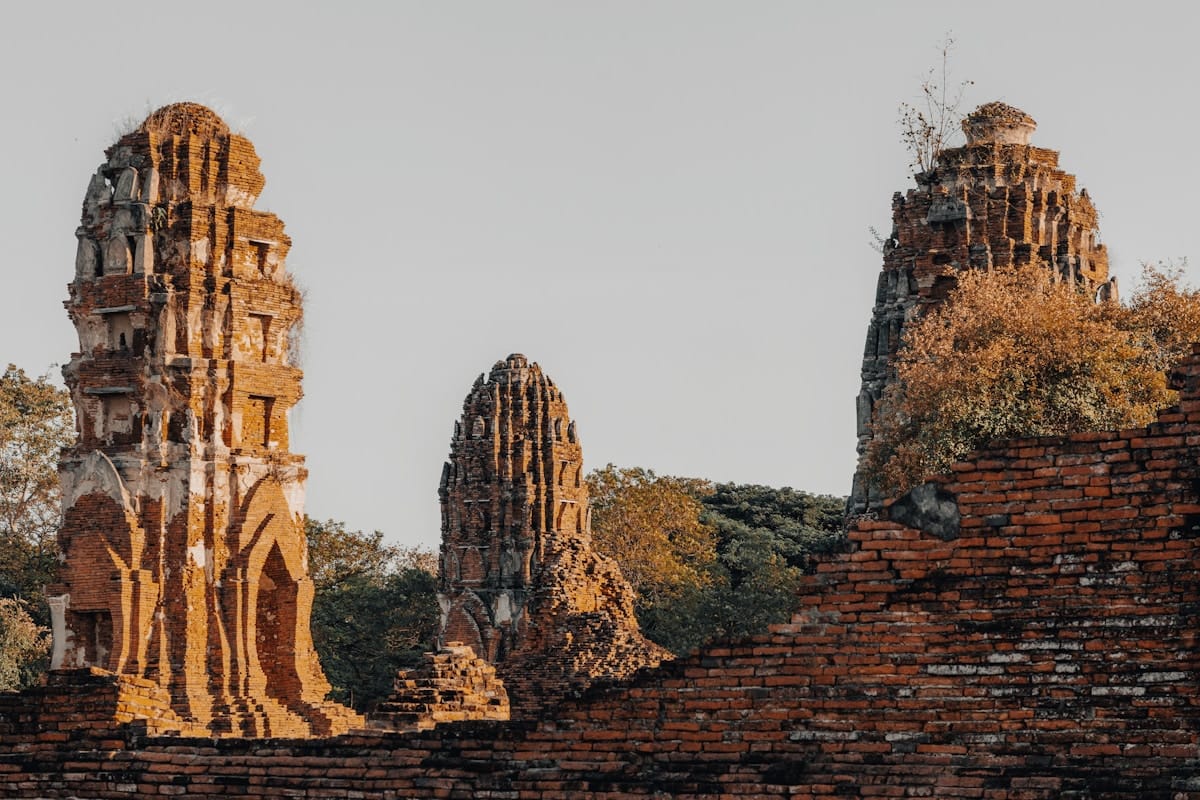
The main reason to visit Nakhon Ratchasima. Phimai is a restored Khmer temple complex built between the 11th and 13th centuries - contemporary with Angkor, and in some architectural details (particularly the carved lintels and the proportions of the sanctuary tower) a direct precursor to Angkor Wat. The temple at the centre of the complex is intact enough to fully convey its original scale.
The complex stands within the old walled town of Phimai, 60km north of the city. The surrounding moat and town walls are partially visible.
Key features inside the complex:
- The main white sandstone prang (tower) - 28m tall, elaborately carved with Hindu and Buddhist iconography
- The Brahmahattat Hall - a long pillared hall with detailed carved panels
- The Nang Sida shrine - a smaller structure with well-preserved lintels
- The Phimai Banyan Tree (Sai Ngam) - one of the largest banyan trees in Thailand, 600m from the main complex by tuk-tuk. The tree has spread via aerial roots to cover over 1,500 square metres.
Entry: ฿100. Open daily 6am–6pm. Allow 2–3 hours minimum for the complex and Sai Ngam together.
The Phimai National Museum (฿100, 300m from the main gate) has excellent carved stone pieces from the site and the surrounding region, including some of the finest Lopburi-style Khmer sculpture in Thailand.
Khao Yai National Park
90km west of the city on Highway 2. One of Thailand’s first and most important national parks, now part of a UNESCO World Heritage area. The park is large (2,168 sq km) and encompasses five distinct forest types from tropical to hill evergreen.
Wildlife: Wild elephants are seen regularly on the main park road, particularly at the salt lick near Km 33. Gaur (Indian bison), sambar deer, gibbons, macaques, and over 300 bird species including great hornbills, green peafowl, and malayan pied hornbill.
Haew Narok Waterfall - The park’s largest waterfall, a 150m three-tier cascade in the southern section. A 1.2km walk from the parking area. Best in and just after the wet season (July–October) when flow is strongest.
Night safari: The park road after dark offers the best wildlife viewing - the beams of car headlights reveal deer, owls, and occasionally larger predators (leopard sightings, though rare, are most likely here). Guided night tours from Pak Chong: ฿1,000–1,500 per person. Browse Khao Yai and Nakhon Ratchasima day tours to find operators running from Bangkok or Korat.
Getting there from the city: Songthaew to Pak Chong (bus terminal → Pak Chong, ฿70, 1.5 hours), then songthaew or songthaew to the park gate. Most visitors hire a driver for the day from Pak Chong (฿2,000–3,000) or join a tour. The park has no public transport internally.
Dan Kwian Pottery Village
15km south of the city on Highway 224. Dan Kwian is the centre of a distinctive reddish-brown unglazed pottery tradition dating from the 13th century - the iron-rich clay fires to a characteristic metallic sheen. The village has 100+ workshops open to visitors, ranging from small family operations to large exporters.
A 2-hour stop is sufficient. Larger items (floor pots, garden statues) can be shipped internationally. Small decorative pieces are practical souvenirs.
Prasat Phanom Wan
25km north of the city. A smaller Khmer temple complex than Phimai but in reasonable condition and rarely visited. Currently serves as an active Buddhist temple - the sanctuary holds a significant Buddha image that is still worshipped. The mixture of archaeological site and living temple is unusual. Entry free.
Eating in Nakhon Ratchasima
The city is a genuine Isan food town. For more Isan food culture further north, Udon Thani is a 3-hour bus ride away., not a tourist-oriented version of it. The night market around Manat Road and the municipal market near the bus station serve the authentic regional repertoire:
- Koi neua (raw spiced minced beef) - more assertively spiced than the Chiang Mai version
- Moo yang (char-grilled pork with glutinous rice)
- Pad mee Korat - a local noodle dish distinct from pad thai, with a darker sauce
- Gai yang (Isan-style grilled chicken) - leaner and more heavily seasoned than central Thai versions
The Korat night market (Talat Klang) is the best single destination for evening eating - active from 5pm, predominantly local.
Getting there and around
- Train: Northeastern Line from Hua Lamphong (Bangkok), 4.5–5.5 hours, ฿150–350. Several departures daily.
- Bus: Nakhon Ratchasima Bus Terminal 2 has services to Bangkok (3 hours, ฿200–350), Khon Kaen, Ubon Ratchathani, and Surin.
- Within the city: Songthaews run fixed routes through the city, ฿10–15 per ride. Grab works for point-to-point.