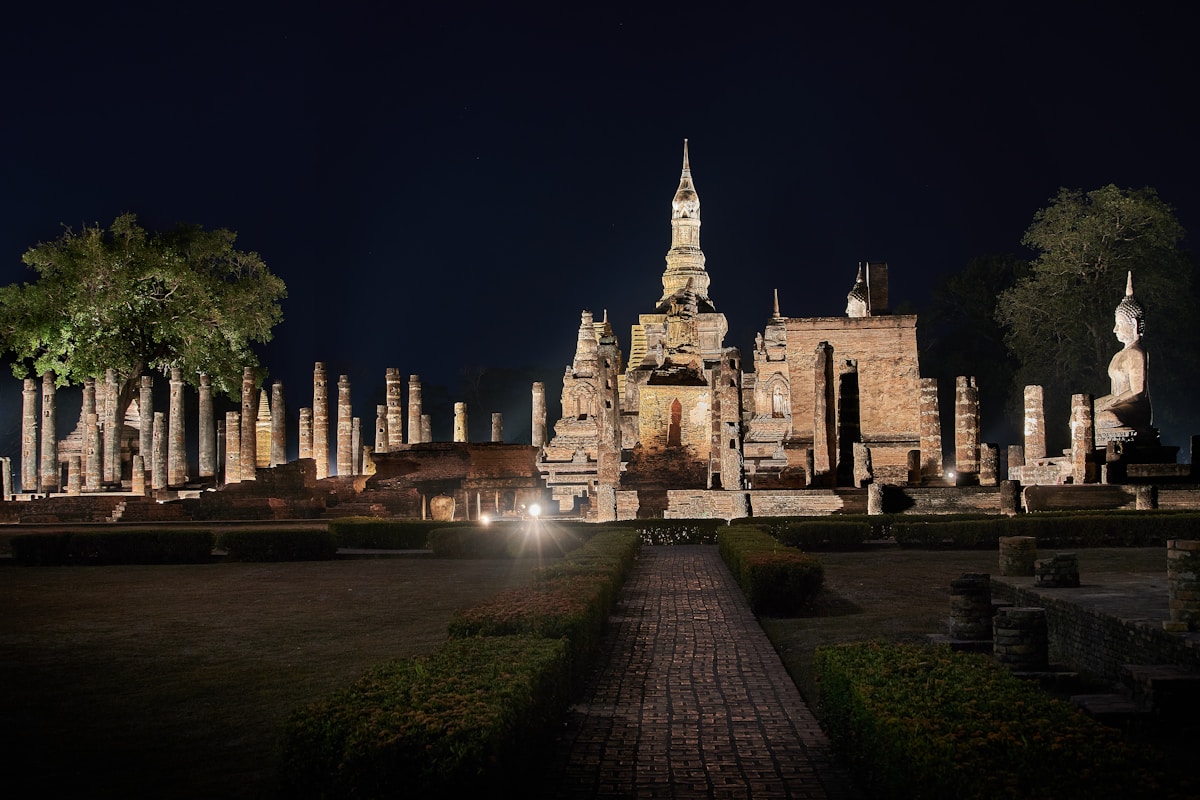
Top Lopburi Tours at a Glance
| Tour | Duration | Price (from) | Group Size | Highlights |
|---|---|---|---|---|
| From Bangkok: Lopburi Monkey Temple & Ruins Day Trip | Full day | from $42 | Small group | Phra Narai Palace, Prang Sam Yod, macaque monkeys |
| Ayutthaya & Lopburi Combined Day Tour from Bangkok | Full day | from $55 | Small group | Both historic cities, ruins, monkey temple, lunch |
| Lopburi Private Day Tour from Bangkok | Full day | from $85 | Private | Prang Sam Yod, Palace ruins, sunflower fields, private car |
Browse all Lopburi tours → GetYourGuide
Lopburi is a city with two distinct characters. The old town - a small grid of Khmer temple ruins, French-era colonial buildings, and crumbling 17th-century Thai architecture - is shared with several thousand long-tailed macaques who regard it as theirs. The rest of Lopburi is a modern Thai city whose sunflower fields turn the Lopburi valley yellow for eight weeks in winter. The combination of archaeological ruins, monkeys, and seasonal flowers makes it one of the more unusual day trips or overnight stops in central Thailand.
Prang Sam Yod (Monkey Temple)
The most photographed site in Lopburi: three towers of a 13th-century Khmer laterite temple, now occupied by hundreds of long-tailed macaques. The towers - built in the reign of the Khmer Empire under King Jayavarman VII - are architecturally significant in their own right, with Mahayana Buddhist carvings predating the site’s later conversion to Theravada use. The monkeys arrived because a local tradition developed of offering them food, which created a self-sustaining urban monkey population.
Entry: Approximately ฿150 for foreigners (as of 2026). The monkeys move freely through the ruins and do not regard the ticket boundary. Photography is excellent. Keep personal items secured - the monkeys will take anything loose, including sunglasses, earrings, and phone cases.
Best time to visit: Early morning (7–9am) when the monkeys are active and tourist numbers are lowest, or late afternoon. The midday heat slows everyone down including the macaques.
San Phra Kan Shrine
Adjacent to Prang Sam Yod, this modern shrine is the epicentre of Lopburi’s human-monkey interface. A four-faced Brahma shrine surrounded by macaques who have complete command of the space. The shrine is operational and worshipped by locals despite the monkey occupation - an unusual coexistence. This is where the annual Monkey Festival (late November) centres: a banquet of fruit and vegetables is laid out for the monkeys, attended by thousands of domestic tourists and a fair number of international visitors.
Wat Phra Si Rattana Mahathat
The largest Khmer prang in Lopburi, more ruined than Prang Sam Yod but larger in scale. The site dates to the 12th century and the main tower still stands to significant height despite centuries of subsidence. Entry approximately ฿150. The archaeological museum adjacent to the main prang houses Lopburi-period sculpture. Fewer monkeys here than at Prang Sam Yod.
King Narai’s Palace (Narai Ratchaniwet)
The most architecturally complex site in Lopburi and the least tourist-focused. Built in 1666 for King Narai - under whose reign Lopburi became the capital of Ayutthaya-era Thailand - the palace complex covers 42 acres and includes throne halls, a French-built observatory, and reception halls built for French ambassadors under Louis XIV. The French architectural influence is visible in the window shapes and stucco details - unusual in Thailand.
Lopburi National Museum within the palace grounds holds a strong collection of Lopburi-era sculpture (the Lopburi style of Khmer Buddhist art developed independently from Angkor) and objects from the Ayutthayan court period. Entry approximately ฿150 for the palace complex and museum combined (as of 2026). Open Wednesday–Sunday, 8:30am–4:30pm.
Baan Wichayen (Phra Narai Ratchaniwet Annex)
A 17th-century French-influenced residence built for the Greek adventurer and Ayutthayan minister Constantine Phaulkon, who served as the effectively a prime minister of Siam under King Narai until his execution in 1688. The ruins of the residence remain - a Roman-baroque façade in red brick that looks completely incongruous on a Lopburi side street. Entry approximately ฿50. One of Thailand’s more obscure historical sites.
Sunflower Fields (November–January)
The Lopburi valley and the Saraburi area south of the city transforms into a sunflower field sea in the November–January cool season. The fields are primarily planted by contract farmers growing sunflower seeds for cooking oil - the tourism is a by-product of the agriculture.
The most accessible area is along Highway 1 between Lopburi and Saraburi, and around Chai Badan district. Entry to the best-maintained viewing areas is sometimes charged (approximately ฿20–50 per person). Motorcycles or a rented car give the most flexibility. The blooming is timed by rainfall and agricultural schedules - call ahead or check Thai travel groups online for current peak timing.
Prang Khaek
A 7th–8th century Hindu temple in the middle of a traffic roundabout in Lopburi’s old town - possibly the oldest structure in Lopburi, predating the Khmer temples. Three brick towers in varying states of preservation, with a few carved sandstone blocks visible at the base. Entry free. The context - surrounded by Thai shophouses and motorbikes - makes it genuinely strange and worth 10 minutes.
Practical Information
Getting to Lopburi: Train from Bangkok Hua Lamphong (2.5–3 hours, from approximately ฿80 third class; express trains approximately ฿200–350). Bus from Bangkok Mo Chit Northern Terminal (2.5–3 hours, approximately ฿100–150). The train is more comfortable and drops at Lopburi station in the centre of the old town.
Getting around: The old city ruins are within 500 metres of each other - walkable, though the heat can make it slow. Lopburi has tuk-tuks (฿30–60 per trip) and motorcycle taxis. For the sunflower fields south of town, motorcycle hire (฿200–250/day) or a taxi (฿400–600 for a half-day) is practical.
Where to stay: Budget: Muangthai Hotel near the station (฿250–500/night). Mid-range: Noom Guesthouse (฿500–900/night with air-con, well-reviewed for cleanliness and location). Lopburi’s accommodation ecosystem is basic - most travellers treat it as a day trip or overnight on the way north.
Monkey safety: Carry a stick if you’re walking through the monkey-dense old town streets. Don’t stop to look at your phone while a monkey is nearby. Don’t carry open bags. Don’t feed them. Local vendors sell water guns (฿30) that you can use to discourage approaching monkeys.
Browse Lopburi tours and day trips for organised excursions to Lopburi from Bangkok.
See also: Ayutthaya guide · Bangkok day trips · Thailand itineraries