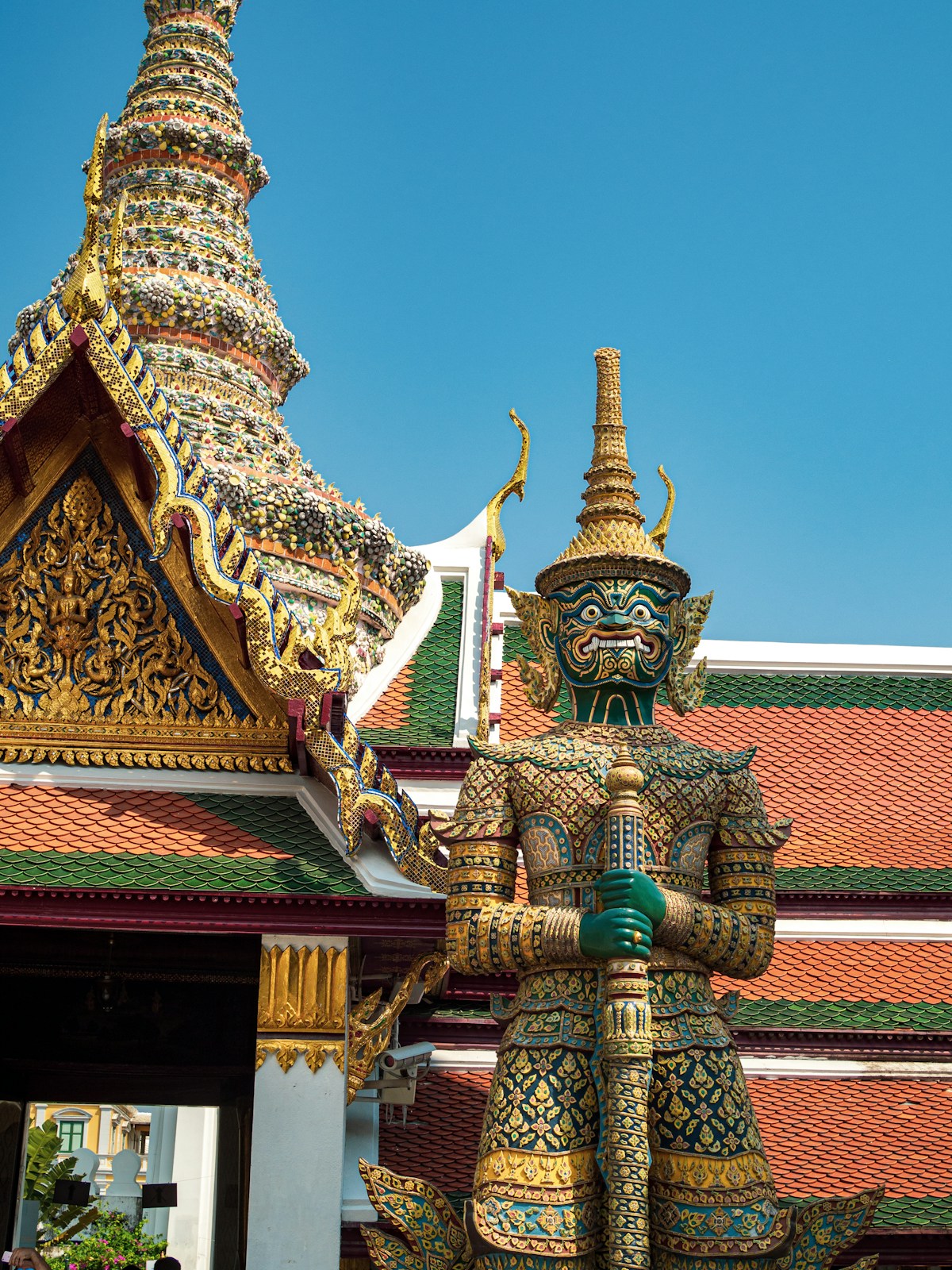
Bangkok contains more than 400 Buddhist temples, but four stand apart in historical significance and visitor impact. Wat Phra Kaew houses the Emerald Buddha and adjoins the former royal palace. Wat Pho shelters the city’s largest reclining Buddha and the birthplace of Thai massage. Wat Arun’s porcelain-encrusted spire rises above the Chao Phraya River’s west bank in one of Thailand’s most recognisable skylines. Wat Saket, the Golden Mount, offers the best elevated views of Rattanakosin island and has been a Bangkok landmark since the 18th century.
Visiting all four in a single day is achievable but requires early starts and a plan for the river crossing between the east and west bank temples.
Top-Rated Guided Temple Tours at a Glance
Here’s a quick comparison of the top-rated options on GetYourGuide:
| Tour | Duration | Price (from) | Group Size | Highlights |
|---|---|---|---|---|
| Grand Palace, Wat Pho & Wat Arun Guided Tour | 6–7 hrs | from ฿750 | Small group | All 3 major temples, live guide |
| Half-Day Temple & Grand Palace Group Tour | 4–5 hrs | from ฿750 | Group | Grand Palace, Wat Pho, Wat Trimitr |
| Grand Palace & Wat Pho Guided Walking Tour | 5 hrs | from ฿900 | Small group | Includes river ferry to Wat Arun |
| Private Grand Palace, Wat Pho & Wat Arun Tour | 6 hrs | from ฿4,650 | Private | Flexible pace, hotel pickup |
Entry fees (Grand Palace ฿500, Wat Pho ฿200, Wat Arun ฿100, Wat Saket ฿20) are in addition to most group tour prices — confirm inclusions when booking.
Browse all Bangkok temple tours → GetYourGuide
Wat Phra Kaew and the Grand Palace
Entry fee: THB 500 (adults), children under 120 cm free
Opening hours: 08:30 to 15:30 daily
Location: Na Phra Lan Road, Phra Nakhon
Wat Phra Kaew (Temple of the Emerald Buddha) is technically the inner courtyard of the Grand Palace complex - your single entry ticket covers both. The Emerald Buddha, carved from a single piece of green jasper (not emerald) and standing 66 centimetres tall, sits atop a massive gilded altar in the main ubosot. The figure’s seasonal robes are changed three times a year by the King in a private ceremony.
Allow at least 90 minutes in the complex. The outer walls of the cloisters are lined with a 2-kilometre mural depicting the Ramakien epic - Thailand’s adaptation of the Indian Ramayana. The murals were originally painted in the late 18th century and have been restored multiple times, but the storytelling is continuous and extraordinary in its detail.
Practical notes: Arrive before 09:00 to beat coach groups. The dress code here is the strictest of all four temples - shoulders and knees covered without exception. Sarong rentals are available at the gate (free with a deposit). Photography is allowed in all exterior areas but not inside the ubosot where the Emerald Buddha is housed.
Wat Pho (Temple of the Reclining Buddha)
Entry fee: THB 200
Opening hours: 08:00 to 18:30 daily
Location: Sanam Chai Road, adjacent to the Grand Palace’s south wall
Wat Pho predates Bangkok as the capital and is considered the oldest and largest temple in the city. The defining sight is the Reclining Buddha - 46 metres long and 15 metres tall, covered in gold leaf and housed in a dedicated vihara gallery. The soles of the feet are inlaid with 108 mother-of-pearl panels depicting the auspicious characteristics of a Buddha.
Beyond the main image, the temple complex contains over 1,000 Buddha images in various sizes and styles distributed across four ordination halls. The massage school in the northeastern section of the grounds is internationally recognised - a traditional Thai massage here costs approximately THB 380 for 30 minutes or THB 530 for 60 minutes and is one of Bangkok’s best-value tourist experiences.
Wat Pho is 10 minutes on foot south of Wat Phra Kaew. Most visitors combine them in sequence on the same morning.
Wat Arun (Temple of Dawn)
Entry fee: THB 100
Opening hours: 08:00 to 18:00 daily
Location: Arun Amarin Road, Thonburi (west bank of the Chao Phraya)
Wat Arun stands on the opposite bank of the Chao Phraya from Wat Phra Kaew. The crossing by river ferry takes 5 minutes and costs THB 5 per person from Tha Tien pier (a 5-minute walk south of Wat Phra Kaew). The temple’s central Khmer-style prang (tower) reaches 70 metres and is encrusted from base to tip with fragments of Chinese porcelain - the effect in late afternoon light, when the ceramics catch the sun, is vivid and quite unlike any other structure in Thailand.
You can climb the central prang on steep steps to approximately the halfway point; vertigo-prone visitors should consider the view from below. The riverside terrace provides the classic view across the water to Wat Phra Kaew on the east bank.
Tip: Wat Arun photographs best from the east bank at dusk, looking west. If you are visiting independently, consider timing your Tha Tien ferry crossing for the late afternoon so you see the temple in full light from the river.
Wat Saket (Golden Mount)
Entry fee: THB 20
Opening hours: 07:30 to 19:00 daily
Location: Chakkraphatdi Phong Road, Pom Prap Sattru Phai
Wat Saket is the furthest from the river and frequently skipped by those short on time - which means it is considerably less crowded than the other three. The Golden Mount is an artificial hill built during the reign of Rama III using earth dug from canal excavations. The golden chedi at its summit, containing a reputed relic of the Buddha, is surrounded by a spiral walkway passing trees draped with prayer flags.
At 344 steps, the ascent takes about 15 minutes at a gentle pace. The summit views across Rattanakosin island to the Grand Palace and east toward Chinatown are the best ground-level panorama in central Bangkok and worth the modest entry fee alone.
To reach Wat Saket from Wat Pho: take a taxi or Grab (approximately THB 70 to THB 100 from the river area) or the air-conditioned bus 47 from Sanam Chai Road.
Guided Tours vs Self-Guided
Self-guided approach works well for confident travellers who have researched the iconography beforehand. Costs are lower, timing is flexible, and you avoid the group dynamic. Download the TAT Thailand Walking Routes app or pick up the free temple map at the Grand Palace ticket office.
Guided half-day tours typically cover Wat Phra Kaew, Wat Pho and Wat Arun with a licensed English-speaking guide for approximately THB 1,500 to THB 2,000 per person on group tours, or THB 4,000 to THB 6,000 for a private guide. Operators including Asia Scenic, Viator and GetYourGuide all list multiple Bangkok temples options. A guide makes the Ramakien murals comprehensible and explains the symbolism of the Emerald Buddha’s garments in a way that transforms the visit.
Long-tail boat tours add a different dimension - some operators run temple tours via the Chao Phraya and Bangkok Noi canal network, covering Wat Arun and the Royal Barges National Museum. Expect to pay approximately THB 1,500 to THB 2,500 per boat (not per person) for a 2 to 3 hour charter. Popular with small groups.
Transport Between Temples
The four temples cluster within a 3-kilometre radius of each other around Rattanakosin island:
- Chao Phraya Express Boat - stops at Tha Chang pier (Wat Phra Kaew) and Tha Tien pier (Wat Pho / Wat Arun ferry), running every 10 to 20 minutes. THB 15 to THB 30 per leg.
- Tuk-tuk - drivers near the Grand Palace will propose a multi-temple circuit for approximately THB 400 to THB 600 including waiting time. Negotiate before departing and beware of drivers who steer you to gem shops.
- Grab - reliable for point-to-point journeys when traffic is light. Fares between temples rarely exceed THB 80.
- Walking - Wat Phra Kaew to Wat Pho is a 10-minute walk. Wat Saket is 2 kilometres further northeast and is best reached by taxi or tuk-tuk.
Practical Planning
Opening hours matter. Wat Phra Kaew closes at 15:30 - earlier than most visitors expect. If you want the Grand Palace and Emerald Buddha, it must be your first stop of the day. Wat Pho, Wat Arun and Wat Saket all close between 18:00 and 19:00, giving more flexibility for afternoon visits.
Crowd management. Wat Phra Kaew receives 8,000+ visitors on peak days between December and February. Being at the gate before 09:00 is the most effective strategy; by 10:30 the main halls are congested. Wat Arun and Wat Saket are significantly quieter throughout the day.
Combined ticket scams. Licensed tuk-tuk drivers near Sanam Luang (the parade ground opposite the Grand Palace) sometimes claim the Grand Palace is “closed today” and offer to take you to other sites instead. The palace is almost never closed during regular hours. Ignore these approaches and walk directly to the ticket windows.
Budget summary (per adult, 2026 prices):
- Wat Phra Kaew / Grand Palace: THB 500
- Wat Pho: THB 200
- Wat Arun: THB 100
- Wat Saket: THB 20
- River ferry crossings: THB 5 to THB 30
- Total entry fees: approximately THB 820 to THB 850