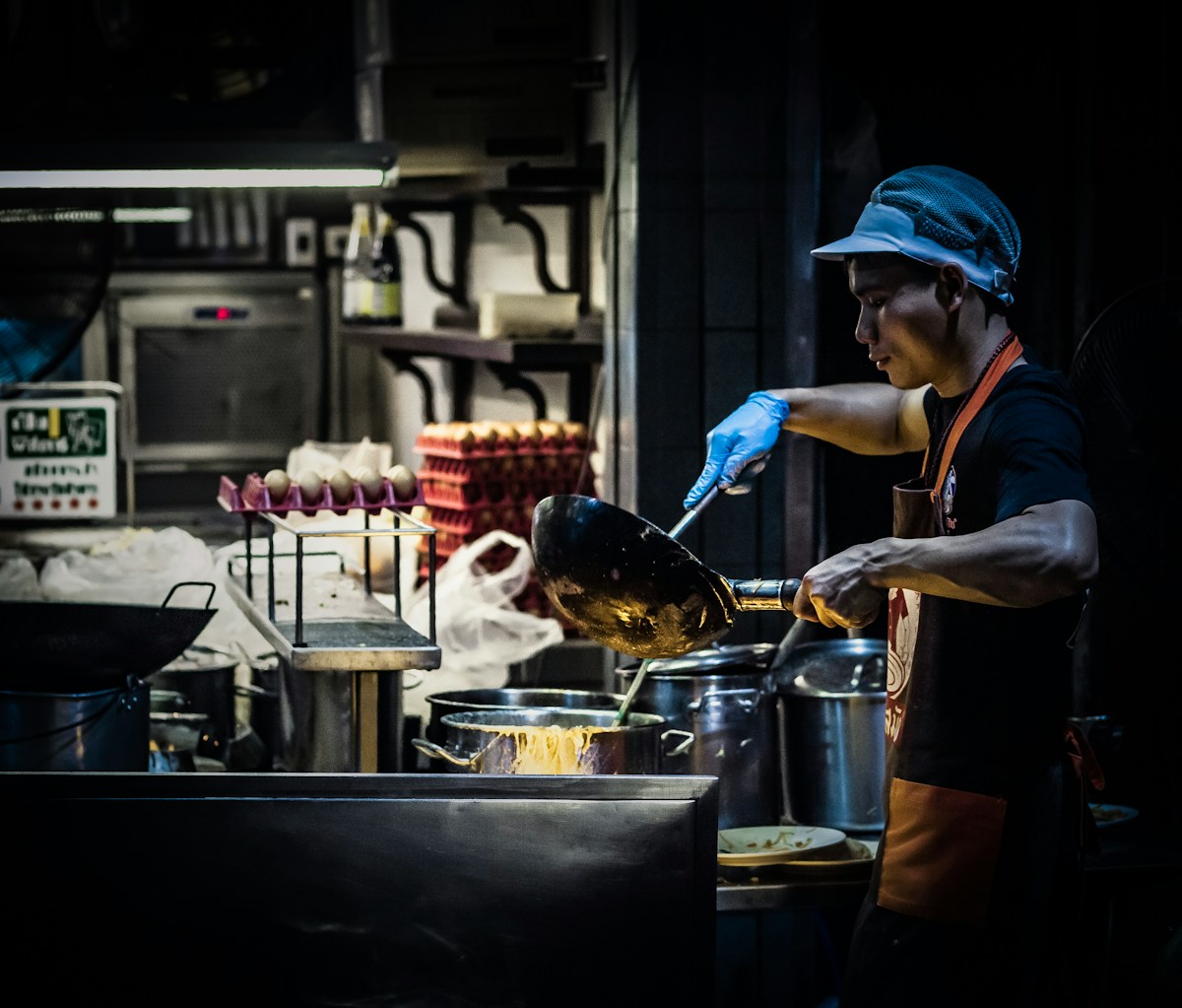
A morning cooking class is one of the best-value experiences in Bangkok: for about the price of a mid-range dinner you get a guided market tour, hands-on instruction in four or five classic dishes, and the biggest lunch of your trip. The catch is that dozens of schools compete for bookings and quality varies. These are the schools we would actually book, with prices as of 2026.
Top Bangkok Cooking Classes at a Glance
Here’s a quick comparison of the top-rated options on GetYourGuide:
| Class | Duration | Price (from) | Group Size | Highlights |
|---|---|---|---|---|
| Thai Cooking Class & Onnuch Market Tour | 4 hrs | from $37 | Small group | Wet market visit, 4 dishes, take-home recipes |
| Hands-On Thai Cooking Class & Market Tour | 4–5 hrs | from ฿1,200 | Up to 12 | Local market, own wok station |
| Bangkok Cooking Class — Half Day | 3–4 hrs | from ฿1,000 | Group | 4 classic Thai dishes, morning slots |
| Blue Elephant Royal Thai Cooking Studio | 4 hrs | from ฿3,300 | Up to 15 | Royal Thai cuisine, market visit, historic mansion |
Prices include ingredients and the meal you cook. Market tours typically run morning sessions only — afternoon and evening classes often skip the market.
Browse all Bangkok cooking classes → GetYourGuide
Silom Thai Cooking School: best budget pick
The long-running backpacker favourite, and deservedly so. Classes start with a walk through a local wet market, then move to a converted house where you cook five dishes - typically tom yum, green curry from scratch (pounding the paste yourself), pad thai, and mango sticky rice.
- Price: approximately ฿1,000–1,200 per person for the half-day morning class as of 2026
- Group size: can reach 20+ in high season - the main drawback
- Book: directly via their site or browse Bangkok cooking class tours a few days ahead
For the price, nothing in Bangkok beats it. Pad-thai-and-paste-pounding fundamentals, done cheerfully.
Sompong Thai Cooking School: the small-group middle ground
Also in Silom, Sompong runs a similar format - market tour, five dishes, recipe book to take home - with smaller groups and more individual attention than the budget giants. Approximately ฿1,200–1,500 per person. If you want the classic experience without an assembly-line feel, this is the sweet spot.
Baipai Thai Cooking School: best all-round experience
Baipai operates from a purpose-built garden house in the northern suburbs with a professional teaching kitchen, two instructors per class, and transport included from central pickup points. You cook four dishes from a rotating menu that goes beyond the tourist standards - think hor mok (steamed curried fish custard) or proper massaman from scratch.
- Price: approximately ฿2,400–2,800 per person as of 2026, transport included
- Why pay more: half the group size of the budget schools, better equipment, and dishes you will not learn elsewhere
This is the one we recommend to food-focused travellers who will only do one class.
Blue Elephant: the white-tablecloth option
Housed in a century-old mansion on Sathorn Road above its famous restaurant, Blue Elephant’s cooking studio teaches royal Thai cuisine with restaurant-grade plating. Morning sessions include a market visit; prices start around ฿3,300 per person as of 2026. It is polished and impressive rather than homey - choose it for technique and refinement, not for street-food authenticity.
May Kaidee: best vegetarian class
The veteran vegetarian restaurant near Khao San Road runs dedicated plant-based classes - green curry, som tam, and tom yum built without fish sauce - from approximately ฿1,200–1,500. The natural choice for vegetarians and vegans rather than asking a mainstream school for substitutions.
How to choose
- Tight budget, social atmosphere: Silom Thai Cooking School
- Smaller group, same dishes: Sompong
- Best overall, food-first travellers: Baipai
- Fine-dining technique: Blue Elephant
- Vegetarian/vegan: May Kaidee
What a class day actually looks like
The standard morning format, common to nearly every school: pickup or meet at 8:30–9:00, an hour at a wet market handling the ingredients (this is where you finally learn the difference between holy basil and Thai sweet basil, and why galangal is not ginger), then two to three hours at the stoves. Each student gets their own wok station at the better schools - confirm this when booking, because “demonstration-style” classes where you mostly watch are still sold at the same prices. You eat each dish as you finish it, which is why nobody needs dinner afterwards. Most schools end by 13:30–14:00, leaving the afternoon free.
Practical tips
- Book the morning class. Market tours mostly run mornings, and the markets themselves are better before the heat.
- Arrive hungry - five dishes is a genuine feast, and you eat everything you cook.
- Most schools email or hand you the recipes; the skill that actually transfers home is the curry paste, so pay attention at the mortar.
- Classes run rain or shine and book out in the December–February high season - reserve two to three days ahead.
Chiang Mai is Thailand’s other great cooking-class city, with farm-based schools at lower prices - we compare them in our Chiang Mai cooking classes guide. And to know what you are eating before you cook it, start with our Bangkok food guide.
See also: Bangkok travel guide · Bangkok things to do · Bangkok food guide · Best Thai dishes · 3 days in Bangkok itinerary