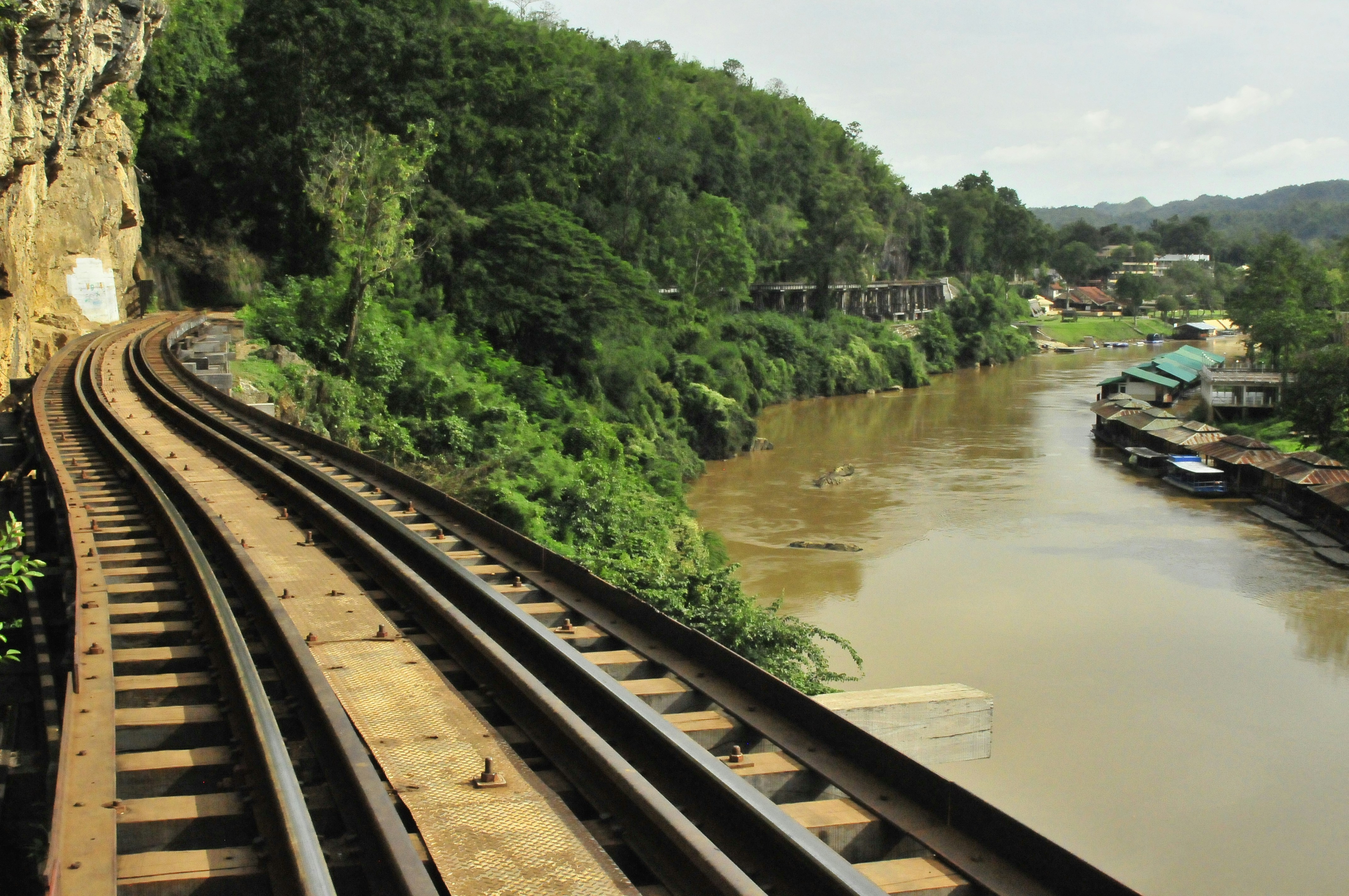
Kanchanaburi is one of the most historically significant stops in Thailand. The town on the River Kwai was the centre of the Japanese-built Death Railway during World War II - a 415 km line constructed by Allied prisoners of war and Asian labourers under brutal conditions, with an estimated 100,000 deaths during construction. The bridge that spans the river here is the most visited section, but the wider story - told through the war museums and cemeteries - is what makes a day trip genuinely worthwhile rather than just a photo stop.
Top Tours at a Glance
Here’s a quick comparison of top-rated tours on GetYourGuide:
| Tour | Duration | Price (from) | Group Size | Highlights |
|---|---|---|---|---|
| Kanchanaburi & Erawan Falls Full-Day Tour from Bangkok | 12 hrs | from $45/person | Group (max 15) | Bridge on the River Kwai, war cemetery, Erawan Falls swimming |
| Death Railway & Hellfire Pass Day Trip | 11 hrs | from $50/person | Group (max 14) | Death Railway train ride, Hellfire Pass Museum, war cemetery |
| Private Kanchanaburi Day Tour from Bangkok | 12 hrs | from $80/person | Private (2–6) | Flexible pacing, all main sites, private English-speaking guide |
| Kanchanaburi Bridge & TBRC Historical Tour | 10 hrs | from $40/person | Group | Bridge walk, Thailand–Burma Railway Centre, riverside lunch |
Browse all Kanchanaburi tours → GetYourGuide
What to see in Kanchanaburi
The Bridge on the River Kwai - The famous iron bridge (formally the Mae Klong Railway Bridge) is free to walk across. The curved iron spans are original Japanese imports; the square spans are postwar replacements. Trains still cross twice daily - locals use the railway - and the riverside around the bridge has cafes and market stalls. Early morning (before 9am) is significantly quieter than midday when tour buses arrive. No entry fee.
Kanchanaburi War Cemetery (Don Rak) - Maintained by the Commonwealth War Graves Commission, this is the main Allied cemetery containing 6,982 graves. Entry is free, it opens from 8am to 6pm daily, and it warrants at least 30–45 minutes. The adjacent Thailand–Burma Railway Centre (TBRC) has the most comprehensive English-language exhibition on the Death Railway (entry ฿160 / USD 4.50 as of 2026).
JEATH War Museum - Smaller, less polished than the TBRC, but the personal artefacts (letters, drawings, tools smuggled by prisoners) make it worth the ฿50 admission. Located at Wat Chaichumphon, 10 minutes walk from the bridge.
Erawan National Park - 65 km north of Kanchanaburi town, the park’s seven-tiered waterfall is one of the most beautiful in Thailand: emerald-green pools, resident fish, and manageable crowds on weekdays. National park entry is ฿300 for foreigners (฿30 for Thais) as of 2026, plus ฿30 for a songthaew from the park entrance to the first tier. Swimming is permitted at most tiers. Budget 2–3 hours minimum; rushing through all seven tiers in 45 minutes does not do it justice.
Organised tours from Bangkok: operators and prices
GetYourGuide-listed tours - A wide selection of licensed operators runs Kanchanaburi day tours from Bangkok. Standard packages (bridge, war cemetery, TBRC, and Erawan Falls) run ฿1,200–1,800 per person (USD 33–50), including return minivan transport and entrance fees. Hotel pickup from central Bangkok and Khao San Road is standard.
Amazing Bangkok Tours - Popular operator running combined Death Railway and Erawan Falls tours. Full-day (7am–8pm) from ฿1,400 (USD 39) per person including transport, entrance fees, and lunch at a riverside restaurant.
Viator-listed options - Private day tours (driver + guide for 2 people) from ฿5,500–7,000 (USD 153–194) for the pair. Better flexibility and more time at each site. Worth considering if you want the war cemetery and JEATH Museum at your own pace rather than 20 minutes each.
Independent minivan - Minivans depart from Bangkok’s Southern Bus Terminal (Sai Tai Mai) and Victory Monument. Fare approximately ฿120–160 (USD 3.30–4.40) each way, journey 2–2.5 hours. In Kanchanaburi, renting a bicycle (฿50–80/day) or using songthaews to get between sites works well.
The Death Railway train experience
Bangkok Thonburi to Nam Tok: Trains depart Thonburi Station (not Hua Lamphong) at 7:45am and 1:35pm daily. Third class only, fare approximately ฿100 (USD 2.80). Journey passes through Kanchanaburi and continues to Nam Tok - the existing end of the Death Railway. The most dramatic section is between Tham Krasae and Wang Pho, where the track runs along a wooden trestle bridge above the Kwai Noi River gorge. Many visitors take the train to Nam Tok and bus or minivan back.
Full day vs half day
Half day (4–5 hours): Bridge, war cemetery, TBRC. Sufficient for the historical focus. Practical for those arriving on the morning train.
Full day (8–10 hours): Bridge, TBRC, lunch, Erawan Falls. The most popular option. Exhausting but complete.
Overnight: If you want both the historical sites and Erawan at a comfortable pace, one night in Kanchanaburi solves the logistics. Guesthouses near the bridge start from ฿400–600 (USD 11–17) per night.
Kanchanaburi Tours at a Glance
Prices are approximate as of 2026. Book via GetYourGuide for free cancellation.
| Tour | Duration | Price (approx.) | Group size | What’s included |
|---|---|---|---|---|
| Kanchanaburi day trip from Bangkok (group) | 11 hrs | from $45 | Group coach | Transport, guide, Bridge, War Cemetery, Erawan |
| Kanchanaburi private day tour from Bangkok | 10 hrs | from $80/person | Private (2–4) | Driver-guide, hotel pickup, custom stops |
| Bridge on the River Kwai + Death Railway train | 8 hrs | from $55 | Group | Coach, guide, train ride, Death Railway Museum |
| Kanchanaburi + Erawan Falls full day | 11 hrs | from $50 | Group | Transport, guide, swimming at Erawan |
| Private Erawan Falls + River Kwai day trip | 10 hrs | from $90/person | Private | Driver-guide, hotel pickup, flexible |
Browse Kanchanaburi tours → GetYourGuide
Practical notes
- The bridge walkway is narrow and trains pass at platform speed - listen for the horn and step onto marked safety ledges.
- Erawan is crowded on Thai public holidays; avoid visiting on these dates if possible.
- The Kwai Yai and Kwai Noi rivers are infested with catfish at Erawan - they will nibble your feet, which most visitors find amusing. They are harmless.
- Travel insurance with water sports coverage is worth having if you plan to swim at Erawan.