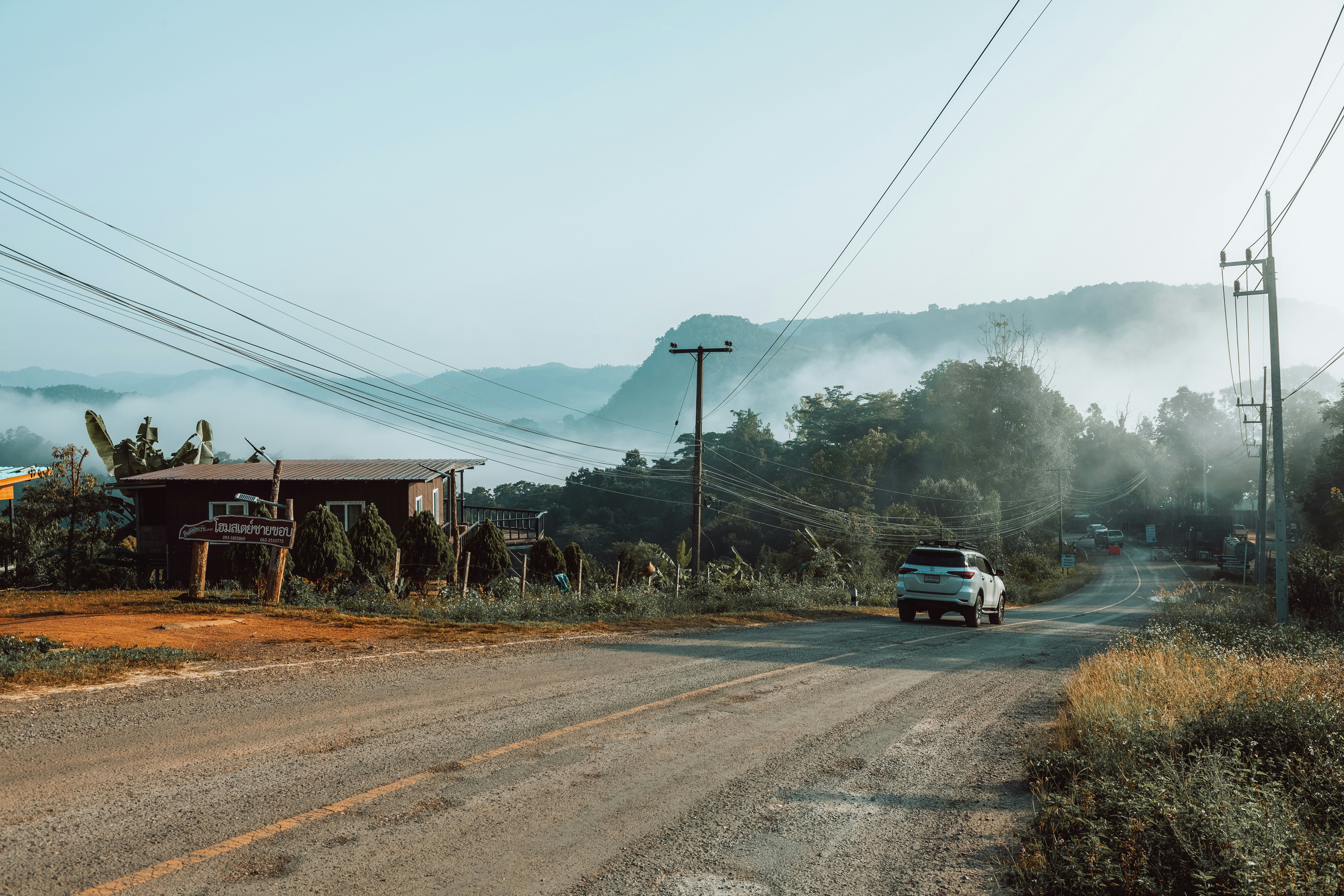
Driving yourself around northern Thailand unlocks a level of freedom that buses, trains, and even private drivers can’t match. The classic loop - Chiang Mai → Pai → Mae Hong Son → Chiang Rai - covers mountainous roads, hill-tribe villages, hot springs, and viewpoints that most package tours never reach. This guide covers everything you need to rent a car and drive it confidently through the north.
Why Rent a Car for the Northern Loop
Public transport in northern Thailand is limited outside Chiang Mai. Minivans connect the main towns, but they stick to fixed schedules and can’t stop at a waterfall, market, or viewpoint on a whim. A rental car lets you:
- Drive the Pai mountain road at your own pace, stopping at the panoramic viewpoints
- Reach Chiang Rai’s White Temple, Blue Temple, and Black House on a single day without tour-group timing
- Explore the Golden Triangle and remote border areas like Doi Tung at no extra cost
- Hit morning markets before the day-trippers arrive
The loop from Chiang Mai is approximately 700–800 km depending on detours, and most travellers cover it comfortably over 4–6 days.
Licence Requirements for Foreign Drivers
Thai law requires foreign drivers to hold a valid driving licence from their home country and an International Driving Permit (IDP). Key points:
- IDP is mandatory for most rental companies and is what traffic police will ask to see. Apply for one before leaving home through your country’s motoring association (AA, AAA, NRMA, RAC etc.). Cost is typically the equivalent of THB 500–700 in your home country.
- Home licence alone is sometimes accepted by smaller local agencies, but it creates legal ambiguity - if you’re stopped at a checkpoint or involved in an incident, the absence of an IDP can complicate insurance claims.
- Automatic vs manual: Most rental cars in Thailand are automatic. If you’re taking an automatic-only licence from home, confirm the vehicle type at booking.
- Minimum age: Most companies require drivers to be at least 21–23 years old. Budget companies sometimes require 25+. Check this at the time of booking.
Rental Companies in Chiang Mai
National and International Chains
Avis and Budget both operate out of Chiang Mai Airport (CNX) and have English-speaking staff. Airport desks handle paperwork smoothly for international travellers. Rates from approximately THB 1,400–2,200 per day for a compact car as of 2026, including basic insurance. Both allow one-way returns to Chiang Rai (drop fee applies).
Hertz has a Chiang Mai presence through local franchise partners. Book online, confirm pickup location in advance - some pick up from near Nimman Road rather than the airport.
Local Agencies
North Wheels (north of the Old City, near Chang Phueak Gate) is one of the most-used local agencies among independent travellers. Small SUVs and sedans from approximately THB 900–1,200 per day as of 2026. Staff know the northern roads and can advise on current road conditions on Route 1095.
Pop Car Rent and similar small agencies along Chaiyaphum Road offer competitive rates for longer rentals. Expect to pay approximately THB 800–1,100 per day for a Toyota Yaris or Honda Jazz. Scrutinise the contract carefully - pre-existing damage should be photographed and noted before you drive off.
For booking: Airport pickups add convenience but usually cost slightly more than city pickups. If you’re arriving at CNX and heading out the same day, the airport desk saves a transfer.
The Pai Road: What You Need to Know
Route 1095 between Chiang Mai and Pai is 135 km with exactly 762 curves - you’ll see the number on roadside signs. This is not a road where you average highway speeds.
What to expect:
- The road climbs steeply out of the Mae Taeng valley into cloud-forest terrain. Switchbacks are tight, many blind, and there is no barrier on the mountain-side drops.
- Time: Allow 3–4 hours. Driving it in 2.5 hours is possible but unwise. The road has enough scenic stops - Mok Fa waterfall, the Doi Chiang Dao viewpoints, Tha Ton if you loop north - to justify a slower pace.
- Best conditions: Dry season (November–April). In the wet season (June–October) landslides are a genuine risk, and mist can reduce visibility to near zero on the higher sections. The road is usually passable but check conditions before departing.
- Night driving: Avoid it. The road is poorly lit, there’s occasional truck traffic, and wildlife crosses in darkness.
- Gears and brakes: If you have the option, request a car with engine braking available (most automatics have an L or sport mode). Riding the brakes on the descents overheats them - use engine braking on the long downhills.
One practical tip: fill up in Chiang Mai before departing and again in Pai. Petrol stations are sparse between the two towns.
Chiang Rai and the Golden Triangle
From Pai most travellers loop north via Mae Hong Son or drop south-east to Chiang Rai directly via Route 118. The Chiang Rai roads are generally smoother and wider than the Pai mountain road - it’s a straightforward 4–5 hour drive on good sealed roads.
Key sites accessible by car around Chiang Rai:
- Wat Rong Khun (White Temple), 13 km south of Chiang Rai city
- Baan Dam Museum (Black House), 13 km north of the city
- Doi Tung Royal Villa and Mae Fah Luang Garden, 45 km north
- The Golden Triangle viewpoint at Sop Ruak, approximately 90 km north
Border crossing notes: The Chiang Rai province borders both Myanmar (at Mae Sai) and Laos (at Chiang Khong). Thai rental contracts universally prohibit cross-border driving. Taking a rental car across either border voids the insurance and breaches the hire agreement. The checkpoints are staffed and foreigners driving rental cars are occasionally flagged. If you want to cross into Myanmar or Laos, park on the Thai side and cross on foot.
Insurance: What You Need
Most rental rates in Thailand include third-party liability and Collision Damage Waiver (CDW) with an excess (deductible) of approximately THB 10,000–30,000 as of 2026. Read the policy carefully:
- CDW excess: How much you pay if the car is damaged. Lower excess = higher daily rate. For a mountain road trip, paying a little more for a reduced excess is worth considering.
- Theft protection: Check whether the basic policy covers theft. Some budget agencies do not include it.
- Your travel insurance: Many comprehensive travel insurance policies include rental car excess cover. Check your policy before paying for the rental company’s own excess reduction. If it’s covered, the cheaper basic CDW is sufficient.
- Tyres and glass: Policies often exclude tyre and windscreen damage. These are the most common claims on mountain routes - rocks and debris on Route 1095 are not unusual. Ask whether tyre/glass protection is available and what it costs.
A few habits that protect you: photograph the car thoroughly before driving off (all panels, wheels, undercarriage if accessible), confirm the photos are timestamped, and email them to yourself as a record.
Best Season to Drive the Loop
November to February is peak season and the best driving window. Roads are dry, mountain air is cool, and the morning mist around Pai is atmospheric rather than dangerous.
March to May brings heat and haze. Visibility on mountain viewpoints is often poor, but roads are dry and tourist numbers drop.
June to October is the rainy season. Road conditions on Route 1095 can deteriorate quickly after heavy rain. The landscape is spectacularly green and tourist numbers are low, but check weather forecasts daily and be prepared to adjust plans. Travel insurance with trip interruption cover is strongly recommended.
Practical Tips Before You Go
- Book ahead in peak season: December and January see high demand. Rental cars at Chiang Mai Airport can sell out. Book at least 2 weeks ahead.
- Fuel: Petrol (benzene) and diesel are widely available. LPG and E85 are common in Thailand - make sure you’re putting the right fuel in. Confirm fuel type with the rental agency.
- Tolls: There are no motorway tolls on the Chiang Mai–Pai–Chiang Rai route. Tolls appear if you use expressways around Bangkok.
- Parking: In Chiang Mai’s Old City, paid parking is available near Tha Phae Gate. In Pai and Chiang Rai town, parking is generally free and easy.
- GPS: Google Maps works well throughout northern Thailand, including on Route 1095. Download offline maps before departing in case of poor mobile signal in the mountains.
- Emergency number: 1669 (medical/ambulance), 191 (police). Keep your rental company’s emergency number saved.
Sample Budget (Approximate, as of 2026)
| Item | Approximate cost (THB) |
|---|---|
| Compact car rental, 5 days | 5,000–8,000 |
| Fuel for full loop (~800 km) | 1,500–2,500 |
| Reduced CDW excess upgrade | 500–1,500 |
| One-way drop fee (Chiang Mai → Chiang Rai) | 500–1,500 |
| Total (approx) | 7,500–13,500 |
Compare that with booking a private driver for the same route at approximately THB 4,000–6,000 per day - for a couple splitting costs, self-drive works out similar or cheaper, with far more flexibility.
The northern loop is one of those trips that genuinely rewards the extra effort of self-driving. The freedom to stop at a roadside noodle stall in a hill-tribe village, or pull over for a viewpoint that no minivan stops at, is what most travellers remember longest.
Plan Your Trip
The self-drive loop works best as part of a dedicated northern Thailand trip — our one week in northern Thailand itinerary maps the Chiang Mai–Pai–Chiang Rai sequence with suggested overnight stops. The Chiang Mai city guide covers where to base yourself at the start and end of the loop. If you are arriving from Bangkok, the Bangkok to Chiang Mai sleeper train guide gets you there overnight without flying.
Book Your Trip
- Flights - Find the best fares to Thailand
- Travel Insurance - Get covered before you go
- eSIM - Stay connected from landing
- Car Rental - Compare prices across providers
See also: Northern Thailand region guide · Chiang Mai city guide · One week North Thailand itinerary