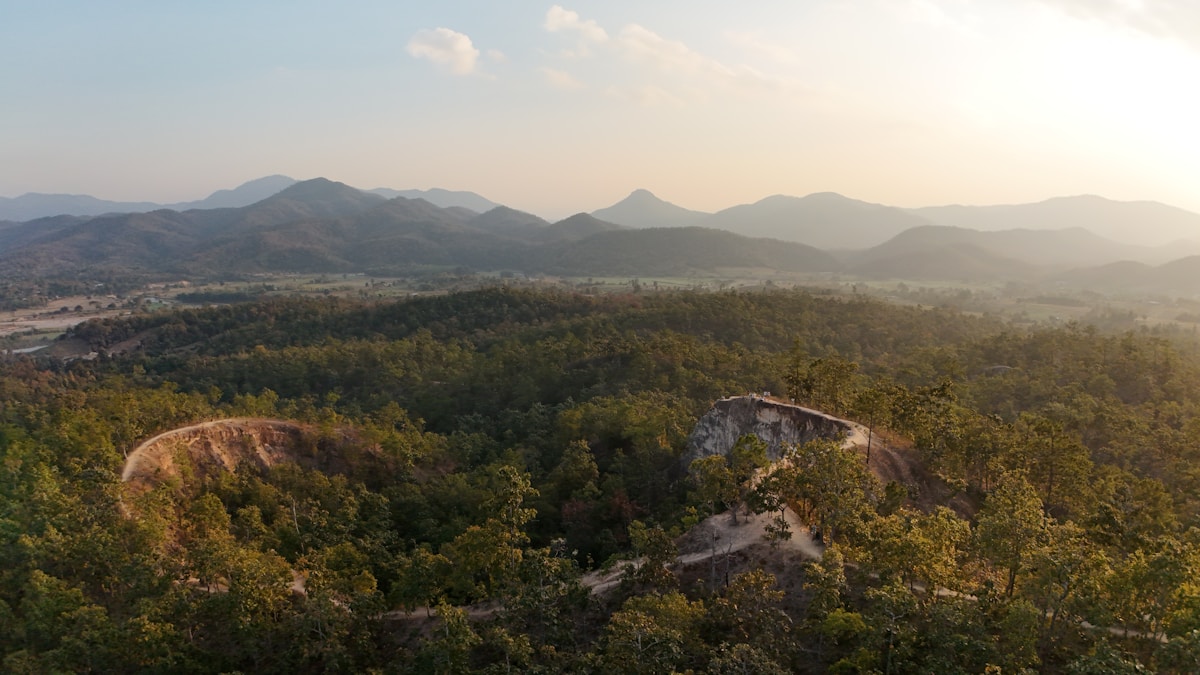
Chiang Mai and Pai are northern Thailand’s two most-visited destinations - linked by a legendary mountain road with exactly 762 curves. They are different in almost every way. Chiang Mai is a city of 200,000 with centuries of temple history, a modern café scene, and Southeast Asia’s best cooking class infrastructure. Pai is a small town of 3,000 people in a mountain valley, surrounded by rice fields and hot springs, best known for being relaxed to the point of horizontal.
Both are excellent. The question is what kind of northern Thailand experience you are after.
Quick Verdict
| Category | Chiang Mai | Pai |
|---|---|---|
| Temples | Winner - 300+ temples, Doi Suthep | A handful, no major sites |
| Food | Winner - best northern cuisine, cooking classes | Good café scene, basic restaurants |
| Nightlife | Modest - walking streets, some bars | Very quiet |
| Nature access | Good - Doi Inthanon day trip | Winner - rice fields, hot springs, canyon |
| Digital nomads | Winner - best infrastructure in Asia | Growing but limited |
| Costs | Low | Very low |
| Pace | Relaxed city | Very relaxed town |
| Day trips | Doi Inthanon, elephant sanctuaries | Waterfalls, canyon, hot springs |
Planning your trip? Browse Chiang Mai tours → · Browse Pai tours →
Costs
Chiang Mai is one of Southeast Asia’s best-value cities for any length of stay. A guesthouse in the Old City or Nimman area costs THB 350–700 per night. A quality boutique hotel runs THB 800–1,500. Street food - khao soi, pad see ew, mango sticky rice - keeps daily food costs under THB 300. Monthly apartment rentals run THB 5,000–10,000, which explains the city’s enormous digital nomad population.
Pai is even cheaper. A guesthouse bungalow runs THB 300–600 per night. Riverside or hillside resorts step up to THB 1,000–2,000. Food is cheap - a full pad thai at local restaurants is THB 70–90, a fresh juice is THB 50–70. Scooter rental (THB 150–200/day) is the main transport cost. Daily budget in Pai typically lands at THB 700–1,100 - lower than almost anywhere else in Thailand.
Temples and Culture
Chiang Mai has over 300 temples within a relatively compact area - an extraordinary concentration of Buddhist architecture, many dating from the 14th to 18th centuries. Wat Phra Singh (entry THB 50, open 6:00–17:00) is the most revered, housing the Phra Singh Buddha image and an excellent monk chat programme on Sunday mornings. Wat Chedi Luang has a ruined but massive 14th-century chedi that anchors the Old City visually. Doi Suthep (16 km from the city, tuk-tuk THB 40–60, entry THB 50) is the mountain temple visible from the city - 306 steps, city views, genuine pilgrimage atmosphere.
Pai has temples but no major religious sites. Wat Phra That Mae Yen on a hill east of town (free, 395 steps) gives views over the valley and is worth the climb. The town’s cultural interest lies less in formal sights and more in its natural surroundings and the lingering bohemian traveller culture that has existed since the 1990s. The Pai walking street on Friday and Saturday evenings has good street food, local crafts, and live music.
Food
Chiang Mai is the home of northern Thai cuisine. Khao soi - a rich coconut curry noodle soup with crispy noodles - is the defining dish, served best at Khao Soi Khun Yai on Chiang Mai Lamphun Road (THB 60–80) or Khao Soi Lung Prakit Kad Kom. The Sunday Walking Street on Wualai Road has arguably the best street food concentration in northern Thailand. Cooking classes are a Chiang Mai staple - A Lot of Thai, Spicy Thai Cookery, and Maya Kitchen all run half-day classes (THB 900–1,200 including market visit). The café scene in Nimman is among Thailand’s strongest outside Bangkok.
Pai has a good café culture for its size - wooden riverside cafés serving filter coffee and açaí bowls are the staple. The night market (daily, 5pm–10pm) serves reasonable Thai and Western food at very low prices. Most restaurants are small family operations rather than culinary destinations. Amido at the south end of the walking street is consistently good for northern Thai food. Pai is not a food destination in the way Chiang Mai is - but it eats well for the price.
Nature and Outdoor Activities
Chiang Mai has day-trip access to excellent nature. Doi Inthanon National Park (Thailand’s highest mountain, 2,565 metres) is 90 km from the city - twin waterfalls, royal pagodas, birding trails, and the summit cloud forest (entry THB 300). Elephant encounters are a major Chiang Mai draw - Elephant Nature Park (THB 2,500–3,500/day) is the most ethically rigorous sanctuary in Thailand. Chiang Dao Cave and Sticky Waterfall (Nam Phu Chet Si) are closer and excellent half-day trips.
Pai sits in a mountain valley and nature is immediately accessible. Pai Canyon (Chong Lom) is a 2 km walking track along narrow red earth ridges above a steep-sided canyon - best at sunset, free, 5 km south of town. Mo Paeng Waterfall is a 20-minute scooter ride away - a wide cascade into a swimming pool (free). The Pai Hot Springs are 8 km southeast - natural thermal pools in a national park setting (entry THB 200, open 7:00–18:00). Land Split, a fissure in the earth created by a 2008 earthquake, is unusual and free.
Accommodation
Chiang Mai: Tamarind Village (THB 3,000–4,500 per night) is a beautiful garden hotel just inside the Old City walls - wooden architecture, serious spa, quiet courtyard pool. Rachamankha (THB 4,000–6,500) is the most acclaimed small hotel in the north, built around a courtyard library with museum-quality Burmese artefacts. Budget: Bodega Chiang Mai (dorm THB 500–700, private THB 900–1,200) is well-run and social.
Pai: Zenstay Pai (THB 1,200–2,000) has stilted wooden rooms above rice fields and is the most atmospheric mid-range option. Belle Villa Resort (THB 1,500–2,500) is on the river with good access to the main street. Budget bungalows (THB 300–500) are scattered through the rice fields south of town - Breeze of Pai and Sun Hut are long-running options with character.
Digital Nomads
Chiang Mai is routinely ranked among Asia’s top three digital nomad bases. CAMP coworking space in the Maya Shopping Centre was the original hub (free WiFi with any drink purchase). MANA at Nimman (THB 150–200/day desk) and CAMP Maya are the most active current spaces. Fast fibre internet is standard at most guesthouses and cafés. The combination of low cost, good food, excellent café culture, and visa-run access to the Myanmar border makes long stays genuinely viable.
Pai has cafés with WiFi but no dedicated coworking infrastructure. Internet speeds outside accommodation are inconsistent. Travellers staying for a week of disconnected relaxation will be fine; anyone needing reliable high-speed internet for work should choose Chiang Mai.
When to Visit
Both share a northern Thailand weather pattern. November to February is the cool season - Chiang Mai drops to 12–15°C at night, Pai to 8–12°C. This is when the region is at its best. March to May is burning season - smoke from agricultural fires can be severe in both locations, though Pai’s enclosed valley can trap smoke worse than Chiang Mai. The wet season (June–September) is green, quiet, and cooler, with occasional flooding of low-lying roads near Pai.
Verdict
Choose Chiang Mai if you want temples, cooking classes, elephant sanctuaries, digital nomad infrastructure, a broader food scene, and a city with genuine cultural weight.
Choose Pai if you want mountain scenery, a small-town slow pace, natural springs and waterfalls, and a retreat from city energy.
The most natural itinerary is both - Chiang Mai first (3–4 nights to orient in northern Thailand), then minivan to Pai (2–3 nights), then minivan back. Total northern Thailand experience: one week, two genuinely different atmospheres, one spectacular mountain road in between.
See our full Chiang Mai city guide and Pai city guide for detailed recommendations. Browse Chiang Mai tours and experiences - including elephant sanctuaries, temple tours, and cooking classes - or browse Pai tours for trekking, hot springs, and day trips from the valley.
Plan Your Trip
The natural itinerary is Chiang Mai first, Pai second — our one week in northern Thailand itinerary structures exactly this route, including Chiang Rai as a third stop. If you are driving rather than taking the minivan, the renting a car in northern Thailand guide explains picking up in Chiang Mai for the mountain loop. The Bangkok vs Chiang Mai comparison is worth reading if you are still deciding where to anchor your north Thailand base.
Book Your Trip
- Flights - Find the best fares to Thailand
- Travel Insurance - Get covered before you go
- eSIM - Stay connected from landing
- Car Rental - Compare prices across providers
See also: Chiang Mai city guide · Pai city guide · One week North Thailand itinerary