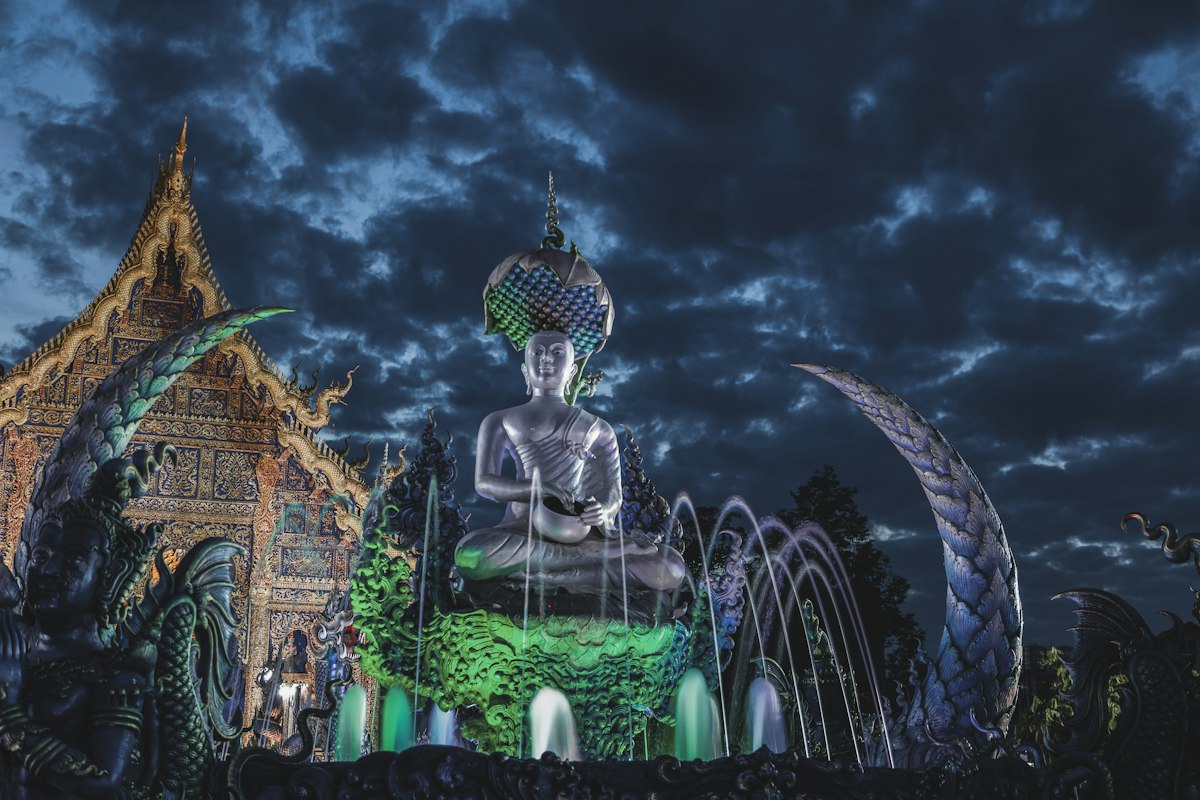
Chiang Mai and Chiang Rai are northern Thailand’s two major cities, separated by about 180 km and connected by a 3-hour drive through mountain scenery. They are often paired in a single northern Thailand trip — and that is the right call, because they offer genuinely different things. Chiang Mai is Thailand’s cultural capital of the north: a large city with a historic walled old town, a thriving digital nomad scene, excellent food, and more activities than most people can cover in a week. Chiang Rai is smaller, quieter, and built its reputation on a handful of extraordinary temples — particularly the White Temple — that draw visitors from across Asia.
Quick Verdict
| Category | Chiang Mai | Chiang Rai |
|---|---|---|
| Cultural depth | Winner — walled old town, 300+ temples | Strong — unique contemporary temples |
| Food scene | Winner — excellent variety | Limited but growing |
| Nightlife | Winner — Night Bazaar, Nimman bars | Quiet |
| Activities | Winner — elephant sanctuaries, cooking classes | Golden Triangle, hill tribe treks |
| Costs | Similar | Slightly cheaper |
| Crowds | Busier | Winner — noticeably fewer tourists |
| Getting there | Winner — Chiang Mai Airport (major hub) | Small airport, mostly Bangkok routes |
| Day trip potential | Base for Chiang Rai | Often visited as a day trip from Chiang Mai |
Planning your trip? Browse Chiang Mai tours → · Browse Chiang Rai tours →
The Temples
Chiang Mai has more than 300 temples, most of them centuries-old Lanna-style architecture. Doi Suthep (Wat Phra That Doi Suthep), perched 1,073 metres above the city on a mountain reachable by songthaew (THB 40–60 per person, 40 minutes), is the most impressive — the views over the valley are exceptional and the temple complex itself is one of Thailand’s finest. Within the old city, Wat Chedi Luang (free), Wat Phra Singh (THB 20), and Wat Chiang Man are all worthwhile. The sheer density of historic temples in Chiang Mai’s old city puts it in a different category from any other Thai city outside Ayutthaya.
Chiang Rai’s temples are contemporary rather than ancient, but two of them are genuinely extraordinary. Wat Rong Khun (White Temple) — an all-white ornate temple studded with mirrored glass — was designed by artist Chalermchai Kositpipat and is still under construction. Entry is THB 100. It draws more visitors per day than most attractions in Chiang Mai, and justifiably so. Wat Rong Suea Ten (Blue Temple) is equally striking: its deep blue and gold interior with a luminous white Buddha is one of northern Thailand’s most photographed interiors. Entry is free. The Black House (Baan Dam Museum) — a compound of dark wooden structures filled with animal bones and folk art — is confronting and memorable.
Food
Chiang Mai has one of Thailand’s best restaurant scenes outside Bangkok. Khao soi — a northern Thai curry noodle soup with crispy noodles on top — is the city’s signature dish, and multiple spots compete for the best version (Khao Soi Khun Yai near Nimman, Khao Soi Lam Duan in the old city). The Saturday Walking Street on Wualai Road and the Sunday Walking Street on Thanon Wualai have excellent food stalls. Nimmanhaemin Road has coffee shops, brunch spots, and international restaurants that rival Bangkok’s more upmarket neighbourhoods.
Chiang Rai’s food scene is a fraction of Chiang Mai’s but has its own character. The Night Bazaar near the Clock Tower has a wide food court with northern Thai dishes at low prices. Lung Eed Khao Tom Mue restaurant near the bus terminal is legendary among locals for its khao tom (rice soup). Fresh-pressed coffee from local Akha hill tribe coffee grown in the mountains surrounding the city is worth seeking out — Doi Chaang and Wawee Coffee are the two main local brands with cafés in Chiang Rai town.
Activities
Chiang Mai has Thailand’s most developed ethical elephant tourism infrastructure. Elephant Nature Park (founded by Lek Chailert) offers half-day visits from approximately THB 2,500 and is the gold standard for no-riding, no-tricks elephant encounters. Elephant Jungle Sanctuary runs similar programmes at THB 2,000–2,500. Beyond elephants, Thai cooking classes are excellent and numerous — Mama Noi’s and Asia Scenic are consistently recommended — costing THB 1,000–1,800 including market visits. Doi Inthanon National Park, Thailand’s highest mountain at 2,565 metres, is a popular day trip (THB 2,500–3,500 as a guided tour from Chiang Mai).
Chiang Rai’s activities centre on the Golden Triangle — the area where Thailand, Laos, and Myanmar converge at the Mekong and Ruak rivers — and mountain village treks. The Golden Triangle viewpoint is about 90 minutes from Chiang Rai town (THB 800–1,200 by songthaew or tuk-tuk). Mae Salong, a hill village settled by former Chinese Nationalist troops that now produces excellent oolong tea, is 3 hours from Chiang Rai and worth a night’s stay if you have time. Trekking to Akha, Lahu, and Karen hill tribe villages operates from Chiang Rai town (1–3 day guided treks from THB 1,500–4,000).
Costs
Both cities are affordable. Chiang Mai has a wider range of price points — from THB 300 guesthouses in the old city to THB 8,000 boutique hotels in Nimman. A mid-range hotel in the old city runs THB 1,200–2,500. Daily food spend in restaurants is THB 200–500 for two solid meals. Overall daily budget: THB 1,000–1,800 for comfortable independent travel.
Chiang Rai is marginally cheaper — there is less tourism pressure, fewer premium restaurants, and less competition for visitors’ spending. Guesthouses in the centre start from THB 400–600. A good mid-range guesthouse runs THB 900–1,800. Food is similarly priced to Chiang Mai but the restaurant selection is much smaller.
Getting There
Chiang Mai Airport (CNX) is northern Thailand’s main hub with frequent connections from Bangkok (1 hour, from THB 700 with AirAsia, Nok Air, Thai Airways), plus direct regional routes to Singapore, Kuala Lumpur, and Kunming. Buses and sleeper trains run from Bangkok (11–13 hours, from THB 200 by bus, THB 280 by second-class sleeper train).
Chiang Rai Airport (CEI) has a smaller network — mostly Bangkok routes (1 hour 20 minutes, from THB 800) with some seasonal regional flights. Most visitors arrive by bus or minivan from Chiang Mai (THB 130–200, 3 hours). The sleeper bus from Bangkok’s Mo Chit terminal arrives in Chiang Rai in approximately 11–12 hours.
Verdict
Choose Chiang Mai if you want a proper northern Thailand base: depth of culture, a functioning city with great food, easy access to elephant sanctuaries and day trips, and flexibility for a longer stay.
Choose Chiang Rai if your main goal is the White Temple and Blue Temple, the Golden Triangle, or mountain trekking — and you either have time to base yourself there for 2–3 nights or want to do a day trip from Chiang Mai.
The logical itinerary is Chiang Mai first (3–5 nights) followed by a day trip or overnight to Chiang Rai. Most travellers find this sequence more satisfying than visiting Chiang Rai independently.
For full destination detail, see our Chiang Mai city guide and Chiang Rai city guide. Browse Chiang Mai tours including elephant sanctuaries and Doi Inthanon day trips or browse Chiang Rai tours including the White Temple and Golden Triangle.
Plan Your Trip
Our one week north Thailand itinerary covers Chiang Mai, Chiang Rai, and Pai in a logical 7-day circuit. For the Bangkok comparison, see Bangkok vs Chiang Mai. For the slower-paced northern alternative, read Chiang Mai vs Pai.
Book Your Trip
- Flights - Find the best fares to Thailand
- Travel Insurance - Get covered before you go
- eSIM - Stay connected from landing
- Car Rental - Compare prices across providers
See also: Chiang Mai city guide · Chiang Rai city guide · One week north Thailand itinerary · Bangkok vs Chiang Mai · Chiang Mai vs Pai