Chiang Rai Travel Guide: White Temple & Golden Triangle
Chiang Rai travel guide: Wat Rong Khun (White Temple), the Blue Temple, the Golden Triangle, and the best base for Thailand's far north.
Guides for Chiang Rai
Chiang Rai at a glance
Chiang Rai is Thailand’s northernmost major city, sitting in a valley 170km north of Chiang Mai. It’s smaller, quieter, and less developed than Chiang Mai - which is either a drawback or a selling point depending on what you’re after. The city has a strong creative community and a few genuinely excellent attractions, most prominently Wat Rong Khun (the White Temple), which is one of the most distinctive modern temples anywhere in Southeast Asia.
The region borders Myanmar and Laos, which makes Chiang Rai the gateway to the Golden Triangle - the area where the three countries meet at the confluence of the Mekong and Ruak rivers.
What to see
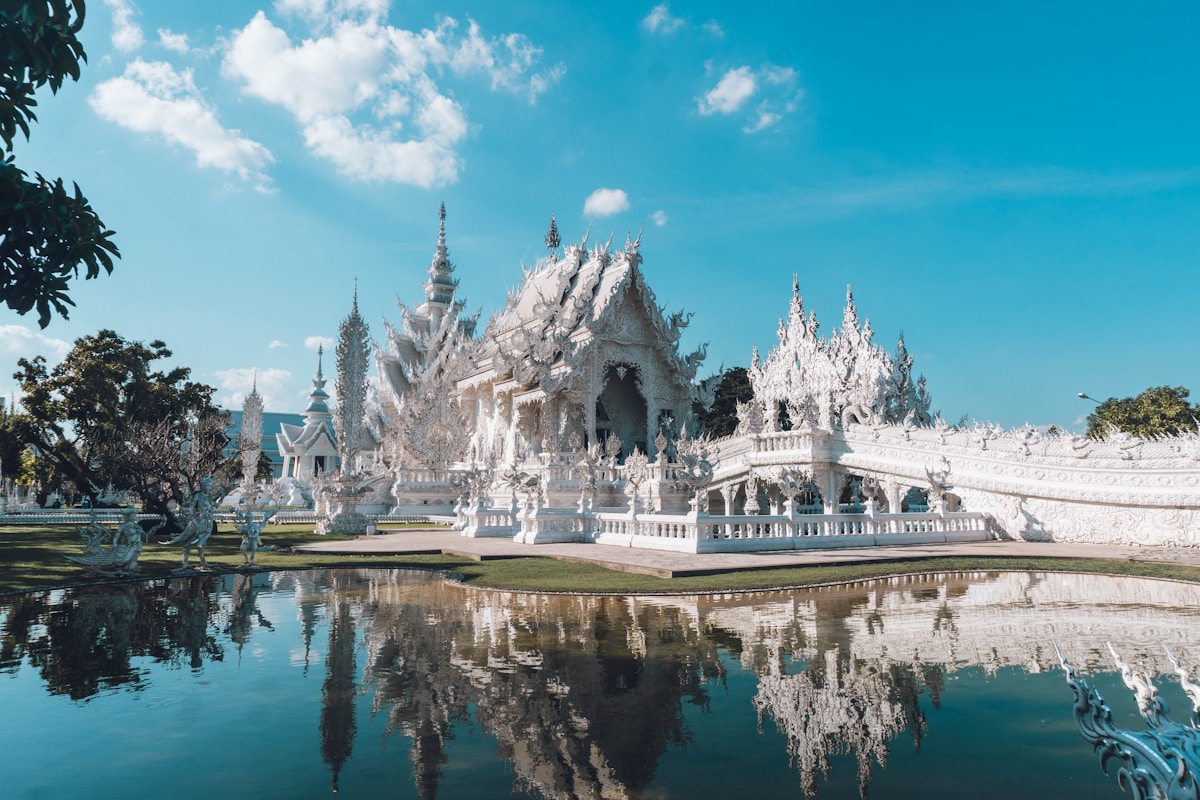
Wat Rong Khun (White Temple) - 13km south of the city. A privately-owned contemporary Buddhist temple by artist Chalermchai Kositpipat, begun in 1997 and still under construction. The all-white exterior inlaid with mirror glass is visually unlike anything else in Thailand. The approach bridge over a sea of reaching hands is the most-photographed element. Arrive early - it fills with coach tours by mid-morning. Entrance is free for Thai nationals and approximately ฿100 for foreign visitors as of 2026. Open daily 8am–5pm (extended to 5:30pm on weekends).
Wat Rong Suea Ten (Blue Temple) - In the city centre, about 2km from the clock tower. Completed in 2016, this temple features intense blue interiors with gold and white detailing. The main hall houses a large white Buddha statue. Free entrance, open daily 7am–8pm. Less crowded than the White Temple and particularly photogenic in late afternoon light.
Baan Dam (Black House/Museum) - The life’s work of artist Thawan Duchanee - a compound of around 40 dark wooden structures housing collections of animal bones, pelts, and art. The aesthetic is deliberately unsettling and highly original. About 4km north of the centre. Entrance approximately ฿80 as of 2026. Open daily 9am–5pm.
Wat Huay Pla Kang - A large white Guan Yin figure (the tallest in Chiang Rai at 69 metres) and nine-story pagoda about 8km north of the city. Less visited than the White Temple, but the views from the upper levels are better. Free entrance, though a small donation is customary. Open daily 7am–9pm.
Chiang Rai Night Bazaar and Saturday Night Market - The Saturday Walking Street (Thanon Thanalai) is the best market - local food, handicrafts, and live music. Less crowded and more local in feel than Chiang Mai’s equivalent. The nightly bazaar near the bus station runs every evening and has a covered food court with Isan, northern Thai, and Yunnanese dishes from approximately ฿40–80 per plate.
Chiang Rai Clock Tower - In the centre of town. Designed by Chalermchai Kositpipat (the White Temple architect), the golden clock tower puts on a light and sound show nightly at 7pm, 8pm, and 9pm. Worth catching if you’re staying in the centre - it’s free and takes about 5 minutes.
Golden Triangle - About 65km north of Chiang Rai. The point where Thailand, Myanmar, and Laos meet at the Mekong River. The viewing area is heavily commercialised. The nearby Hall of Opium museum (at Doi Tung) provides genuine historical context on the region’s opium trade. Entrance approximately ฿200. Allow 2 hours for the museum.
Singha Park - 8km south of the city. A large agricultural estate with tea plantations, flower fields, and a zipline course. Cycling is the best way to explore - bike hire approximately ฿50. Entry to the park is free; activities are priced separately. The on-site Bhu Bhirom restaurant serves Thai fusion food with plantation views - mains from approximately ฿180.
See our full Chiang Rai accommodation guide for hotel picks across every budget.
Where to eat
Phu Lae Restaurant - Northern Thai and Lanna cuisine near the Night Bazaar. Known for khao soi (Chiang Rai style, slightly different from Chiang Mai’s version) and sai oua (northern sausage). Mains from approximately ฿80–150.
Chivit Thamma Da Coffee House - A riverside café set in a colonial-era building with gardens. Popular for coffee, cakes, and Western breakfasts. Coffee from approximately ฿80, meals ฿120–200.
Lung Eed - A local favourite for larb mueang (northern-style minced pork salad) and grilled meats. Simple setting, strong flavours. Mains from approximately ฿60–100.
Night Bazaar food court - The most efficient way to sample multiple northern dishes in one sitting. Plates from ฿40–80. Look for the grilled pork neck stalls (kor moo yang) and the Yunnanese noodle vendors.
Practical information
Getting there - Bus from Chiang Mai Arcade Bus Terminal: 3 hours, approximately ฿140–290 depending on class. Minivan: slightly faster, approximately ฿200. Chiang Rai Airport (CEI) has direct flights from Bangkok Don Mueang with AirAsia and Nok Air - flight time 1 hour 20 minutes, fares from approximately ฿800–2,000 one way.
Getting around - Songthaews run the main routes within the city for ฿20–30. Rent a scooter for the outer attractions (White Temple, Black House, Huay Pla Kang) - approximately ฿200–300 per day from shops near the bus station. Most outer sites can be covered in a single day by rented vehicle. Grab operates in Chiang Rai but with fewer drivers than in Chiang Mai.
How long to stay - One full day covers the White Temple, Blue Temple, and Black House. Two days allows the Golden Triangle, Singha Park, and the Saturday market. Three days opens up a Doi Tung excursion or a Mekong river trip into Laos. To cover the key sites efficiently - or to add an experience like a tea plantation visit or hill tribe village trek - browse guided tours and day trips in Chiang Rai.
Best time to visit - November to February is cool and dry (highs around 28–30°C, nights can drop to 12–15°C in December). March–April is hot and hazy due to crop burning. June–October is the rainy season, though mornings are often clear.
Book your Chiang Rai trip: Hotels in Chiang Rai · eSIM for Thailand
See also: Things to do in Chiang Rai · Best cafes to work in Chiang Rai · Chiang Mai travel guide · One week in northern Thailand · Bangkok vs Chiang Mai · Getting around Thailand · Best tours in Thailand
Upcoming Events in Chiang Rai
- Wonderfruit Festival
Wonderfruit 2026: 17-21 December near Pattaya. Arts, music, and sustainability festival with international artists, food markets, and wellness activities.
Book an experience
Top experiences in Chiang Rai
Explore the best tours and activities in Chiang Rai , with instant confirmation and free cancellation on most bookings.