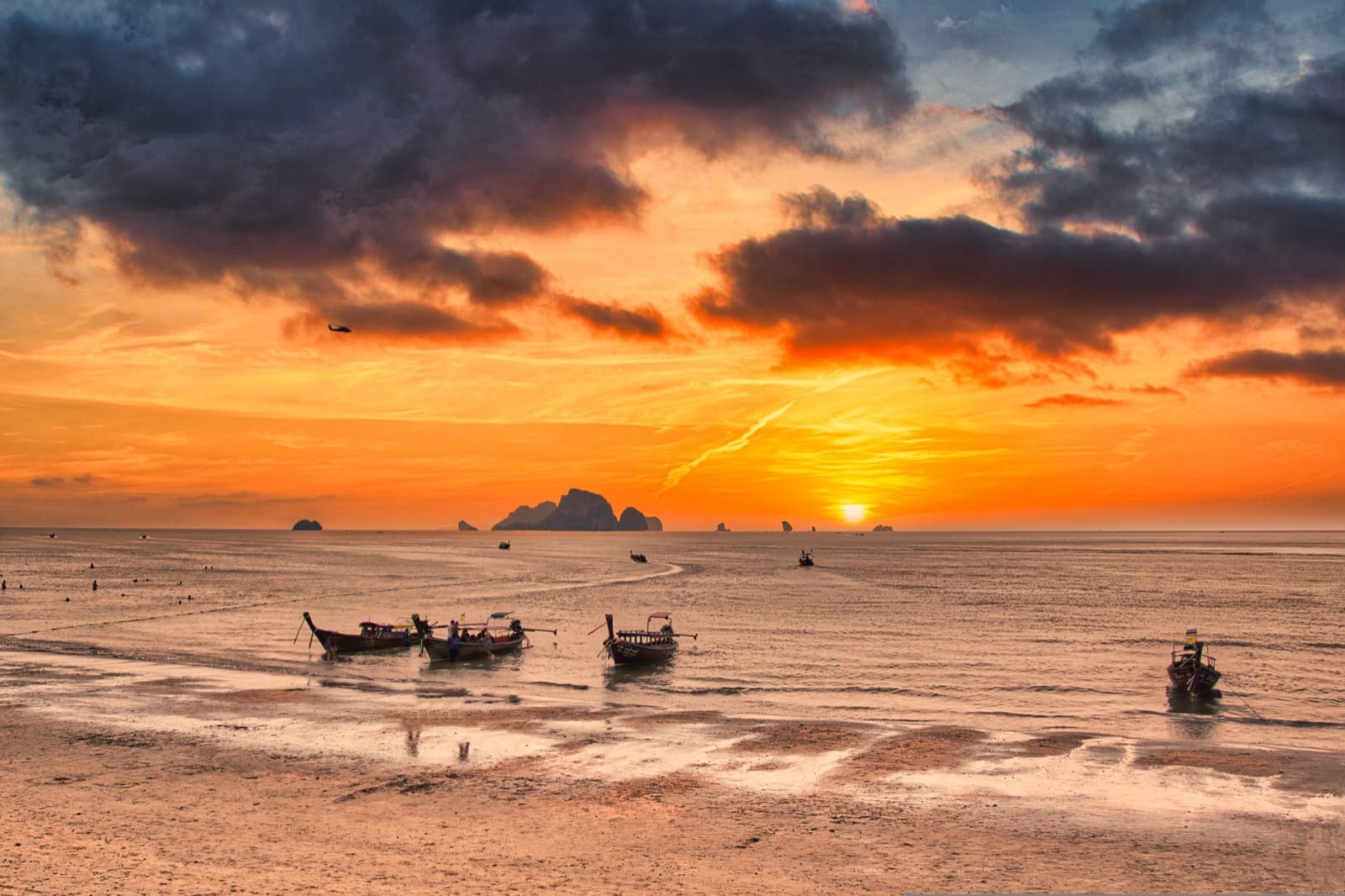
January is Krabi at full capacity - the Andaman dry season is established, every boat route is running, and the limestone karsts that define the area stand against clear blue skies. The main practical difference from December is pricing: the Christmas and New Year surcharge disappears after January 5 or so, making January a significantly better value proposition for what are essentially identical conditions.
Andaman Dry Season in Full Effect
January sits squarely in the middle of Krabi’s finest weather window. The southwest monsoon retreated in October, the remaining November swells have long settled, and the Andaman coast exhibits its most reliable conditions.
Air temperature averages 31–33°C from mid-morning through afternoon. Northeast trade winds provide a consistent breeze that moderates the heat - Krabi in January rarely feels oppressive in the way March or April can. Nights cool to 25–27°C and are pleasant.
Rainfall in January averages 30–60mm - roughly 10–20% of the October average. The occasional brief afternoon shower is possible but doesn’t affect itineraries meaningfully. Consistent morning sunshine through midday is the norm.
Sea conditions are excellent. Andaman swells in January average 0.3–0.5m on west-facing beaches. Long-tail boat services from Ao Nang to Railay run throughout the day regardless of conditions. Larger passenger ferries to Koh Phi Phi and Koh Lanta operate on full schedules.
Railay Beach: Accessible and at Its Best
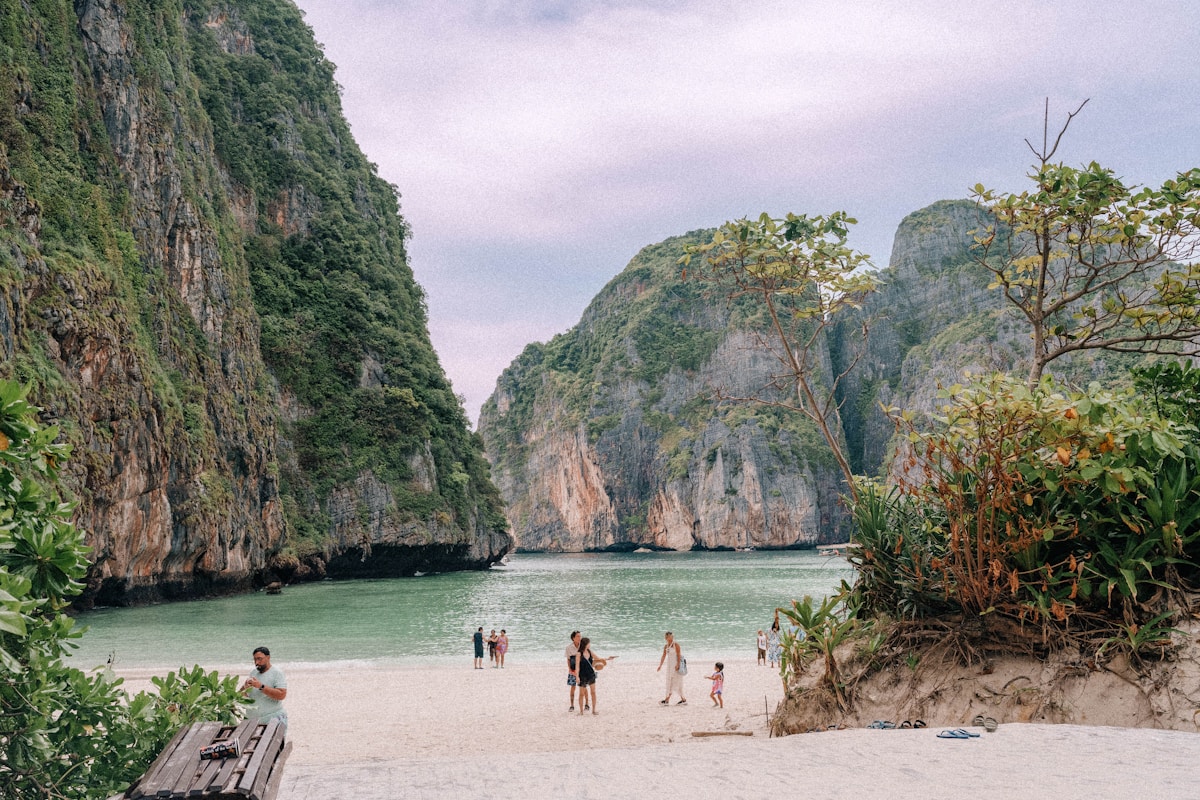 Limestone cliffs and turquoise water, Krabi.
Railay Beach - the mainland peninsula accessible only by boat due to the surrounding limestone cliffs - is one of Thailand’s finest settings in any month. In January, it operates at its best: clear water at Railay West Beach, calm conditions for kayaking through the sea caves, and the rock climbing walls dry and grippy.
Long-tail boats from Ao Nang Beach (15 minutes, THB 120–200 per person depending on time) and Krabi Town Passenger Pier (45 minutes, THB 150) run continuously from approximately 07:00 until 19:00 in January. Private long-tail charters are available for around THB 1,500–2,000 per boat.
Railay East Beach (mangrove side) serves as the departure and arrival point for the long-tails and has the main concentration of accommodation and restaurants. Railay West Beach is the beach side - white sand, clear water, and views of the karst formations to the north. The two are a 5-minute walk apart across the peninsula.
Phra Nang Beach at the southern tip of the peninsula requires a 15-minute walk or short long-tail from Railay. The cave shrine, rock formations, and water colour make it arguably the finest stretch of beach in all of Krabi. Arrive before 10:00 to get ahead of the day-trip boats.
Four Islands Tour and Phi Phi Day Trips
 Aerial view of Ao Nang coastline, Krabi.
The standard Four Islands tour (Koh Mor, Chicken Island, Tup Island, and Koh Poda) is a Krabi staple - a half-day snorkelling trip running from Ao Nang and Krabi Town daily. January conditions give the best snorkelling visibility of the season. The trip costs approximately THB 1,200–1,500 per person including a basic lunch.
Koh Phi Phi is a 1.5-hour ferry from Krabi Town or a 45-minute speedboat from Ao Nang. The January conditions are ideal for the trip - calm seas throughout. Day trip speedboats departing from Ao Nang at 08:30 return by 17:00 and include snorkelling stops at Maya Bay (entry THB 500), Viking Cave, and Monkey Beach. Overnight stays on Koh Phi Phi Don allow more exploration time and the chance to see the bay outside day-trip hours.
Rock Climbing: January’s Ideal Conditions
Krabi is one of Southeast Asia’s premier rock climbing destinations with over 700 bolted routes across Railay, Tonsai, and several offshore towers. January’s dry conditions - lower humidity, dry holds, clear visibility - represent the prime climbing season.
Beginner routes at the base of the Railay East cliffs are accessible to complete novices with a half-day introduction course (from THB 1,800 including shoes, harness, and instructor). Intermediate routes on the main Railay faces range from 6a to 7c; advanced routes on the southern towers and offshore formations reach 8b+.
Established operators with consistent safety records include King Climbers and Wee’s Rock Climbing. January books up for multi-day courses, so contact operators at least 3–5 days ahead.
Where to Stay in Krabi in January
| Tier | Property | Area | From (per night, 2026) |
|---|---|---|---|
| Budget | Greenery Guesthouse | Ao Nang | THB 700 / USD 20 |
| Mid-range | Deevana Plaza Krabi | Ao Nang | THB 3,000 / USD 87 |
| Upscale | Rayavadee Resort | Railay Beach | THB 22,000 / USD 637 |
| Luxury | Phulay Bay Ritz-Carlton Reserve | Klong Muang | THB 38,000 / USD 1,101 |
Browse hotels in Krabi on Booking.com
For more options, see our full Krabi hotel guide, or fold January into one of our Thailand itineraries.
Ao Nang is the best base for access to boat departures, restaurants, and day trips. Railay Beach is more atmospheric but costs more and requires a boat to leave. Krabi Town itself is quieter and better value - good for budget travellers and those wanting a less touristy experience, with frequent songthaews to Ao Nang (THB 50).
Book upscale properties 4–6 weeks ahead for January. Mid-range options 2–3 weeks ahead is generally sufficient outside the first week of January (post-New Year period).
See also: Krabi travel guide