Top Railay & Krabi Tours at a Glance
| Tour | Duration | Price (from) | Group Size | Highlights |
|---|---|---|---|---|
| Railay Beach Full-Day Boat Tour with Snorkelling | Full day | from ฿900 | Group | Railay East & West, Phranang Cave, 4 Islands |
| Railay & Tonsai Beach Private Longtail Excursion | Half day | from ฿1,200 | Private | Private boat, flexible timing, all 3 Railay beaches |
| Krabi 4 Islands Day Trip including Railay | Full day | from ฿800 | Group | Railay, Chicken Island, Tub Island, snorkelling |
| Rock Climbing & Railay Half-Day Tour | 4 hrs | from ฿1,200 | Small group | Beginner climbing, Railay limestone walls, guide |
Browse all Krabi tours → GetYourGuide
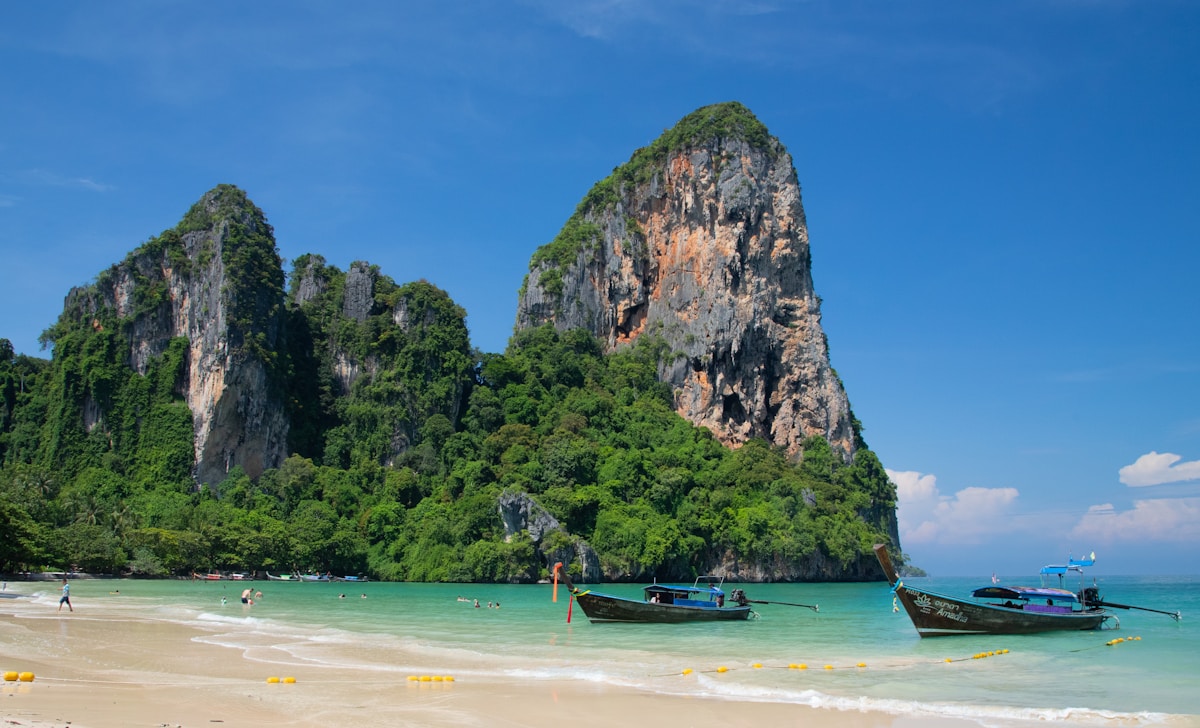
Railay is a small headland 3km south of Ao Nang, separated from the mainland by limestone cliffs too steep for any road. The only way in is by longtail boat, and the only way to get anywhere once you’re there is on foot. That combination - dramatic karst scenery, no traffic, four distinct beaches within a 20-minute walk of each other - makes Railay one of the most compelling destinations along the Andaman coast.
The peninsula is compact enough to see everything in a day trip from Ao Nang or Krabi Town, but the concentration of good guesthouses and restaurants means multi-night stays are easy to justify.
Getting to Railay Beach
There are no roads to Railay. The only access is by longtail boat from three departure points:
From Ao Nang Beach: The standard route. Longtails leave from the western end of Ao Nang Beach throughout the day - roughly every 15–30 minutes when the beach is busy. THB 100–150 per person, 15 minutes. This is a shared boat service; boats leave when they have enough passengers (usually 8–10). Last public boat back from Railay is around 6pm.
From Krabi Town (Chao Fah Pier): A longer crossing of approximately 45 minutes by longtail. THB 150 per person one-way. Scheduled departures depend on the season and passenger numbers - mornings are more reliable. A good option if you’re combining Railay with a morning in Krabi Town.
Private charter: After 6pm, or if you want to travel without waiting, a chartered longtail from Ao Nang costs THB 500–800 per boat (fits 10–12 people). Useful for groups or late arrivals.
Arrival: Boats land at Railay West Beach. From there, all other beaches are reachable on foot in under 20 minutes.
The Four Beaches
Railay West
The main arrival point. A long arc of sand facing west, which means outstanding sunsets. The beach is wide, calm, and swimmable most of the year. The northern section has the highest concentration of guesthouses and restaurants - it can feel crowded at midday, especially November to February. The southern stretch is quieter.
Phra Nang Cave Beach
The most dramatic beach on the peninsula. Walk south from Railay West along a path through the jungle (10 minutes), or take the longer route around the eastern side. The beach itself is a narrow bay enclosed by sheer karst walls - the rock towers overhead on three sides. At the southern end, a large cave contains the Phra Nang Shrine, a Hindu fertility shrine hung with carved wooden offerings. The beach gets busy between 10am and 3pm when day-trip longtails arrive from Ao Nang. Visit early morning or late afternoon for fewer crowds.
Entry to the Phra Nang area is free, but the beach is technically within the Noppharat Thara–Mu Ko Phi Phi National Park. There have been discussions about enforcing a THB 200–400 entry fee - verify current status locally as of 2026.
Railay East
The eastern side faces mangrove and a tidal mudflat - not swimmable. This is where cheaper guesthouses cluster, and it’s where you’ll find most of the climbing shops and tour operators. The path between Railay East and Railay West takes about 5 minutes. At high tide, the eastern shoreline floods to knee depth.
Ton Sai Beach
A 15–20 minute walk north of Railay West, past boulders and through a short forest section (ropes assist at a few points). Ton Sai has a rougher, more low-key atmosphere - favoured by climbers and backpackers. The beach itself is narrow and rocky at low tide. Restaurants and bungalow operations here are basic but prices are lower than Railay West. The climbing scene is most concentrated on Ton Sai.
Rock Climbing
Railay and the adjacent Ton Sai wall have approximately 700 bolted routes across all grades. The limestone is orange-yellow and overhanging in character - this is sport climbing, not trad. Routes are mostly single-pitch, 15–25 metres.
Beginners: Most climbing shops on Railay offer half-day (฿1,200–1,500) and full-day (฿1,800–2,200) guided courses. These cover harness fitting, basic movement, footwork, and a sequence of progressively harder routes. No prior experience needed. Operators include Hot Rock Climbing (Railay East) and King Climbers (Railay East). Both have good reputations - expect a maximum of 4–6 people per instructor.
Intermediate/experienced: Rent gear from any climbing shop (shoes THB 150/day, harness THB 100/day, full rack not generally available for hire). The Thaiwand Wall on the Railay East side has the longest routes - some multi-pitch lines reaching 100+ metres. Diamond Cave and the Muay Thai Wall are popular sectors.
Climbing season: November–March is optimal. The rock dries fast after rain, but high humidity from April–October makes friction worse and the heat harder to manage on exposed faces. The Ton Sai sector has some shaded routes usable year-round.
See our Krabi rock climbing guide for a full breakdown of sectors and operator reviews.
Other Activities
Kayaking: A few operators on Railay West rent single kayaks (THB 300–400 per hour) for self-guided paddling around the headland. The circumnavigation of the peninsula takes 2–3 hours depending on conditions. Not recommended in rough Andaman swells.
The Railay Viewpoint: A 45-minute scramble from Railay East up a steep karst trail - ropes assist at the technical sections. The view from the top over both bays and the limestone towers is the best free activity on the peninsula. Start early; the trail is exposed and hot by 10am.
Snorkelling: The water around Railay is clear but the reef is patchy. Better snorkelling is on the Four Islands tour departing from the Railay beach area - included in most island-hopping packages.
Where to Stay on Railay
Railay has no budget hostels - the isolation and boat logistics put a floor on prices. Expect to pay more than equivalent accommodation in Ao Nang. That said, mid-range bungalow operations are genuinely good value for what you get.
Budget (THB 900–1,800/night): Railay Garden View Resort (Railay East) offers fan bungalows from approximately THB 900 as of 2026 - basic but clean, with a small pool. Dream Valley Resort (Railay East) has air-con bungalows starting around THB 1,200. Both are on the quieter east side.
Mid-range (THB 2,000–4,500/night): Railay Beach Club (Railay West) has beach-facing villas and garden rooms from approximately THB 2,800 as of 2026. The position directly on Railay West is the main draw. Bhu Nga Thara Hotel (Railay West) is reliable mid-range with a pool and good breakfast, from approximately THB 3,200.
Splurge (THB 5,000+/night): Rayavadee Resort is the standout property - circular pavilion rooms set in gardens between Railay West and Phra Nang, starting from approximately THB 14,000 as of 2026. The position and design are exceptional. Meals at their restaurant (Krua Phranang) are expensive but the food quality matches.
Ton Sai: The cheapest options on the headland. Basic bungalows from THB 500–800/night with shared bathroom. Facilities are minimal, the atmosphere is casual, and the boat access is slightly more complicated than Railay West. Good if budget is the priority.
Wherever you stay, book ahead for November–February. Railay has limited rooms and the high-season surge is significant.
Where to Eat
Restaurants on Railay are clustered along the path connecting Railay West to Railay East, and on the Railay West beachfront. Prices are predictably higher than Ao Nang, but not extravagant.
Railay Beach Bar (Railay West beachfront): The most popular evening spot, with tables on the sand and a kitchen serving standard Thai and Western dishes. Pad Thai THB 120–160, grilled fish from THB 280 as of 2026. Gets busy from 6pm; arrive early for beach-facing seats.
Flame Tree Restaurant (Railay East): A step up in cooking quality. Strong on seafood - the prawn massaman is consistently good - and a decent wine list by Railay standards. Expect THB 300–500 per person for a full meal as of 2026.
Mangrove Restaurant (Railay East): Solid Thai-Chinese cooking, particularly the stir-fries and noodle soups. Cheaper than the West side. THB 80–150 for mains as of 2026. Good for lunch before the afternoon climbing session.
For dinner after sunset, the path from Railay West is unlit in places - bring a torch or use your phone.
Practical Tips
- Cash only: There are no ATMs on Railay. Bring enough cash from Ao Nang or Krabi Town before you arrive. Some guesthouses accept card with a surcharge.
- Boat frequency: Public longtails from Ao Nang run roughly 8am–6pm in high season. In low season (June–September), they run less frequently and may not operate at all if seas are rough.
- Last boat: The last public longtail back to Ao Nang is around 6pm. After dark, private charters cost THB 500–800 per boat - factor this in when planning a day trip.
- Luggage: Longtail landings involve stepping from the boat onto the beach - sometimes knee-deep in water. Use a dry bag or waterproof liner for electronics and documents.
Getting to Railay from Elsewhere
From Krabi Town to Railay: THB 150 per person by longtail from Chao Fah Pier, 45 minutes. Or take a songthaew to Ao Nang (THB 60, 30 minutes) and get the longtail from there.
From Phuket: Bus or minivan to Krabi Town (2.5 hours, approximately THB 250–350), then longtail as above. Or a direct speedboat charter (expensive - typically THB 3,000–5,000 one way for the boat).
From Koh Lanta: Ferry to Krabi Town (approximately THB 350, 1.5–2 hours during high season), then longtail to Railay.
Browse Krabi tours and experiences for day trips departing from Ao Nang and Railay.
See our full Krabi things to do guide for the broader picture on day trips and activities.