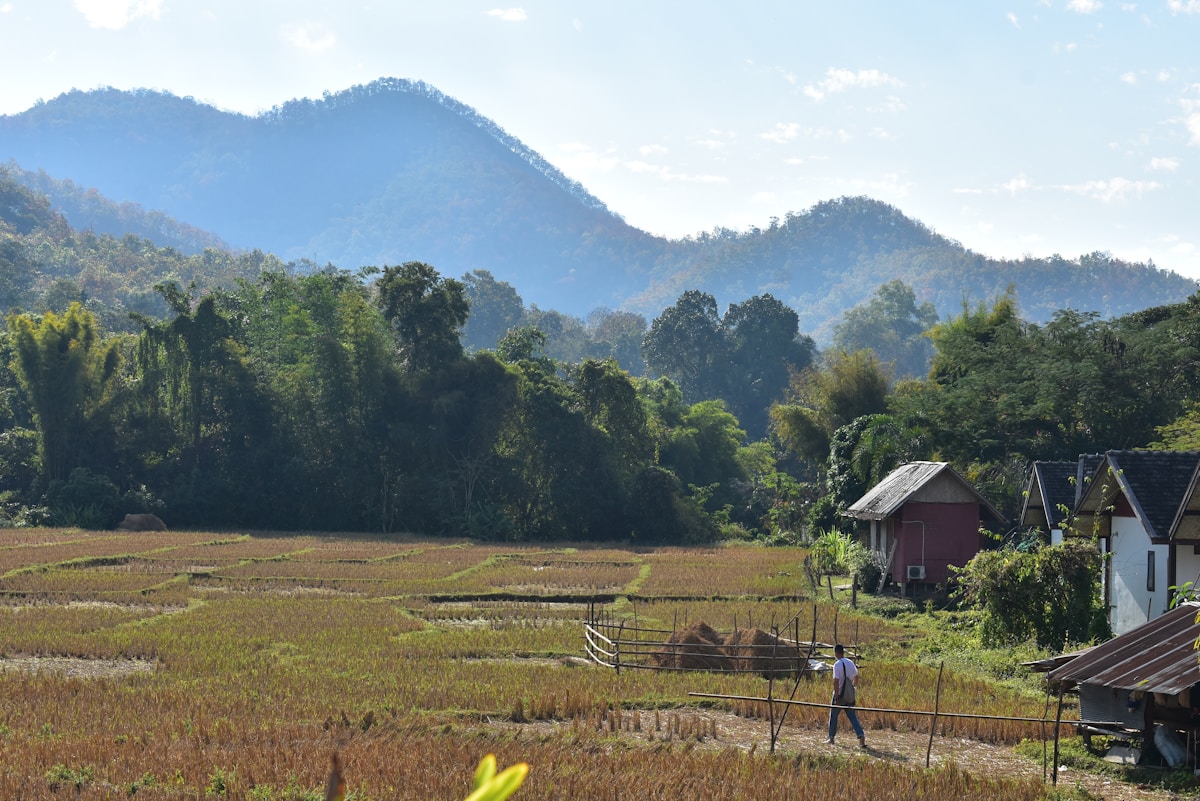
Chiang Rai for remote work
Chiang Rai is northern Thailand’s second city - quieter, cheaper, and more locally flavoured than Chiang Mai. See our Chiang Rai guide for temples, markets, and practical transport information. The digital nomad scene is smaller but real: a growing number of cafes have invested in good Wi-Fi, the town is walkable, and monthly costs are among the lowest in northern Thailand.
The cafe culture clusters around the Clock Tower area, Jet Yod Road, and the area around Singha Park. Most working cafes open at 8am and stay open until 9–10pm. The town has no dedicated coworking spaces of note, but several cafes function as coworking-in-practice with their setup.
Monthly budget in Chiang Rai: ฿10,000–15,000 ($280–420 USD) - accommodation, food, and transport included.
Best cafes for working
Chivit Thamma Da (Kok River)
A beautifully designed cafe on the Kok River with a colonial-Thai interior, excellent coffee, and enough table space to work comfortably. Wi-Fi: 40–80 Mbps. Power outlets available. Opens 8am, closes 9pm. Coffee from ฿80; the river-view window tables book up fast on weekends. Best visited on weekday mornings before it fills with day-trip visitors from Chiang Mai. The river view makes afternoon working sessions genuinely pleasant.
Doi Chaang Coffee (multiple locations)
The Doi Chaang brand is a Chiang Rai-born specialty coffee cooperative supporting hill tribe farmers. The flagship cafe near the old clock tower has reliable Wi-Fi (50–100 Mbps), good seating, and a professional coffee standard. Opens 8am, closes 8pm. Single-origin pour-overs from ฿120. Power outlets are available but limited — arrive early for a good seat.
Baan Chivit Mai Bakery
A social enterprise cafe (proceeds support disadvantaged children) with a large indoor space, reliable internet, and an all-day menu. Opens 7:30am, closes 7pm. Coffee from ฿75, lunch mains from ฿130. Popular with NGO workers and occasional nomads. Wi-Fi: 30–60 Mbps. The garden seating is pleasant in the cooler months (November–February); indoors is better for focus.
Cat ‘n’ a Cup Cat Cafe
Not primarily a working cafe, but has reliable Wi-Fi and a tolerant policy toward long stays. Entry includes a drink from ฿100. Better for lighter sessions. Unusual atmosphere — resident cats are a feature not everyone finds conducive to focus.
Black Cat Cafe (near Night Bazaar)
A straightforward working cafe near the Night Bazaar — long tables, power access, good espresso, and consistent Wi-Fi (50–80 Mbps). Opens 9am, closes 10pm. One of the more practical spots in the central area for late-afternoon sessions.
Phu Fa Coffee (northeast of centre)
A quieter, locally-run option away from the Clock Tower crowds. Excellent northern-style drip coffee (฿65–85), long hours (7am–8pm), and a shaded outdoor terrace that catches the breeze. Wi-Fi: 40–60 Mbps. Better suited to focused work than to client calls — the ambient noise level is low and the atmosphere calm.
Practical notes
Smoke season warning: February to April, Chiang Rai experiences agricultural burning season. The air quality index regularly exceeds 150 AQI (unhealthy). If you have respiratory sensitivities or are on video calls requiring a clear backdrop, this matters — outdoor cafe seating becomes unpleasant and some days it’s worth staying indoors. Check the AQI at IQAir before making the trip in these months.
Internet: Central Chiang Rai has reliable 4G and fibre-backed cafe Wi-Fi. Outside the centre (Golden Triangle day trips, rural guesthouses), rely on your SIM card.
SIM card: AIS has the best coverage in northern Thailand including the mountainous border areas. A 30-day tourist SIM with 30GB: ฿299. An eSIM for Thailand is an alternative that can be activated before you arrive.
Transport: Chiang Rai is walkable in the centre but a bicycle (฿50–80/day rental) or motorbike (฿200/day) is useful for reaching the more scattered cafes.
Accommodation: Monthly rentals available for ฿4,000–8,000 for a furnished studio, significantly cheaper than Chiang Mai or Bangkok. Several guesthouses offer monthly discounts.
Weather: The best working months are November to February (cool and dry, 15–22°C). March–May gets hot. Rainy season (June–October) is workable - most afternoons involve rain but it rarely affects connectivity.
Getting to Chiang Rai from Chiang Mai: Bus from Chiang Mai Arcade Bus Terminal: 3 hours, ฿140. Minivan: faster at 2.5 hours, ฿200. Flight: 30 minutes (available but rarely cheaper than ฿1,500). Shared songthaews also run between the two cities (฿100) but take longer and have irregular schedules. Once here, the White Temple (Wat Rong Khun, ฿100 entry), Black House (Baandam), and Golden Triangle are within a half-day — see things to do in Chiang Rai for the full rundown.
Monthly budget breakdown: A comfortable nomad month in Chiang Rai covering a furnished studio (฿6,000–8,000), food (฿5,000–7,000 eating a mix of local Thai and occasional cafe meals), transport by bicycle or rented scooter (฿1,500–3,000), and SIM data (฿300) comes to ฿12,800–18,300 — roughly $350–510 USD. This is 25–35% cheaper than Chiang Mai and 50–60% cheaper than Bangkok for equivalent quality of life.
Browse accommodation in Chiang Rai | Browse Chiang Rai tours → GetYourGuide