Thailand is easy to pay for once you know the three or four quirks: a fixed ATM fee that punishes small withdrawals, a currency-conversion prompt that you should always refuse, a country that still runs on cash in the places you will want to eat, and tipping rules that are relaxed rather than rigid. This guide covers the baht, the real cost of ATMs, when cards work, where to exchange and what to tip. All figures are as of 2026 and Thai banks do change their fees, so treat the numbers as a reliable guide rather than a tariff.
The baht at a glance
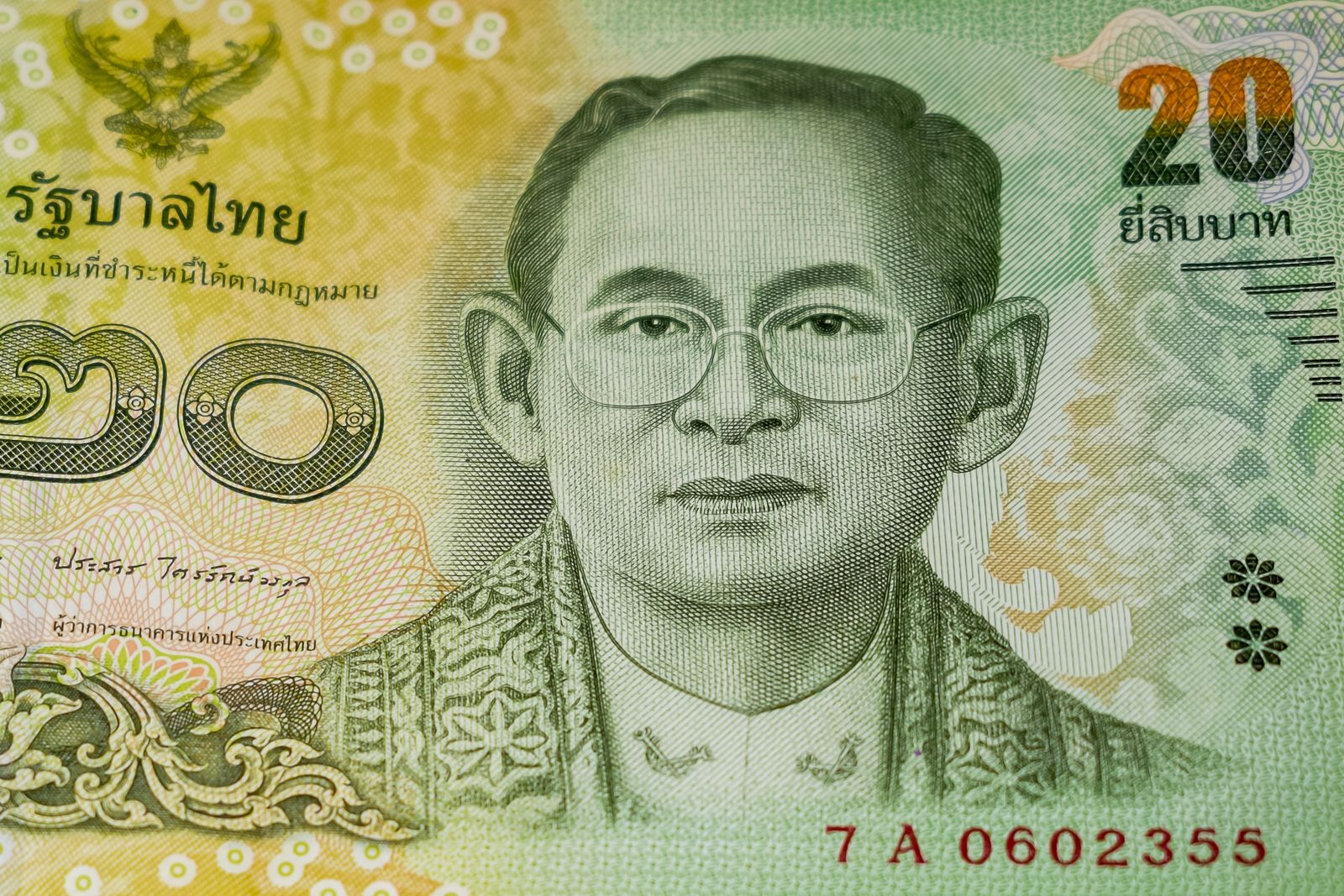
The Thai baht (THB, symbol ฿) is divided into 100 satang, though satang coins are almost never seen. Notes come in 20 (green), 50 (blue), 100 (red), 500 (purple) and 1,000 (brown-grey) baht. Coins are 1, 2, 5 and 10 baht. For live conversion use your banking app on the day, because rates move, and our budget guide shows what daily spending looks like in baht at each travel level.
Practical habits that save hassle:
- Break 1,000-baht notes early. Street vendors, songthaew drivers and small shops often cannot change them, so spend them at 7-Eleven, a supermarket or a restaurant first.
- Keep a stack of 20s and 50s for markets, motorbike taxis and temple donations.
- Check notes for tears. Torn or heavily taped notes may be refused.
- Do not buy baht before you leave home unless you want a small float for the first taxi. Home-country rates for baht are poor, and Thai exchangers pay better.
ATMs: the 220-250 baht flat fee
ATMs are everywhere, in Bangkok, Chiang Mai and every island town with a 7-Eleven. The catch is the foreign card fee. Most Thai banks, including Bangkok Bank, Kasikorn, Krungsri, SCB and Krungthai, charge a flat fee of approximately 220-250 baht per withdrawal on foreign cards (as of 2026). It is the same whether you take out 1,000 baht or 20,000 baht, which makes small, frequent withdrawals expensive.
How to keep it low:
- Withdraw the maximum per visit. Limits per transaction are commonly 20,000-30,000 baht depending on the bank. Withdrawing 20,000 baht costs about 1% in fees, while withdrawing 3,000 baht costs over 7%.
- Look for AEON ATMs. AEON charges approximately 150 baht on foreign cards, and the machines sit inside Makro, Big C, Lotus’s and some MaxValu stores. They are cheaper but less common, so plan a withdrawal when you shop rather than detouring.
- Check your home bank. Some travel-friendly accounts refund ATM fees or charge no foreign-transaction fee. Others add 2-3% plus a fixed charge, which stacks on top of the Thai fee.
- Avoid credit cards at ATMs. Cash advances usually carry a fee plus interest from day one.
- Choose “without conversion”. If the machine asks whether to convert to your home currency, say no, as covered below.
Use ATMs inside bank branches or malls when possible. Standalone machines in dark corners and hotel lobbies sometimes add extra fees, and skimming devices are a rare but real risk, so cover the keypad and look for loose card slots. Our safety and scams guide lists the common tricks.
Dynamic currency conversion: always decline
Dynamic currency conversion (DCC) is the prompt at an ATM or card terminal asking, “Pay in baht or in your home currency?” The home-currency option looks convenient and costs more, because the machine owner sets an inflated exchange rate. Pick Thai baht every time, at ATMs, shops, hotels and restaurants. If a shop assistant has already run the card in your currency, ask them to cancel and redo it in baht.
Cash versus card, setting by setting
| Setting | What works |
|---|---|
| International hotels, resorts, malls | Cards fine |
| Chain restaurants, cafes, 7-Eleven, Tops, Big C | Cards fine |
| Street food, night markets, food courts | Cash only |
| Songthaews, motorbike taxis, local buses | Cash only |
| Grab and Bolt | Card or cash, check in the app |
| Small guesthouses and bungalows | Often cash, some add 3% for card |
| Island shops, beach bars, ferry counters | Cash preferred, patchy signal for terminals |
| Tour operators and dive shops | Cards usually accepted, sometimes with a 3% surcharge |
| Temples and national park entry | Cash |
A sensible split for most trips is cards for hotels, big meals and bookings, and cash for everything under about 500 baht. On the islands and in the north, carry more cash than you think you need, since the nearest ATM can be a boat or a long songthaew ride away. If you are heading to remote areas such as the islands or the northern hills, withdraw before you leave town.
A fee-free travel card from a digital bank can reduce the foreign-transaction cost at shops, but it does not remove the Thai ATM fee, so check how your card treats ATM withdrawals before assuming it is free.
Where to exchange baht
If you carry cash from home, exchange it at licensed money exchangers rather than the airport or your hotel.
- City exchangers. SuperRich (green and orange branches) and Vasu are widely trusted names in Bangkok, with branches in Chiang Mai and other tourist cities. Rates are posted on a board, they usually require a passport for larger amounts, and they offer better rates than airports. Compare two or three counters, because spreads vary.
- Airport counters. Suvarnabhumi and Don Mueang have exchange booths in arrivals. The rates are acceptable for a small amount, such as 1,000-2,000 baht for a taxi or the airport transfer, but worse than city branches.
- Banks. Branches exchange at fair rates but have limited hours and paperwork.
- Hotels and street booths. Expect the weakest rates, particularly near Khao San Road and in beach resort strips.
Large-denomination US dollar notes (50s and 100s) in good condition tend to get the best rates, while small or worn notes get lower rates. Count your baht at the counter before you leave and keep the receipt.
For limits, remember that visitors can usually enter with up to US$20,000 in foreign currency without declaring it, and that immigration may ask for proof of funds, see our cash-proof entry check update and the visa guide. For official currency and customs rules, see the Bank of Thailand and Thai Customs sites. Both are in English.
Tipping in Thailand
Tipping is a courtesy rather than an obligation, and locals tip small. Many mid-range and upscale restaurants and hotels add a 10% service charge plus 7% VAT, often shown as ”++” on menus. If it is on the bill, you do not need to add more. If not, tip in these ranges (as of 2026):
| Service | Typical tip |
|---|---|
| Street food, food court | None |
| Casual restaurant without service charge | Round up or leave 20-50 baht |
| Restaurant with service charge | Nothing extra, or small coins for a standout meal |
| Taxi (metered) | Round up to the next 10 baht |
| Grab or Bolt | Optional, 10-20 baht |
| Thai massage (1 hour) | 50-100 baht |
| Spa treatment, oil massage | 100-200 baht |
| Hotel porter | 20-50 baht per bag |
| Housekeeping | 20-50 baht a night, left on the pillow |
| Tour guide, group day trip | 100-200 baht per person |
| Private guide | 300-500 baht per day |
| Private driver | 200-500 baht per day |
| Boat crew, dive or snorkel trip | 100-300 baht per person, shared |
Tip in cash, in baht, directly to the person who served you. Tips left on a card slip may not reach staff. Do not feel pressured if staff hint for more. A smile and a polite thank-you matter as much, and our Thai etiquette guide covers the wider customs.
Mobile payments and QR codes
Thai shoppers pay with PromptPay QR codes, and many street stalls display a QR next to the cash box. Foreign visitors cannot normally use these with a standard foreign bank app, so do not rely on them. Some tourist-oriented wallets and travel eSIM bundles offer limited QR payment, but cash remains the dependable option. Setting up data before you land helps you check rates and use ride-hailing apps, so buy a Thailand eSIM in advance, and consider travel insurance that covers lost cards and stolen cash.
A simple money plan
- Before you fly, tell your bank you are travelling and check its foreign-transaction and ATM fees.
- Carry one debit card and one credit card, stored separately, plus a spare in your hotel safe.
- On arrival, withdraw 10,000-20,000 baht from a bank ATM or AEON machine, decline conversion, and spend large notes early.
- Pay hotels and big bookings by card in baht, and use cash for food, transport and tips.
- Exchange only what you need, at a city exchanger.
Booking tours online in advance means fewer cash payments on the day, so browse Bangkok tours before you land. For lodging, compare Bangkok hotels and pay by card in baht.