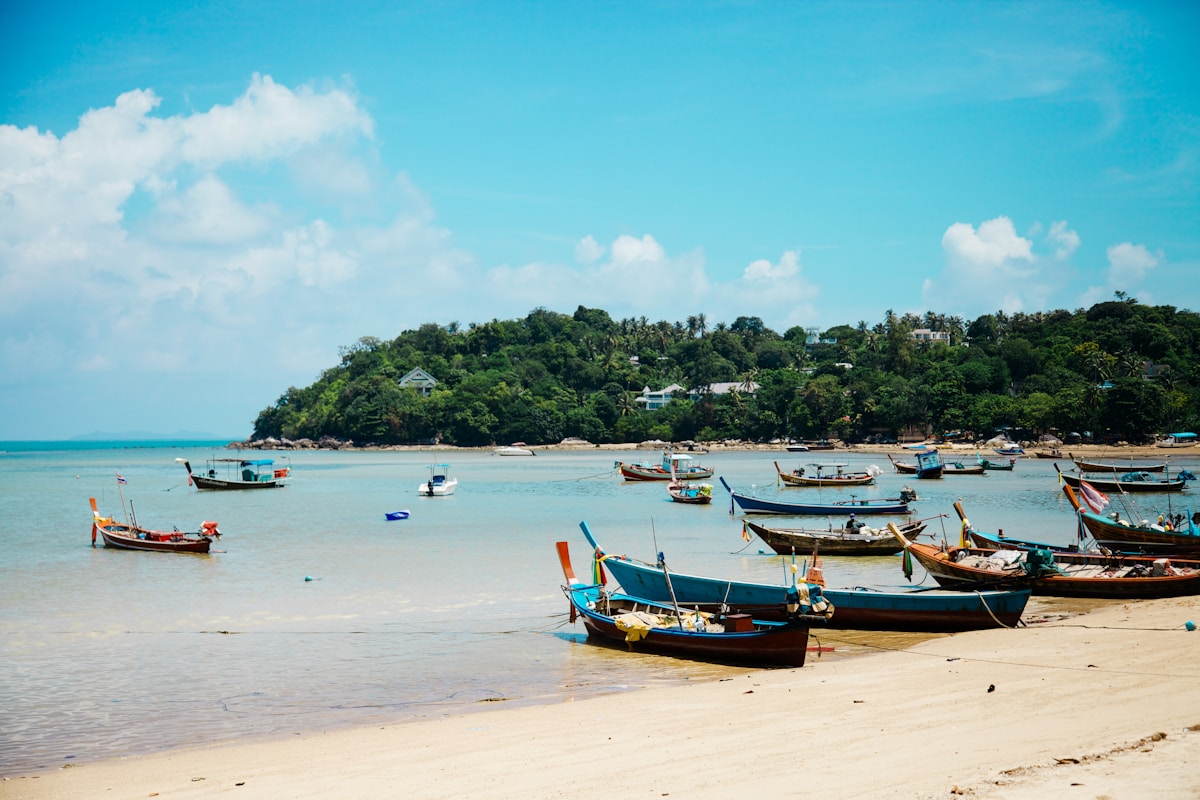
Koh Samui and Koh Phangan sit opposite each other in the Gulf of Thailand, connected by a 30-minute ferry. They are different in fundamental ways: Koh Samui has international airports, five-star resorts, shopping centres, and the infrastructure of an established mass-market beach destination. Koh Phangan has the Full Moon Party, a growing wellness scene, quieter beaches, and a fraction of Koh Samui’s resort development. Your reasons for visiting one over the other should be clear before you book.
Quick Verdict
| Category | Koh Samui | Koh Phangan |
|---|---|---|
| Resort infrastructure | Winner - international brands | Budget to mid-range |
| Beaches | Chaweng, Lamai, Bo Phut | Winner - Thong Nai Pan, north coast |
| Nightlife | Chaweng Road - good | Winner - Full Moon Party, jungle events |
| Costs | More expensive | Winner - 20–30% cheaper |
| Families | Winner - calm beaches, resort facilities | North coast only |
| Couples | Winner - better resorts and restaurants | North coast is charming |
| Yoga and wellness | Some options | Winner - strong retreat scene |
| Getting there | Winner - direct international flights | Ferry from Koh Samui or Surat Thani |
Planning your trip? Browse Koh Samui tours → · Browse Koh Phangan tours →
Costs
Koh Samui is one of Thailand’s more expensive beach islands. Chaweng area guesthouses start at THB 800–1,200 per night. Mid-range beach hotels run THB 2,000–4,500. Restaurants on Chaweng Beach Road charge THB 200–400 per main course. International resort brands - Four Seasons, Banyan Tree, Conrad, W - push nightly rates to THB 8,000–25,000. Daily spend for a budget traveller lands at THB 1,500–2,200.
Koh Phangan is meaningfully cheaper. Beach bungalows outside Full Moon Party week start at THB 400–800. Mid-range options on the north coast (Thong Nai Pan area) run THB 1,200–2,500. Restaurants are 20–30% cheaper than Koh Samui equivalents. During Full Moon Party week, accommodation prices double or triple and book out months ahead. Regular weeks, daily budget is THB 900–1,400.
Beaches
Koh Samui has well-developed beach infrastructure. Chaweng Beach is the island’s longest (6 km) and most popular - wide sand, clear water, and the full gamut of beach chairs, jet skis, banana boats, and beachfront bars. It is excellent for swimming from January to September. Lamai Beach is quieter and slightly less crowded with a good restaurant scene. Bo Phut (Fisherman’s Village area) is charming and low-key with boutique restaurants along the beachfront road.
Koh Phangan has fewer tourist-developed beaches but some that are genuinely more beautiful than anything on Koh Samui. Thong Nai Pan Noi and Thong Nai Pan Yai on the north coast are deep, horseshoe-shaped bays with calm water and almost no vendors - arguably the best beaches in the Gulf of Thailand. Haad Yuan on the south coast is accessible only by longtail boat or a 45-minute walk - utterly peaceful. Haad Rin (Full Moon Party beach) is wide and fine-sand but backed by beach bars and bungalows.
Nightlife
Koh Samui has a nightlife scene centred on Chaweng Beach Road. The strip has bars, clubs, and live music venues running until 2am. Green Mango Club is the most established nightclub. The beach clubs - Ark Bar on Chaweng Beach - run afternoon beach parties that continue into the evening. The W Retreat Koh Samui has an upscale cocktail bar scene. It is lively without being overwhelming.
Koh Phangan’s Full Moon Party is Thailand’s most famous recurring event. Held monthly at Haad Rin Sunrise Beach, it draws 10,000–30,000 people. The beach is lined with music-themed bars from psytrance to hip-hop to techno. Entry wristband costs THB 100–200, drinks THB 100–200 each. Separate events run on off-moon dates: Half Moon Festival (electronic, jungle setting, tickets THB 600–800), Jungle Experience, and the Eden Garden Experience (more curated). On non-party weeks, Koh Phangan is significantly quieter than Koh Samui.
Culture and Sights
Koh Samui has a few worthwhile cultural stops amid the beach resort sprawl. The Big Buddha Temple (Wat Phra Yai) at Bophut is free and has a 12-metre golden seated Buddha visible from the sea. Wat Plai Laem has a distinctive 18-armed Chinese goddess statue in a colourful compound (free). The Angthong Marine National Park - an archipelago of 42 islands visible from Koh Samui’s north coast - is accessible by day trip (THB 1,200–1,800) and is one of Thailand’s most spectacular marine parks.
Koh Phangan has Wat Pho (different from Bangkok’s Wat Pho - a local hilltop temple with views), the Chinese temple near Thong Sala, and natural attractions that are more compelling than cultural ones. The Than Sadet National Park waterfall was reportedly visited by multiple Thai kings and is considered sacred - the walk in is free and the pools are good for swimming.
Accommodation
Koh Samui has some of Thailand’s finest resort properties. The Four Seasons Resort Koh Samui on Angthong Bay (THB 18,000–35,000 per night in villas) is one of the country’s most acclaimed luxury resorts. Banyan Tree Koh Samui (THB 10,000–20,000) is adults-only with a famous spa. The W Koh Samui (THB 6,000–12,000) at the north coast is modern and vibrant. Mid-range: Centara Villas Samui at Nathon Bay (THB 2,500–4,000), Library Hotel on Chaweng (THB 3,000–5,000).
Koh Phangan: Kupu Kupu Phangan Beach Villas on the north coast (THB 4,000–7,000) is the island’s most polished option. Hacienda on Thong Nai Pan Yai (THB 1,800–2,800) is excellent mid-range in a beautiful bay. Budget: various Haad Rin bungalows around THB 600–1,000 outside party week. The Sanctuary at Haad Tien (from THB 2,500 including meals) is the most established wellness retreat on the island.
Getting There
Koh Samui has its own airport (USM) - one of Thailand’s most pleasant - with flights from Bangkok (1 hour, THB 800–2,000), Phuket, Singapore, Kuala Lumpur, and Doha. Bangkok Airways operates most Samui routes with a partial monopoly that keeps prices higher than budget airline competitors. The alternative is flying to Surat Thani on the mainland (THB 600–1,200) and taking a ferry (1.5–2 hours, THB 200–300).
Koh Phangan is reached by ferry from Koh Samui’s Nathon pier (30–45 minutes, THB 200–300) or from Surat Thani by overnight boat (6 hours, THB 400–600). There is no airport on Koh Phangan.
When to Visit
Both islands share the Gulf of Thailand weather pattern. January to September is generally good - calm seas, warm weather. October and November bring the Gulf’s annual storms - sea conditions deteriorate and ferry services may be disrupted. December is transitional. The Full Moon Party happens year-round regardless of weather.
Verdict
Choose Koh Samui if you want resort facilities, international hotel brands, a developed beach scene, direct international flights, and more dining variety.
Choose Koh Phangan if you want the Full Moon Party, lower costs, the best Gulf of Thailand beaches (north coast), or a wellness retreat in a less crowded setting.
Many visitors combine both in a single Gulf of Thailand trip - ferry easily between them, adding Koh Tao for diving. The three-island Gulf circuit (Koh Samui base → Koh Phangan for the Full Moon Party → Koh Tao for diving) covers the Gulf’s best in 10–12 days.
See our Koh Samui island guide and Koh Phangan island guide for full details. Browse Koh Samui tours and Ang Thong day trips or browse Koh Phangan tours and experiences.
Plan Your Trip
Both islands form the core of any Gulf of Thailand trip — our Thailand island hopping itinerary connects Koh Samui, Koh Phangan, and Koh Tao into a logical 10-12 day circuit. For a broader southern Thailand route, the one week south Thailand itinerary includes Surat Thani transport links. Compare the islands against the Andaman coast by reading Koh Samui vs Phuket before finalising your route.
Book Your Trip
- Flights - Find the best fares to Thailand
- Travel Insurance - Get covered before you go
- eSIM - Stay connected from landing
- Car Rental - Compare prices across providers
See also: Koh Samui island guide · Koh Phangan island guide · Thailand island hopping itinerary