Khao Yai National Park is one of Thailand’s oldest and most rewarding protected areas - a UNESCO World Heritage site covering over 2,168 sq km of montane forest straddling four provinces. It is the closest major national park to Bangkok (around 190 km north-east), yet feels genuinely wild. Elephants wander the grasslands at dusk. Gibbons open each morning with calls that travel a kilometre through the canopy. Hornbills perch above the waterfalls. If you have time for only one national park in Thailand, Khao Yai is the one to make it.
Getting to Khao Yai: Pak Chong as Your Base
The nearest town to the park is Pak Chong, approximately 25 km from the main entrance on the Nakhon Ratchasima side. This is where most accommodation, transport, and tour operators are based.
From Bangkok by minivan: The most practical option. Minivans run from Mo Chit (Northern Terminal) approximately every 30 minutes throughout the day, taking around 2.5 hours and costing approximately THB 200–250 per person. Drop-off is in central Pak Chong.
From Bangkok by train: Trains from Hua Lamphong to Pak Chong on the Bangkok–Nakhon Ratchasima line take 3–4 hours and cost approximately THB 40–80 for third class (with advance booking sometimes cheaper). Trains are slower but more comfortable than minivans.
Self-drive: If you are renting a vehicle, Highway 2 (Mittraphap Road) takes you from Bangkok directly to the park turnoff, with clear signage. The drive is around 2.5 to 3 hours depending on Bangkok traffic.
Pak Chong to the park entrance: Songthaews (shared covered pickup trucks) run along Route 3077 between Pak Chong and the park’s northern checkpoint. Expect to pay around THB 50–80 per person. Private motorbike taxis or vehicle hire cost THB 500–800 return - useful if you want flexibility on timing.
Where to Stay Near Khao Yai
Accommodation clusters in two main areas: along the Pak Chong side of the park (Route 3077 / Thanarat Road) and inside the park at the DNP campgrounds.
Inside the Park: Camping and Bungalows
The Department of National Parks (DNP) operates Khao Yai Campground near the visitor centre, with tent pitches from approximately THB 30–60 per person per night. Basic bungalows sleeping two to four people are available from approximately THB 600–1,500 per night, bookable through the DNP website (dnp.go.th). These are basic but functional - staying inside the park gives you the best chance of early morning wildlife encounters before day visitors arrive.
Mid-Range: Pak Chong and Route 3077
Greenery Resort Khao Yai sits along Route 3077 roughly 7 km from the park entrance. Rooms run from approximately THB 2,500–4,000 per night, with a pool and restaurant. It has a slightly dated feel but the location is convenient and the gardens attract birds in the morning.
Kirimaya Golf Resort & Spa is a step up in comfort - a golf and spa resort adjacent to the park boundary, with well-appointed rooms from approximately THB 4,500–7,000 per night. It is popular with Bangkok weekenders and fills up quickly on Fridays. The grounds at dusk are worth walking; elephants have been spotted from the perimeter on numerous occasions.
Muthi Maya Forest Pool Villa offers standalone pool villas in a woodland setting, from approximately THB 5,000–9,000 per night. Good for couples. The forested grounds mean you can hear gibbons from your terrace most mornings.
Luxury: Resort Experiences
Palio Village and Sala Khaoyai (in the Palio complex on Route 3077) leans heavily on its Italian-village aesthetic but has genuinely comfortable rooms from approximately THB 6,000–11,000 per night during high season. It is more of a resort experience than a nature lodge.
Elephant Hills Khao Yai - not to be confused with the Khao Sok property - operates a tented lodge concept near the park with all-inclusive wildlife programmes from approximately THB 8,000 per person per night. Rates include guided morning and evening wildlife drives.
Wildlife Spotting at Khao Yai
Elephants
Wild Asian elephants are the park’s most celebrated residents, with a population of approximately 200–300 individuals. The best locations to see them are at the salt lick grasslands (visible from the main road in the park at km marker 30–33) and near the Haew Narok area in the south. Dusk and dawn are the most reliable times. Quietly park on the verge and wait - elephants often emerge from the treeline as the temperature drops. Never leave your vehicle or approach on foot.
Gibbons and Monkeys
White-handed gibbons are common and vocal - their whooping songs begin at first light and are clearest from elevated points near the visitor centre. Macaques (both long-tailed and pig-tailed varieties) are frequently seen along the main park road, sometimes in large groups near the campground.
Birds
With over 300 species recorded, Khao Yai is a serious birding destination. The Great Hornbill is the headline act - look for them at fruiting fig trees, particularly near Haew Narok and along the Pa Kluay Mai trail. Wreathed Hornbill, Siamese Fireback (a pheasant-like bird that forages at forest edges at dawn), and various kingfisher and raptor species round out an exceptional list. Dawn and dusk are the most productive times. Bring binoculars.
Deer, Gaur, and Smaller Mammals
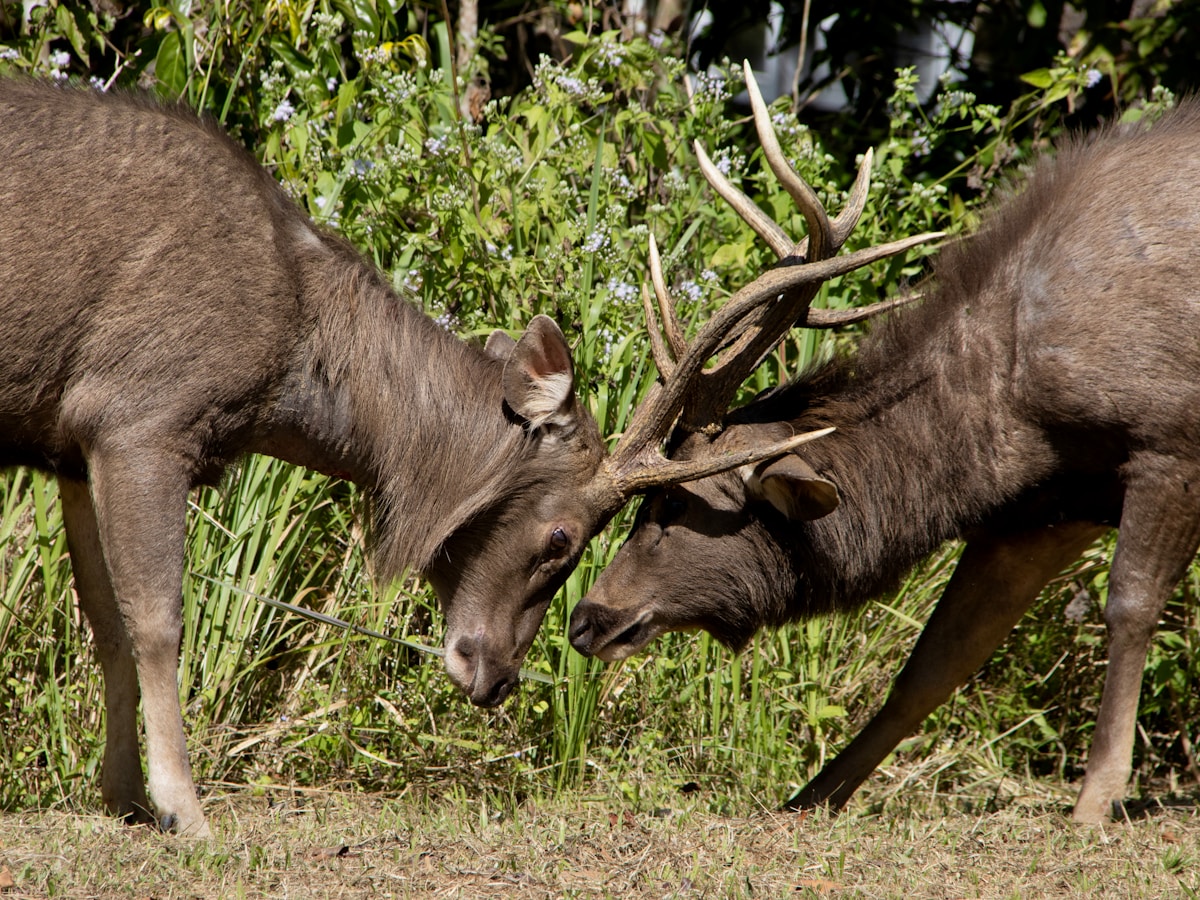
Sambar deer are commonly seen near the visitor centre grassland, especially in the early morning. Barking deer (muntjac) are shier but often visible at forest edges. Gaur - large, dark cattle-like animals - appear occasionally near the southern end of the park. Civets and pangolins are nocturnal and rarely spotted without a guide.
Hiking Trails at Khao Yai
Kong Kaew Nature Trail - Easy, 3 km loop
Starts from the visitor centre. A well-maintained loop through secondary and primary forest with interpretation boards. Excellent for birds and butterflies. Takes around 1.5 hours at a comfortable pace. No guide required.
Haew Suwat Waterfall Trail - Easy to Moderate, 8 km one-way
This is the trail that featured in The Beach (waterfall scenes). It connects the visitor centre to Haew Suwat Falls through mixed forest. Walking one way and arranging a vehicle pick-up at the other end is the easiest approach. Expect 3–4 hours. Wildlife sightings common, especially gibbons.
Mo Singto Grassland Trail - Moderate, 5 km
Traverses open grasslands near km 33 on the main park road - prime elephant country. The trail is flat but requires some basic navigation. Best done with a guide. Dawn starts are rewarding.
Haew Narok Loop - Moderate to Hard, 10 km
Haew Narok is the park’s most dramatic waterfall - a three-tiered drop of 150 m. The loop trail descends into the gorge and climbs back via secondary forest. Allow 5–7 hours. Steep sections after rain are slippery. A guide is recommended. Elephants are sometimes seen near the lower viewpoint.
Nong Phak Chi–Khao Luang Overnight Trek - Hard, 2 days
A multi-day backcountry route requiring a licensed guide and pre-registration at the visitor centre. You stay overnight at a forest ranger station. This is one of the best ways to experience the park beyond day-tripper hours. Guide fees from approximately THB 1,000–1,500 per day; registration fees additional.
Tour Operators and Guided Wildlife Drives
If you are self-driving into the park, hiring a local guide is still worthwhile for the first day. Pak Chong has several reputable operators:
Wildlife Khao Yai (based along Route 3077) offers day and night wildlife drives in 4WD vehicles, from approximately THB 1,200–1,800 per person depending on group size. Night drives are particularly good for civets, porcupines, and deer.
Greenleaf Khao Yai runs similar wildlife programmes including nocturnal spotlighting tours, from approximately THB 1,000–1,500 per person. They also arrange day treks with experienced naturalist guides.
Bobby’s Jungle Tours is a well-established operator in Pak Chong, known for small groups and guides with genuine natural history knowledge. Half-day wildlife walk from approximately THB 800 per person; full-day from THB 1,500.
Park entry fees (as of 2026): THB 400 for international visitors per day; vehicle entry from THB 50. Entry is paid at the main checkpoint.
Best Season to Visit
November to February is the ideal window - temperatures in the park range from 10–25°C, trails are dry, and wildlife concentrates near predictable water sources. The atmosphere in the forest is cooler and clearer than at any other time of year. Book accommodation two to three weeks ahead for weekends.
March to May brings increasing heat (up to 35°C at midday) but wildlife is still active in the early morning and evenings. Fewer visitors than peak season.
June to October is the monsoon period. Waterfalls are at their most dramatic, the forest is vivid green, and visitor numbers drop substantially. Leeches are active on the trails after rain. Some roads flood briefly after heavy storms. A reasonable time to visit if you are prepared.
The park closes temporarily each year during the monsoon - usually around August - for a week or two. Check the DNP website before booking a trip during this period.
Practical Notes
The park visitor centre is approximately 14 km from the northern checkpoint and has a café, maps, and ranger advice. Speed limits inside the park are strictly enforced (30–50 km/h) because of wildlife on the roads - particularly at night. Wildlife encounters on the road require staying in your vehicle. Do not feed any animals; heavy fines apply.
Mobile signal inside the park is patchy to non-existent. Download offline maps (Maps.me or Google Maps offline area) before entering. Bring insect repellent, a light rain jacket, and water.
Plan Your Trip
Khao Yai pairs well with a Bangkok base — our Bangkok city guide covers transport options and how to organise the Pak Chong transfer. If you are building a broader central Thailand route, the two weeks in Thailand itinerary includes day trips from Bangkok that can incorporate Khao Yai alongside Ayutthaya and Kanchanaburi. The getting around Thailand guide explains train and minivan options from Bangkok’s main terminals.
Book Your Trip
- Flights - Find the best fares to Thailand
- Travel Insurance - Get covered before you go
- eSIM - Stay connected from landing
- Car Rental - Compare prices across providers
See also: Central Thailand region guide · Bangkok city guide · 1-week Thailand itinerary