Central Thailand Travel Guide
Ayutthaya ruins, Kanchanaburi wartime history, and floating markets within 3 hours of Bangkok. Central Thailand is day-trip country done properly.
Central Thailand is Bangkok’s backyard and one of the most historically dense stretches of land in Southeast Asia. Within 200km of the capital lie three former royal capitals (Ayutthaya, Lopburi, Sukhothai — though Sukhothai is technically on the northern edge), a Second World War memorial site that draws pilgrims from Australia, Britain, and the Netherlands, and a network of river canals that hosted floating markets centuries before they became tourist attractions.
The central plains are the rice bowl of Thailand — flat, green, cut through by the Chao Phraya and its tributaries. The landscape isn’t dramatic but the history embedded in it is. Ayutthaya was the wealthiest city in Asia at its peak in the 17th century, trading with the Dutch, French, Portuguese, and Japanese simultaneously. Its destruction by the Burmese in 1767 left ruins that still carry the weight of that loss.
What Makes Central Thailand Distinct
Three things define the region: history, agriculture, and proximity. The history runs from the Dvaravati kingdom (6th–11th century) through the Khmer expansion (11th–13th century, visible at Lopburi) to the Ayutthaya Kingdom (1351–1767) that shaped the Thai state most directly. The agricultural character shows in the rice plains, the river markets, and the pace of life outside the capital. And the proximity means you can do Ayutthaya, Kanchanaburi, or the floating markets as a single long day from Bangkok — though two days treats each destination more fairly.
The cuisine here is Bangkok-adjacent rather than distinct. The floating markets at Damnoen Saduak and Amphawa do have specific regional snacks — grilled seafood on the Amphawa canal, coconut-milk sweets made in traditional copper pots — but you’ll eat best by ordering whatever the stall owners are eating themselves, not what’s flagged as a tourist dish.
Getting There from Bangkok
Ayutthaya: 76km north of Bangkok, approximately 1.5 hours by train from Hua Lamphong station (฿15–30 for a third-class seat on the local train — one of the cheapest and most pleasant rail journeys in Thailand). Minivans run from Victory Monument (approximately 1 hour 30 minutes, ฿60–70). Day tours from Bangkok handle transport, a bicycle guide, and entrance fees for approximately ฿900–1,500 per person — browse Ayutthaya day tours from Bangkok on GetYourGuide.
Kanchanaburi: 130km west of Bangkok, approximately 2.5–3 hours by bus from the Southern Bus Terminal (฿100–130). Trains run from Bangkok Noi (Thonburi) station twice daily (approximately 3 hours, ฿100 for third class) — a slow but scenic route through the western plains.
Lopburi: 155km north of Bangkok, approximately 2 hours by train from Hua Lamphong (฿50–250 depending on class). The town is famous for its population of long-tailed macaques, which have colonised the Khmer-era Prang Sam Yot shrine and surrounding streets.
Floating markets: Damnoen Saduak (100km southwest of Bangkok) is the largest and most photogenic but also the most commercialised — arrive by 8am to beat tour groups. Amphawa (105km southwest) is smaller, calmer, and better for an overnight stay, with a weekend market and longtail boat firefly tours in the evening (approximately ฿60 per person). Floating markets from Bangkok covers the logistics.
Best Time to Visit
The central plains are hot year-round, with the coolest temperatures from November to February (25–32°C). This is also the driest period and best for outdoor sites like Ayutthaya Historical Park.
March to May is the hottest stretch (35–40°C) — temple ruins in direct sun are uncomfortable by 10am. Start early.
June to October brings afternoon rain but rarely disrupts a morning itinerary. Flooding is possible in particularly wet years — the 2011 floods submerged parts of Ayutthaya under 2–3m of water — but this is not an annual event.
Must-See Highlights
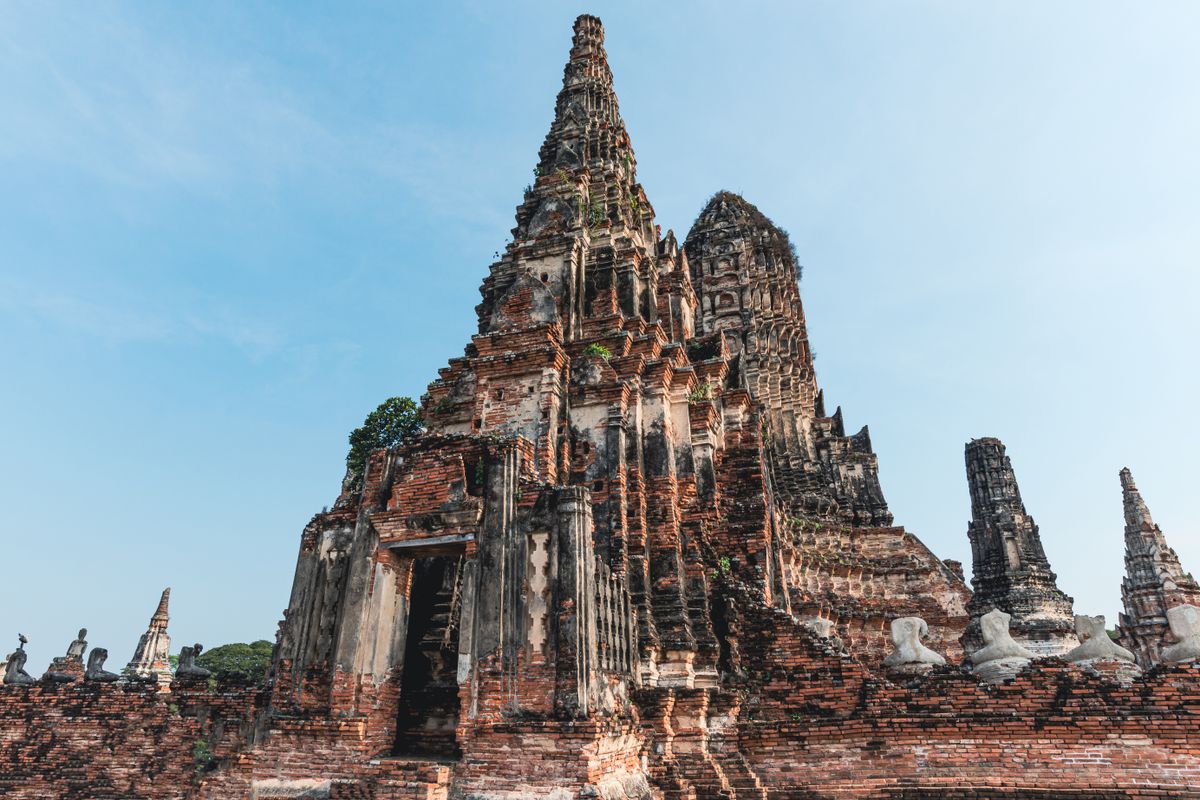
Ayutthaya Historical Park — The old capital covers a river island dotted with the ruins of temples, palaces, and chedis. Wat Phra Si Sanphet, the royal temple, has three restored chedis in a row that appear on every travel image of the site. Wat Mahathat contains the famous Buddha head entwined in banyan tree roots. Wat Chaiwatthanaram, built in 1630 in Khmer style on the riverbank, is best photographed at sunset when the laterite bricks glow. Bicycle rental (approximately ฿50–80 per day) from guesthouses near the train station is the most practical way to navigate the sprawling park. Entry approximately ฿50 per major temple. Full Ayutthaya day trip guide covers the best route and timing.
Kanchanaburi and the Death Railway — The town of Kanchanaburi sits at the confluence of the Kwai Noi and Kwai Yai rivers, and the WWII history here is sobering. The Thailand-Burma Railway — built by Allied prisoners of war and Asian forced labourers under Japanese occupation between 1942–43 — ran through some of the most inhospitable jungle in Asia. The JEATH War Museum (entry approximately ฿50) and the Kanchanaburi War Cemetery (Commonwealth War Graves Commission site, free) anchor the historical visit. The Hellfire Pass Memorial Museum, 80km northwest on the old railway route, is one of the most moving wartime sites in Asia — free entry, Australian government managed, with a 4km guided walk along the original cutting. See the full Kanchanaburi day trip guide for what to cover in one or two days, or browse Kanchanaburi tours from Bangkok.
Erawan Falls, Kanchanaburi — A 7-tier waterfall in Erawan National Park, 65km northwest of Kanchanaburi town, where each pool is a different shade of emerald and turquoise from mineral deposits. Tier 1 is accessible to all; tier 7 requires approximately 2 hours of steady walking. The doctor fish (Garra rufa) that congregate in the lower pools will nibble dead skin off your feet if you sit still. Entry approximately ฿300 for foreigners. The Erawan Falls guide covers getting there, the best tiers to swim in, and combining it with Kanchanaburi.
Lopburi and the Monkey Temple — The Khmer-era shrine of Prang Sam Yot, built in the 13th century, has been comprehensively colonised by several hundred long-tailed macaques. They sit on the prangs, steal food from visitors, and generally run the place. The experience is simultaneously extraordinary and mildly chaotic — the monkeys are bold and will reach into bags. Hold everything securely. The broader Lopburi old town has more Khmer and Ayutthaya-era ruins within walking distance, and the Sunflower Festival (November–January, when the surrounding plains are covered in sunflowers) draws Thai domestic visitors in large numbers.
Where to Stay
Most visitors to central Thailand stay in Bangkok and day-trip out. If you want to overnight near the sites:
Ayutthaya has a range of river guesthouses from approximately ฿400–800 (basic fan rooms) to boutique hotel options from approximately ฿1,800–3,500. Staying overnight allows early morning visits before day tours arrive and a more relaxed pace. The Ayutthaya where to stay guide covers the best zones.
Kanchanaburi town has guesthouses along the Kwai Yai River from approximately ฿350–700 for basic rooms; mid-range riverside resorts from approximately ฿1,200–2,500. The Kanchanaburi where to stay guide has specific options by budget.
Lopburi is typically visited as a half-day from Bangkok or Ayutthaya. The Lopburi where to stay guide covers the limited but functional options if you choose to overnight.
Day Trip Planning from Bangkok
The most efficient central Thailand circuit from Bangkok combines Ayutthaya (Day 1 — arrive by early train, cycle the ruins, return by evening train) and Kanchanaburi (Day 2 — bus or tour, covering the bridge, cemetery, and Erawan Falls). Lopburi can be added as a stop on the way to or from Ayutthaya by train.
Our Bangkok day trips itinerary includes routes and timing for all major central Thailand sites.
Related guides: Ayutthaya day trip · Kanchanaburi day trip · Erawan Falls · Floating markets Bangkok · Ayutthaya where to stay · Kanchanaburi where to stay · Sukhothai where to stay
Book an experience
Top experiences in Central Thailand Travel Guide
Find the best tours and activities across Central Thailand Travel Guide, with instant confirmation and free cancellation on most bookings.