Overview
This itinerary runs 21 days and covers three distinct Thailand regions: Bangkok (city and central plains), the north (Chiang Mai, Chiang Rai), and the Andaman coast islands (Krabi, Koh Phi Phi, Koh Lanta). An alternative island route using the Gulf Coast (Koh Samui, Koh Tao, Koh Phangan) is noted at the end.
Pace: Medium. Not rushed, not leisurely. Most stops allow time for the main sights plus one or two days of unstructured exploration.
Best season: November to February for the full itinerary. March–April works for the north but the south gets hot. May–October: rain on the Andaman coast; Gulf Coast islands are better.
Days 1–4: Bangkok
Four full days in the capital. Bangkok rewards slow travel - the city is vast and the best experiences often come from wandering neighbourhoods rather than ticking sights.
Day 1 - Rattanakosin (royal district):
- Grand Palace and Wat Phra Kaew (entry ฿500, allow 2.5 hours minimum)
- Lunch near Tha Tien pier - the riverside restaurants have good views
- Wat Pho, the reclining Buddha (฿200, 1 hour)
- Cross the river by ferry (฿4) to Wat Arun - exterior only, the climb offers views across the river at sunset
Day 2 - Markets and neighbourhoods:
- Chatuchak Weekend Market (Saturday/Sunday - 15,000 stalls, arrive early to avoid crowds)
- Alternatively: Talat Rot Fai (Train Night Market) - vintage, food, and street art
- Afternoon: Jim Thompson House (฿200) and the Siam district
- Evening: Dinner in the Silom or Sathorn area
Day 3 - Ayutthaya day trip: Take the train from Hua Lamphong (1.5 hours, ฿20–30). The ancient capital is UNESCO-listed - a bicycle rental from the station (฿50–100) covers the main temple ruins in 4–5 hours. Return by evening train. Alternatively: join a full-day guided tour from Bangkok (฿800–1,500 including transport).
Day 4 - Free / neighbourhood exploration:
- Chinatown (Yaowarat Road) - best visited for lunch or evening street food
- Thonburi canals by longtail boat (฿500–800/hour, private charter)
- Lumpini Park morning run or evening walk
- Rooftop bar at sunset - Lebua State Tower (sky bar, smart dress required) or a more accessible alternative
Where to stay: Sukhumvit area for access to BTS and nightlife. Silom for quieter nights and easy airport rail access. Khao San area for backpacker ecosystem.
Browse hotels in Bangkok on Booking.com
Days 5–8: Chiang Mai
Transport: Overnight train from Hua Lamphong to Chiang Mai (12 hours, departs 6pm, arrives 6am). 1st class sleeper: ฿1,300–1,600. 2nd class sleeper: ฿700–1,000. Book at dticket.railway.co.th - advisable to secure berths 1–2 weeks ahead in high season. Alternative: 1-hour flight (฿800–2,500 on budget carriers). Compare train and bus prices on Omio.
Day 5 (arrival morning): Check in, rest. Afternoon: walk the old city moat, visit Wat Chedi Luang. Evening: Sunday Walking Street market (if Sunday) or the Night Bazaar.
Day 6 - Doi Suthep and cooking:
- Morning: Doi Suthep Temple by songthaew (฿50/person to the base, ฿30 entry). The temple sits at 1,600m - views across Chiang Mai valley on clear mornings.
- Afternoon: Thai cooking class (฿1,000–1,800 including market visit). The half-day format is sufficient; classes typically cover 4–5 dishes.
Day 7 - Elephant sanctuary: Most reputable sanctuaries operate full-day programmes (7am–5pm). Elephant Nature Park (฿2,800–3,200) is the most established - no riding, rescue-focused. Book ahead. The day includes feeding, walking with elephants, river time.
Day 8 - Free / Chiang Rai day trip: Option A: Day trip to Chiang Rai (2.5 hours by bus, ฿140). White Temple (Wat Rong Khun, ฿100) in the morning, Blue Temple (Wat Rong Suea Ten, free) in the afternoon. Return by evening bus.
Option B: Explore the Nimman neighbourhood (cafes, galleries, designer shops), rent a bicycle for the old city, or arrange a half-day guided trek in the foothills.
Days 9–10: Chiang Rai
Transport: Bus from Chiang Mai Arcade Bus Terminal to Chiang Rai (3 hours, ฿140). Or continue from the Chiang Rai day trip.
Two nights in Chiang Rai is enough to see the main sites at a comfortable pace without rushing.
Day 9:
- White Temple (Wat Rong Khun) - the most architecturally distinctive temple in Thailand, entirely white with mirrored glass inlays. 30 minutes outside town; songthaew from the bus station ฿60.
- Blue Temple (Wat Rong Suea Ten) - vivid blue and gold interior, more recent construction. In town.
- Singha Park (if time) - a working tea and fruit farm with views across the valley.
Day 10:
- Baan Dam (Black House / Baandam Museum) - the life’s work of artist Thawan Duchanee. Dark-themed collection of animal skins, bones, and traditional craft in black wood buildings. Unsettling and excellent. ฿80 entry.
- Golden Triangle (if continuing north): 2 hours from Chiang Rai. The point where Thailand, Laos, and Myanmar meet at the Mekong. Hall of Opium museum (฿200) is worth the visit for historical context.
Day 10 evening: Overnight bus to Bangkok (or fly directly to Krabi/Phuket to save time).
Browse hotels in Chiang Rai on Booking.com
Days 11–14: Krabi and Railay
Transport: Fly Bangkok to Krabi (1.5 hours, ฿900–2,500). Or overnight bus from Chiang Mai/Bangkok to Krabi (12–14 hours, ฿600–900).
Day 11 (arrival): Settle in Ao Nang (main town) or Railay Beach (accessible by longtail only - ฿150 from Ao Nang pier).
Railay is the better base for the next few days - no cars, limestone cliffs, and proximity to the best beaches. Accommodation on Railay runs ฿800–5,000/night; book ahead in high season.
Browse hotels in Krabi on Booking.com
Day 12 - Rock climbing or kayaking:
- Railay rock climbing half-day intro (฿1,200–1,800) - the standard first-timer experience on Muay Thai Wall and One-Two-Three Wall
- Or: sea kayak rental to paddle around the limestone stacks (฿200–300/hour)
- Viewpoint above Railay East - 20-minute scramble through the jungle to a platform with views across both bays
Day 13 - Phang Nga Bay day trip: Full-day tour from Ao Nang: limestone karsts, sea caves, floating Muslim village at Ko Panyi, James Bond Island (Khao Phing Kan). ฿3,500–4,500 per person including kayaking. One of Thailand’s best day trips.
Day 14 - Beach day: Explore the beaches on foot - Railay West (main beach), Railay East (mangrove side), Princess Cave (shrine inside a cave at Railay headland), Phra Nang Cave Beach (the finest beach in the area, 15-minute walk from Railay West).
Days 15–18: Koh Phi Phi and Koh Lanta
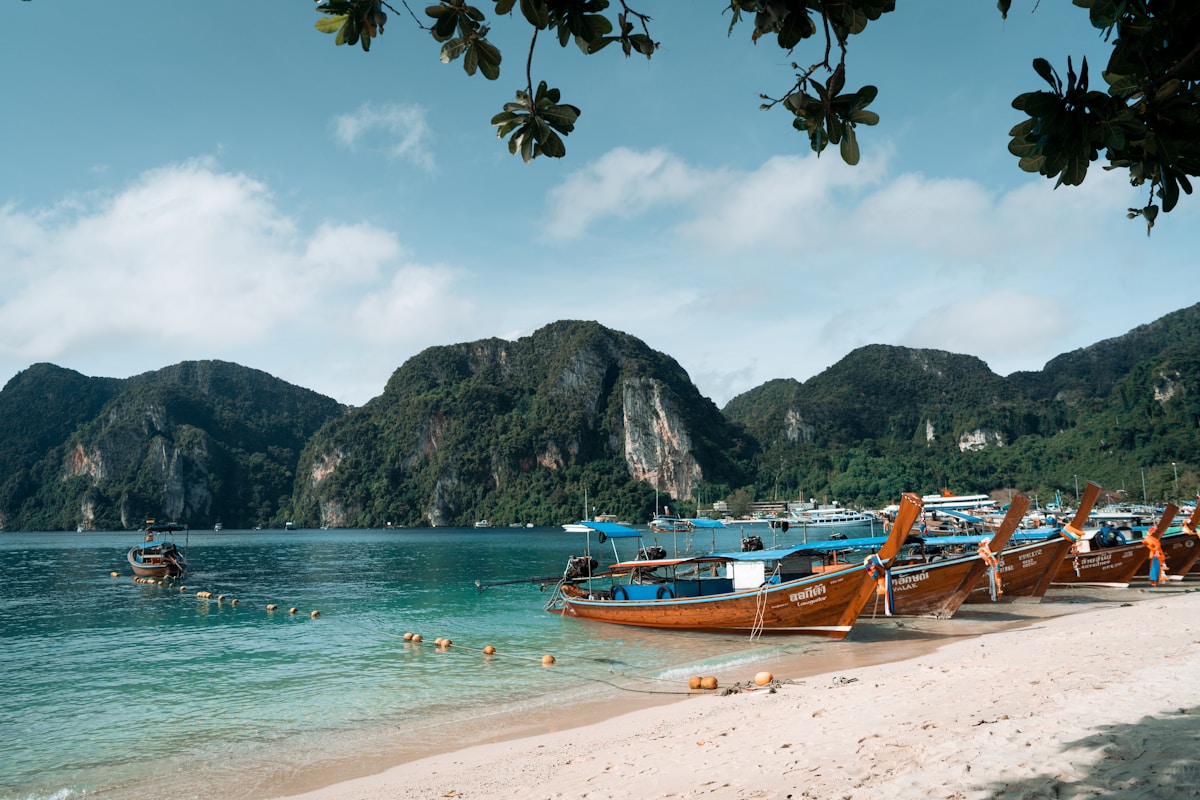
Day 15: Longtail or speedboat from Railay/Ao Nang to Koh Phi Phi (1.5–2 hours, ฿300–500). Check in at Ton Sai (the main village - no cars, narrow lanes).
Browse hotels in Koh Phi Phi on Booking.com
Day 16 - Koh Phi Phi:
- Viewpoint hike: 20 minutes from the village, ฿30 entry. Arrive before 7am for sunrise with almost no crowds. The view over both bays simultaneously is the best single image in the southern Andaman.
- Maya Bay boat tour: join a small-group early tour (depart 7am) to avoid the day-trip crowds. The bay is genuinely beautiful inside.
- Afternoon snorkelling at Long Beach (from shore) or Bamboo Island (included in most boat tours).
Day 17: Ferry to Koh Lanta (2 hours from Phi Phi, ฿400–600).
Days 17–18 - Koh Lanta:
- Kantiang Bay: the most beautiful beach on the island - rent a scooter (฿200/day) and ride the west coast road south.
- Ko Ha snorkelling or diving day trip: the Cathedral Cave is the highlight - an air-filled sea cave entered through an underwater arch. ฿1,200–2,500 depending on dive/snorkel.
- Koh Lanta National Park: lighthouse viewpoint, park forest, monitor lizards at the entrance.
Browse hotels in Koh Lanta on Booking.com
Days 19–21: Final island or return to Bangkok
Option A - Add Koh Tao (Gulf Coast): This requires backtracking - ferry from Koh Lanta to Surat Thani, then ferry to Koh Tao. 8–10 hours total. Only viable with 3 full nights on Koh Tao.
Option B - Stay in Koh Lanta: Relax, dive, read. Koh Lanta rewards staying. An extra day at Kantiang Bay is not wasted.
Option C - End in Phuket: Ferry Koh Lanta to Phuket (3 hours by speedboat via Ao Nang, ฿900–1,200). One or two nights in Phuket Old Town for food and architecture before the flight home.
Day 21: Depart from Phuket International Airport (for Andaman route) or return to Bangkok via Surat Thani for departures from Suvarnabhumi.
Alternative: Gulf Coast islands route (Days 11–21)
Replace Krabi/Phi Phi/Lanta with:
- Days 11–14: Koh Samui - beaches, Ang Thong Marine Park day trip
- Days 15–17: Koh Tao - diving, snorkelling, Koh Nang Yuan
- Days 18–20: Koh Phangan - Thong Nai Pan, Full Moon Party (if dates align), Sail Rock snorkelling
- Day 21: Return to Bangkok via ferry + bus from Surat Thani, or fly Koh Samui to Bangkok
This route has better diving (Koh Tao) but slightly less dramatic scenery than the Andaman coast. Best in the dry season (November–April); the Gulf of Thailand’s weather pattern is almost inverse to the Andaman.
Practical notes
Booking order: International flights → Chiang Mai overnight train (books out) → elephant sanctuary (books out 1–2 weeks ahead) → Railay accommodation in high season → Phi Phi accommodation in high season
Money: ATMs across all stops. Rural areas (Doi Suthep, national parks) prefer cash. Carry some cash between major stops.
SIM card: Buy at the airport on arrival - DTAC or True Move H 30-day packages (฿300–500) cover the whole route. Or order a Thailand eSIM before you fly to avoid queuing at the airport.
Health: No malaria risk on this route. Dengue is present - use DEET repellent, especially at dawn and dusk in Chiang Mai.
Destination guides
Bangkok · Chiang Mai · Chiang Rai · Krabi · Koh Phi Phi · Koh Lanta · Koh Samui · Koh Tao · Koh Phangan
Browse tours and experiences across Thailand to book elephant sanctuaries, island day trips, and guided activities along this route.
See also: Getting from Bangkok to Chiang Mai · Full Moon Party guide · Bangkok travel guide · Chiang Mai travel guide · Chiang Rai travel guide · Koh Tao diving guide · Thailand island hopping · Two weeks in Thailand · Best tours in Thailand
Book Your Trip
- Flights - Find the best fares to Thailand
- Travel Insurance - Get covered before you go
- eSIM - Stay connected from landing
- Airport Transfers - Pre-book your transfer from Bangkok or Phuket
- Car Rental - Compare prices across providers
- Hotels - Compare and book accommodation on Booking.com
- Tours & Activities - Browse Thailand tours on GetYourGuide