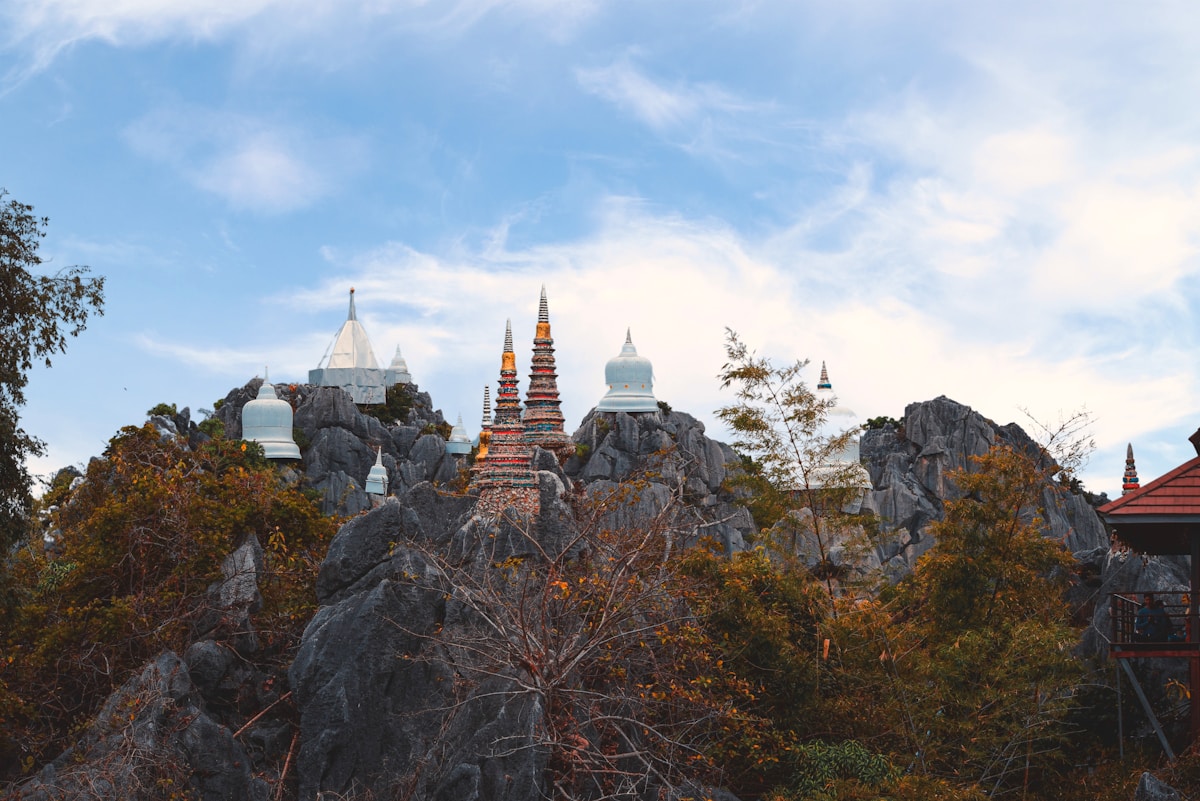
Lampang is the kind of northern Thai city that rewards visitors who give it a night or two - broad enough to feel like a real city, compact enough that the historic quarters are genuinely walkable. It has better temples than most of the north outside Chiang Mai, a Burmese teak architectural legacy that gives the old town a distinctive character, and it sits 100 km from Chiang Mai on the Bangkok–Chiang Mai rail corridor, making it easy to incorporate into any northern itinerary.
Accommodation here is almost entirely budget to mid-range. There is no international luxury chain in Lampang - the top-end options are solid boutique or business hotels that would be classified as mid-range anywhere else.
Wang River and Ratchadapisek Road area
The Wang River bisects the city from north to south, and the riverside area between Ratchadapisek Road and the water is the most atmospheric part of the city. Horse-drawn carriages depart from here; the old Burmese-style shophouses line the streets nearby; and several of Lampang’s most-visited temples - Wat Phra Kaeo Don Tao, Wat Sri Chum - are within walking distance.
- Budget (฿350–700): Several small guesthouses on Si Sangwan Road and along the river run basic air-con rooms from approximately ฿350–700. Roong Ruang Hotel is one of the oldest addresses in the area - functional rather than charming, but central. Pin Hotel near the river offers clean budget rooms and a helpful owner who speaks English.
- Mid-range (฿900–2,200): The Riverside Guesthouse is the most pleasant mid-range option in this zone - teak-accented rooms in an older property, a garden, and a restaurant overlooking the Wang River that is genuinely good for evening meals. Rates run approximately ฿900–1,600 as of 2026.
- Upper mid (฿2,200–3,500): Lampang River Lodge, on the north bank of the Wang River outside the immediate city, offers teak bungalows in a garden compound with a pool and riverside access. Rates run approximately ฿2,000–3,500 - the most resort-like option near the city, though 5 km from the historic centre.
Old town and Kad Gao market area
Lampang’s old town concentrates around Kad Gao (the old market) and the streets north of it, where Burmese teak shophouses and old temples sit alongside local restaurants and coffee shops. A Saturday Walking Street Market activates the area on weekends.
- Budget (฿400–900): Several smaller guesthouses in the old town streets run approximately ฿400–800. Lampang Wiang Thong Hotel offers large rooms at budget prices - dated decor but good value.
- Mid-range (฿1,200–2,500): Nine House Boutique Hotel in the old town district runs approximately ฿1,200–2,000 and has the most design-conscious rooms in Lampang - restored wooden building, comfortable beds, good coffee. Book in advance as it has limited rooms.
- Business class (฿1,800–3,200): Wianglakor Hotel is the most prominent business hotel in the city centre - large rooms, pool, meeting facilities, and reliable service at approximately ฿1,800–3,200. Good choice for anyone visiting for longer than a night.
Near the Thai Elephant Conservation Center
The Thai Elephant Conservation Center (TECC) is 13 km north of Lampang on Route 11. It operates the most legitimate elephant programme in the north - no riding, emphasis on mahout training and elephant welfare. The center has on-site accommodation (Elephant Conservation Center Bungalows, approximately ฿1,500–2,500) which allows early morning access before the day visitors arrive.
If you are visiting the TECC and the city on the same trip, staying in town and arranging a half-day visit works well - the center is a short songthaew or taxi ride away.
Ceramics and Ko Kha district
Lampang is famous throughout Thailand for its hand-painted chicken ceramics (literally every Thai kitchen has a piece) - the production centre is Ko Kha district, about 20 km south. There is no accommodation specifically aimed at ceramics visitors, but if you are making Ko Kha a focus, the city-centre hotels are the practical base.
Local food highlights
- Khao Soi: Northern Thai curry noodle soup, more subdued than the Chiang Mai version. Excellent at the morning markets around Kad Gao.
- Sai Oua: Northern Thai herbed sausage, sold from roadside grills from early morning. Approximately ฿60–100 for a portion as of 2026.
- Lampang morning market (Talat Noi): Opens from 4 am and has the best fresh produce and local snacks. Short walk from the riverside area.
- The Riverside Restaurant: On the Wang River bank, this is Lampang’s most established dinner spot - open evenings, good Northern Thai menu, live music on weekends. Expect approximately ฿200–450 per person as of 2026.
Our verdict
The Riverside Guesthouse gives the best combination of atmosphere and location in Lampang. Nine House suits visitors who want a boutique feel in the old town. For business or a longer base, Wianglakor is reliable. The city makes an excellent one or two-night stop between Bangkok (by overnight train) and Chiang Mai - the temples and the TECC justify the detour.
See also: Chiang Rai where to stay · Thai Elephant Conservation Center guide · Getting around northern Thailand