Top Lampang Tours at a Glance
| Tour | Duration | Price (from) | Group Size | Highlights |
|---|---|---|---|---|
| Lampang City & Elephant Conservation Centre Day Tour | Full day | from $38 | Small group | Thai Elephant Conservation Centre, carriage ride, Wat Lampang Luang |
| From Chiang Mai: Lampang Day Trip | Full day | from $42 | Small group | Horse-drawn carriage, temples, TECC, lunch |
| Lampang Temples & Local Market Walking Tour | 3 hrs | from $20 | Small group | Wat Phra That Lampang Luang, Kad Kong Ta market |
Browse all Lampang tours → GetYourGuide
Lampang is the kind of Thai city that rewards travellers who arrive without expectations. It is not Chiang Mai - it has no international scene, no backpacker quarter, and almost no itinerary-chasing. What it has are genuinely good Lanna temples in various states of preservation, the most ethical major elephant facility in northern Thailand, an old town that still uses horse carriages, and a pace so unhurried that two days here feel longer than they do anywhere busier.
Wat Phra That Lampang Luang
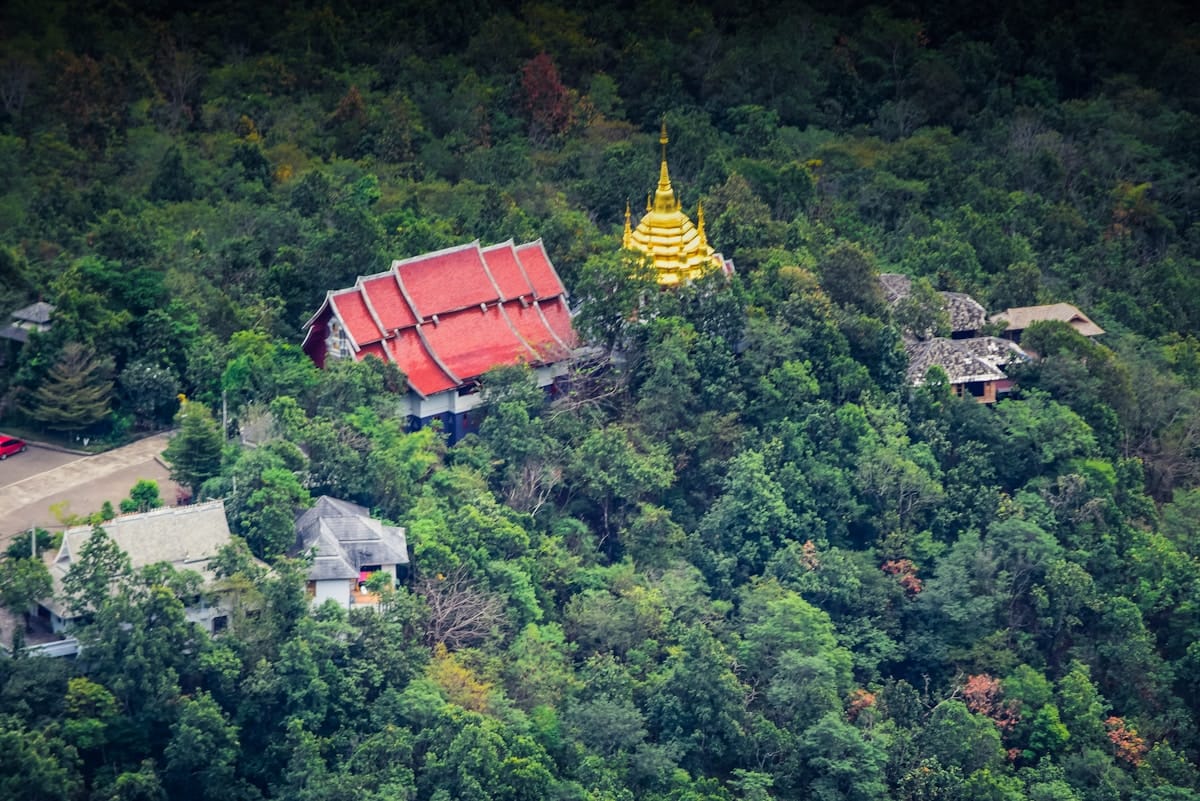
The most important historical site in Lampang province and one of the finest Lanna-style temple complexes in Thailand. The main wihan (ordination hall) dates to the 15th century - the oldest surviving wooden wihan in the country - and the architectural detail is exceptional: layered roof tiers, gilded carved screens, and a giant reclining Buddha visible through a narrow doorway. The central chedi enshrines a relic of the Buddha’s hair.
The complex is 18km southwest of Lampang town, in Kok Kha district. By songthaew or motorcycle taxi from the city: approximately ฿150–250. Entry is free; a donation box is at the entrance. Open 6am–8pm daily. The interior is best visited in the morning when the light enters through the carved screens.
Adjacent to the main complex is a small sala containing an inverted image of the main chedi - a photographic curiosity created by a pinhole effect through a small hole in the wall. The image is upside-down and focused; guides demonstrate it with a white sheet.
Thai Elephant Conservation Centre (TECC)
30km north of Lampang, near Thung Kwian Market on the Chiang Mai highway. The centre is a government facility established in 1993 to care for retired working elephants, injured rescue cases, and mahout training. It is not a jungle sanctuary or a tourist camp - the environment is more institutional - but the elephant welfare standard is among the highest in the country.
What visitors see: The morning programme (9am and 10am) includes a brief performance of historical elephant work (logging demonstrations using replicated traditional harnesses), elephant bathing in the river, and a hospital tour showing current rescue and treatment cases. The hospital is the genuinely interesting part - the prosthetics and rehabilitation cases on display represent real veterinary work.
Day pass: Approximately ฿200 for foreigners (as of 2026); elephant riding is not offered. Mahout-for-a-day programmes (฿2,500–4,000) are available with advance booking and allow participants to work with the mahouts and their elephants through a morning programme.
Getting there: Songthaew toward Chiang Mai from Lampang’s market area, ask to stop at TECC (approximately ฿30–50). By taxi: approximately ฿200 one-way from Lampang.
Horse Carriage Tour
Lampang’s horse-drawn carriages are a genuine historical institution rather than a staged attraction - they were used for real transport until the 1980s and still operate for tourists today, driven by the families of former commercial operators. The carriages cluster near the Riverside area and near Wat Phra Kaeo Don Tao.
A standard circuit covers the old town along the Wang River (approximately 30 minutes, ฿150–300). A longer itinerary includes Wat Phra Kaeo Don Tao and the old Burmese quarter (45–60 minutes, ฿400–600). Prices are negotiable and vary by season.
Old Town Temples
Lampang’s old town, on the north bank of the Wang River, has several temples worth walking between. None individually matches Wat Phra That Lampang Luang, but the concentration makes for a good afternoon on foot.
Wat Phra Kaeo Don Tao - In the old town, this was the home of the Emerald Buddha (now in Bangkok’s Grand Palace) for 32 years. The 19th-century wihan is Burmese-influenced - carved woodwork and gilded stucco details in a different style from the earlier Lanna architecture. Entry approximately ฿50.
Wat Chedi Sao Lang - 5km north of town, 20 white chedis arranged in a field - small, well-maintained, and almost always uncrowded. The name means “temple of 20 chedis.” Good for photography in the morning light.
Wat Pongsanuk Tai - Near the central market, this temple has a 13th-century Haripunchai-style chedi that predates Lanna rule. The surrounding courtyard has teak pavilions in traditional Lanna style; the oldest surviving community wat in the city.
Wang River and Night Market
The Wang River runs through the old town and the bank has been developed as a weekend night market area. The Kad Kong Ta Walking Street (Talat Gat Khong Ta) runs every weekend along the riverside near Ratsada Road - vendors selling northern Thai food, local ceramics, and Lampang’s famous blue-and-white “cockerel” pottery (a distinctive ceramic tradition).
The pottery is worth a mention: Lampang produces most of Thailand’s domestic blue-and-white stoneware, and there are factory shops north of town where the full range is on display and sold at source prices.
Pottery Factory Visits
Lampang province is Thailand’s largest producer of ceramics. The factories north of town (on the road toward TECC) welcome visitors and sell seconds and full-price pieces directly.
Dhanabadee Ceramic - A family factory that has been producing Lampang ceramics for generations. The showroom has the blue-and-white “Rooster” pattern pieces for which Lampang is known (the rooster design was popularised for the Chinese-Thai market in the early 20th century). Factory price: approximately 30–50% below Bangkok shop prices.
Practical Information
Getting to Lampang: Bus from Chiang Mai (1.5 hours, approximately ฿100). Train from Chiang Mai (2.5 hours; scenic route, approximately ฿150–300 depending on class). From Bangkok: overnight bus (9–10 hours) or train (12–13 hours to Lampang station).
Getting around: Songthaews run the main routes (฿15–30). Motorcycle taxis for point-to-point trips (฿30–100). For Wat Phra That Lampang Luang and TECC, either take a songthaew in the right direction and ask to be let off, or hire a tuk-tuk for a half-day (approximately ฿400–600 for both stops).
Where to stay: Budget options near the Wang River include Riverside Guesthouse (฿300–600/night). Mid-range: Lampang River Lodge on the river (฿1,200–2,200/night, pool, good breakfast). The city is small enough that location matters less than in bigger cities.
When to visit: November to February is the coolest and most comfortable. Lampang can get hotter than Chiang Mai in March–May as it sits in a more sheltered valley. Rain from June to October is moderate; temples remain open.
For day tours covering the temple and elephant centre, browse Lampang tours and activities.
For accommodation in Lampang, see our Lampang hotels guide.
See also: Chiang Mai guide · Chiang Rai guide · northern Thailand itinerary