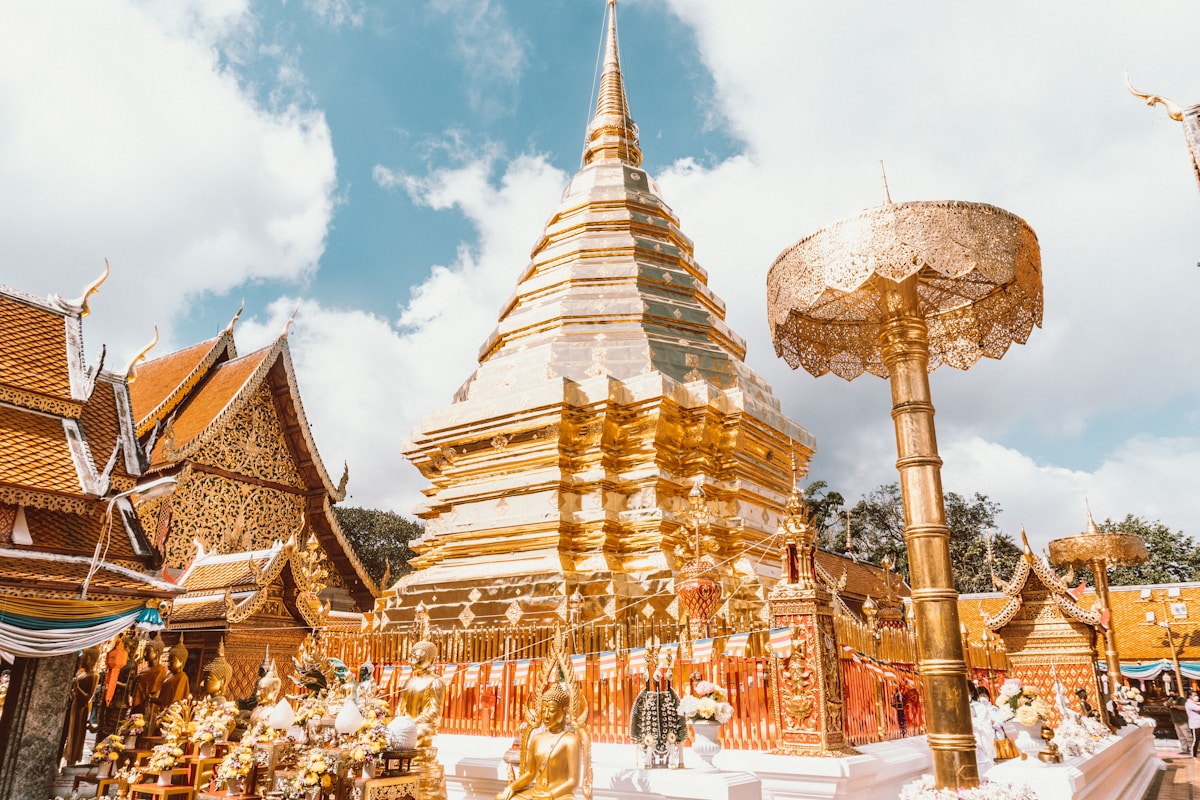
Wat Phra That Doi Suthep sits on the summit of Doi Suthep mountain at 1,080 metres above sea level, 15 kilometres west of Chiang Mai’s old city. It’s the most important temple in northern Thailand and has been a place of pilgrimage since 1383 CE, when the temple was established after a white elephant carrying a relic of the Buddha climbed the mountain and trumpeted three times before dying - taken as a sign that the relic should be enshrined there.
The temple’s golden chedi (stupa) is visible from much of Chiang Mai on clear days and functions as the city’s most recognisable landmark. The views from the terrace extend across the Chiang Mai valley, and in cool-season mornings a sea of cloud fills the lowlands below.
Top Guided Tours at a Glance
| Tour | Duration | Price (from) | Group Size | Highlights |
|---|---|---|---|---|
| Doi Suthep Temple & Hmong Hill Tribe Culture Tour | Half day | from ฿800 | Small group | Golden chedi, hilltop views, Doi Pui Hmong village |
| Doi Suthep, Orchid Farm & Sticky Waterfall | Half day | from ฿900 | Small group | Temple, orchid gardens, Bua Tong sticky waterfall |
| Doi Suthep & Wat Umong Twilight Tour | 4 hrs | from ฿1,000 | Small group | Sunset light on the chedi, Wat Umong tunnel temple |
| Private Doi Suthep & Chiang Mai City Temple Tour | 5 hrs | from ฿1,800 | Private | Personalised itinerary, Doi Suthep + old-city temples |
Entry (THB 30) is not included in most tour prices — pay at the gate. Going independently by songthaew costs approximately THB 50 each way.
Browse all Chiang Mai tours → GetYourGuide
Entry and Opening Hours
- Opening hours: 06:00–20:00 daily
- Admission: THB 30 per person (as of 2026)
- Dress code: Shoulders and knees must be covered. Sarong wraps are available to borrow free of charge at the temple entrance
- No advance booking required
The temple receives its highest traffic between 09:00 and 12:00 when organised tour groups arrive. For the most peaceful visit, aim to arrive at or just after opening (06:00) to catch the monks’ morning chanting, or come after 16:00 when tour groups have left and the light for photography is at its best.
Getting to Doi Suthep from Chiang Mai
By songthaew (recommended): Red shared trucks (songthaews) depart from the base of Huay Kaew Road in Chiang Mai’s old city. They don’t run on a fixed schedule - they fill up and depart when full. Cost: approximately THB 50 per person each way (as of 2026). Journey time: 30 minutes. The drop-off point is at the base of the 309-step Naga staircase leading up to the temple.
By private taxi or grab: From the Nimman or Old City area: approximately THB 200–400 one-way by metered taxi or Grab, depending on traffic and time of day. Many visitors take a taxi up and a songthaew back to keep costs reasonable.
By motorbike (experienced riders only): The road up Doi Suthep is wide and well-paved but has tight switchback bends. Motorbike rental in Chiang Mai runs approximately THB 200–300 per day. Note: the road is shared with tour vans and buses; overtaking on the bends is dangerous. Parking is available at the top.
By organised tour: Many tours from Chiang Mai combine Doi Suthep with Bhubing Palace (the royal winter residence, 5 km further up the mountain) and sometimes with Hmong tribal villages. A half-day tour typically costs THB 600–1,200 per person via GYG or local operators, including transport and guide.
The 309 Steps - or the Funicular
At the base of the temple sits a dramatic staircase flanked by 16th-century Naga (serpent) balustrades. The 309 steps climb steeply through trees to the main terrace.
A small funicular (cable car) operates alongside the staircase for those who prefer not to climb: cost approximately THB 20–30 each way. The cable car runs during opening hours. Many visitors walk up and take the cable car down.
What to See Inside
The Golden Chedi is the heart of the complex. The copper-plated, gilded stupa was built in the 14th century and rises approximately 22 metres. It’s one of the most revered Buddhist relics in Thailand; devotees circumambulate it clockwise on festival days. The chedi is surrounded by parasol decorations and flanked by four Buddha images facing the four cardinal directions.
The Temple Terrace and City Views: The main terrace opens to a panoramic view of Chiang Mai and the valley. On clear days in the cool season (November–February), the view extends 50 kilometres or more. Early morning light and late afternoon light are the best for photography.
The Wihan (Assembly Hall) contains two highly venerated Buddha images - the Phra Phuttha Sihing and a crystal Buddha - along with murals depicting the temple’s founding legend.
Monks and Morning Prayers: Early morning visits (06:00–07:30) coincide with monks’ chanting, which can be heard throughout the complex. Visitors are welcome to observe respectfully.
The Naga Staircase itself is worth pausing to appreciate - the 16th-century balustrades on either side represent seven-headed Nagas (sacred serpents), and the detail in the craftsmanship is remarkable.
Bhubing Palace and Beyond
If you’re making the drive up Doi Suthep, continue 5 kilometres further to Bhubing Palace (Phuphing Ratchaniwet) - the Royal Winter Residence built in 1961. The palace itself is not open to the public, but its gardens are accessible when the royal family is not in residence (typically January through March and August through November; check current status before visiting). Garden admission: approximately THB 50 per person. The roses here are particularly impressive during the cool season.
Further up the mountain, the road passes through Doi Pui - an Hmong hill tribe village that has become a tourist attraction, with handicraft stalls and a small tribal museum. The setting in the mountains is beautiful even if the village is heavily visited.
Chiang Mai’s Other Temples
Doi Suthep sits at the top of any Chiang Mai temple itinerary, but the old city contains numerous wats worth visiting on foot or by bicycle:
- Wat Chedi Luang - massive 14th-century ruined chedi in the centre of the old city; free, open daily, monks available for informal “Monk Chat” sessions
- Wat Phra Singh - the most important temple within the old city walls; houses the revered Phra Singh Buddha image
- Wat Suan Dok - large complex with a forest of whitewashed chedis containing ashes of Chiang Mai’s royal family; popular Monk Chat programme Tuesday/Thursday/Sunday at 17:00
A self-guided walk between these three takes about 2 hours and costs nothing beyond a small donation box at each temple.
Practical Tips
- The mountain road can be blocked by traffic on busy weekends, particularly around Songkran (April) and Loy Krathong (November). Leave early on public holidays.
- The summit is approximately 5–8°C cooler than Chiang Mai city, which matters in January and February when the city can already be cool. Bring a light layer.
- Thunderstorms develop rapidly on the mountain in rainy season (May–October). If you see clouds building, head down before the afternoon storm hits - the road can become slippery quickly.
- The temple has no café or restaurant; there are food stalls at the base of the staircase and near the songthaew stop.