Southern Thailand Travel Guide
Phuket beaches, Krabi limestone cliffs, Koh Samui nightlife, Similan Islands diving. Southern Thailand spans 1,400km across two seas.
Southern Thailand stretches 1,400km from Chumphon to the Malaysian border, flanked on the west by the Andaman Sea and on the east by the Gulf of Thailand. The two coastlines don’t share a weather pattern, which means when the Andaman side (Phuket, Krabi, Ko Lanta) is raining in September and October, Koh Samui and the Gulf coast are often clear — and vice versa in May and June. Understanding which coast you’re on matters as much as knowing which island.
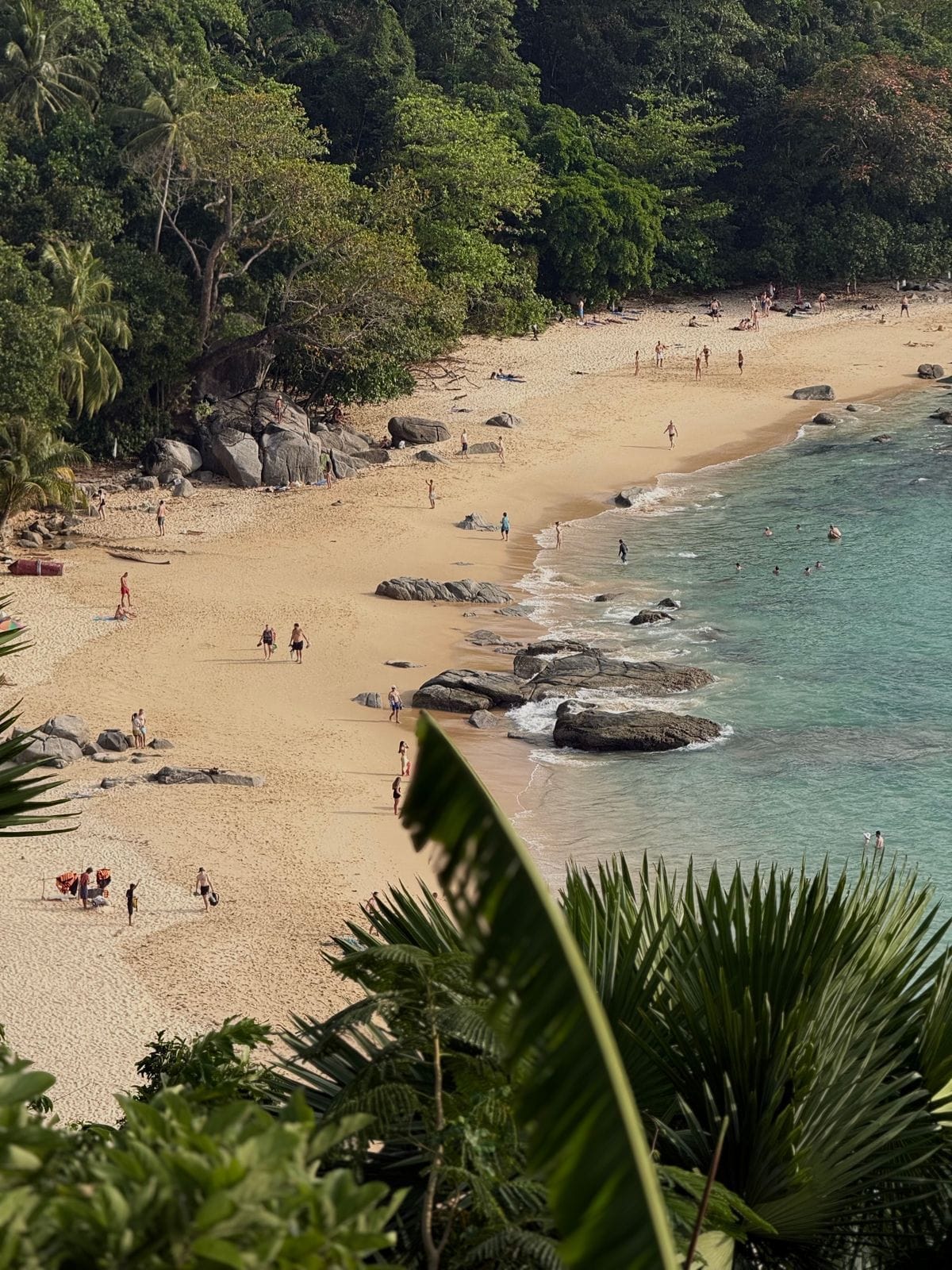
The south’s geography is defined by limestone karst formations rising from the sea, coral reefs, and some of the most photographed coastline in the world. It also has a distinct Malay-Muslim cultural character in the deep south — from Chumphon downward, mosques appear alongside temples, and the food shifts toward southern Thai and Malay flavours: yellow curry with turmeric, massaman with tamarind, fresh seafood grilled over coconut husks.
What Makes Southern Thailand Distinct
The south is defined by its beaches, but the character varies enormously. Phuket has the infrastructure of a mid-sized city — international hospitals, shopping malls, Michelin-starred restaurants alongside beach clubs. Krabi is more relaxed, with the iconic Railay Peninsula accessible only by longtail boat, vertical karst walls rising from the water, and a rock climbing scene centred on Tonsai. Koh Samui sits on the Gulf coast, with Chaweng Beach offering the most developed party scene outside Phuket and the Ang Thong Marine National Park (42 islands) a short speedboat ride away.
Further out, Ko Tao is one of the cheapest places in Asia to get PADI certified — the waters are warm (27–29°C year-round), clear, and busy with whale sharks from March to October. The Similan Islands (liveaboard only, no overnight stays permitted) are consistently ranked among the best dive sites in Southeast Asia, with visibility regularly exceeding 30m and encounters with manta rays and leopard sharks.
Getting There from Bangkok
Phuket: Flights from Suvarnabhumi take approximately 1 hour 20 minutes. Budget fares start around ฿800–1,800. The overnight bus from Bangkok’s Southern Bus Terminal (Sai Tai Mai) takes approximately 13–14 hours and costs approximately ฿600–900 — functional for those with time and a tight budget.
Krabi: Fly direct from Bangkok (approximately 1 hour 20 minutes). Alternatively, reach Krabi by overnight bus (approximately 12 hours) or fly to Phuket and take a minibus transfer (approximately 2.5 hours, ฿200–300).
Koh Samui: Fly direct from Bangkok Suvarnabhumi (approximately 1 hour 15 minutes) or fly to Surat Thani and take a bus-ferry combination (approximately 3–4 hours total, significantly cheaper). Bangkok Airways operates a near-monopoly on Samui flights, which keeps prices high — plan ahead or route via Surat Thani.
Ko Tao: No direct flights. Go via Surat Thani or Chumphon by bus, then ferry (night ferry from Chumphon approximately 6 hours, ฿400–600; high-speed from Surat Thani approximately 2.5 hours, ฿700).
Best Time to Visit
The Andaman coast (Phuket, Krabi, Ko Lanta, Ko Phi Phi) is best from November to April. The dry northeast monsoon keeps skies clear; seas are calm; visibility for diving is at its best. May through October brings the southwest monsoon — heavy rainfall, rough seas, and boat cancellations. Some Andaman islands (Ko Phi Phi, Ko Lanta) effectively close from June to September.
The Gulf coast (Koh Samui, Ko Phangan, Ko Tao) runs roughly opposite: best from December to August, with September and October bringing the heaviest rainfall. The Full Moon Party on Ko Phangan happens every month regardless of weather.
Must-See Highlights
Railay Peninsula, Krabi — Accessible only by longtail boat from Ao Nang (10 minutes, approximately ฿100), Railay is a narrow strip of land flanked by vertical karst cliffs that make it effectively an island. Phra Nang Cave Beach on the eastern tip is consistently ranked among Thailand’s finest beaches. Rock climbers come for the limestone faces at Tonsai; kayakers explore the sea caves at high tide. Browse Railay and Krabi tours for sea cave kayaking, longtail circuits, and rock climbing sessions. Accommodation ranges from ฿800 bamboo bungalows to ฿12,000 resort villas.
Koh Phi Phi viewpoint and Maya Bay — The twin islands of Ko Phi Phi Don (inhabited) and Ko Phi Phi Leh (uninhabited) sit between Phuket and Krabi. Maya Bay on Ko Phi Phi Leh — closed for coral rehabilitation from 2018 to 2022 — has reopened with restricted daily visitor numbers (access by speedboat only, approximately ฿1,500–2,500 including park fee). The viewpoint above Tonsai village on Ko Phi Phi Don requires a 30-minute scramble up uneven steps; the panorama of the twin bays is worth it.
Similan Islands diving — The Similan Islands National Park sits 84km northwest of Phuket and is open from October 15 to May 15 each year (closed during monsoon). Day trips from Phuket or Khao Lak take approximately 2 hours by speedboat — browse Similan Islands dive and snorkel tours from Phuket. Liveaboard trips of 2–4 nights allow access to deeper sites including Christmas Point (wall dive to 40m+) and Anita’s Reef. Our Khao Sok National Park tours guide covers the nearby rainforest option that pairs well with Similan dives.
Full Moon Party, Ko Phangan — The monthly gathering on Haad Rin Beach draws 20,000–30,000 people on the night of each full moon. It is what it is: a large beach party with multiple sound systems, fire shows, and neon-painted crowds. The surrounding days see Half Moon Party and Black Moon parties at separate venues. The Full Moon Party guide covers dates, getting there, and accommodation strategy.
Where to Stay by Budget
Phuket ranges from ฿400 guesthouses in Patong’s Bangla Road area to ฿35,000+ per night at Amanpuri and similar ultra-luxury resorts. The most atmospheric base for first-timers is Phuket Town’s Sino-Portuguese old quarter, where boutique hotels occupy shophouses from approximately ฿1,500–4,000. Kata and Karon beaches offer a quieter mid-range alternative to Patong.
Koh Samui: Chaweng is the party strip with the most options at all price points. Bophut (Fisherman’s Village) and Mae Nam on the north coast are quieter and more relaxed. The Koh Samui where to stay guide has zone-by-zone recommendations.
Krabi: Ao Nang is the main hub (budget ฿600–1,200, mid-range ฿1,800–4,000). The Krabi where to stay guide covers Ao Nang, Railay, and the nearby islands.
Island-Hopping the South
The Gulf and Andaman coasts are both designed for multi-island trips. The classic Andaman route connects Phuket, Ko Phi Phi, Ko Lanta, and Krabi by ferry and speedboat over 5–10 days. The Gulf route links Koh Samui, Ko Phangan, and Ko Tao by regular high-speed ferries (30–60 minutes between each). Our Southern Thailand island hopping itinerary covers a 7-day route across both coasts.
Related guides: Andaman coast island hopping · Thailand island hopping · Phuket island hub · Koh Samui island hub · Surat Thani where to stay · Hat Yai where to stay
Book an experience
Top experiences in Southern Thailand Travel Guide
Find the best tours and activities across Southern Thailand Travel Guide, with instant confirmation and free cancellation on most bookings.