Pai is a small mountain town in Mae Hong Son Province, 135km northwest of Chiang Mai, sitting at about 800m elevation in a lush valley. Its cool-season atmosphere - misty mornings, string-lit Walking Street, hot springs and waterfalls - has made it one of northern Thailand’s most beloved destinations. But Pai’s seasonality is sharp: it is extraordinary in November to February and genuinely unpleasant in March to April.
Quick Summary
| Season | Months | Temps (°C) | Air Quality | Crowds | Budget |
|---|---|---|---|---|---|
| Cool season | Nov–Feb | 8–25 | Good | ★★★★★ | High |
| Burning season | Mar–Apr | 22–36 | Poor–Dangerous | ★★ | Mid |
| Green season | May–Oct | 18–30 | Good | ★★ | Low |
Month-by-Month Breakdown
November - Cool season begins. Temperatures drop to 12–25°C (evenings around 12–15°C). Morning mist fills the valley - stunning from the hilltop viewpoints. Walking Street market is at its most active. Crowds: 4/5.
December - Peak season. Cool (8–22°C), clear, and beautiful. Christmas and New Year see Pai at maximum capacity - accommodation needs booking 4–8 weeks ahead. The string-lit Walking Street and surrounding guesthouses are magical in cool-season evenings. Crowds: 5/5.
January - Coldest month (6–20°C most days; hilltops occasionally near 5°C at dawn). Pai Jazz Festival typically takes place in late January - a charming local event on the riverside. Best conditions for hot springs (Tha Pai Hot Springs). Crowds: 5/5.
February - Still cool and clear (12–25°C). Pai Flower Festival adds colour to the town. Start watching air quality forecasts from late February as burning season risk approaches. Crowds: 4/5.
March - Burning season begins in earnest. Air quality deteriorates rapidly - hazy skies, eye irritation, smoke smell. AQI of 150–300 is common; some days exceed 300 (hazardous). Not recommended for anyone with respiratory conditions. Scenery loses the crisp visibility that makes Pai so photogenic. Crowds: 2/5.
April - Worst month for air quality in Pai. Temperatures also climb sharply (26–36°C). Songkran (April 13–15) gives a brief festival atmosphere but smoke makes it uncomfortable compared to Chiang Mai. The majority of regular Pai visitors specifically avoid this month. Crowds: 2/5.
May - Rains arrive and clear the smoke almost immediately. A transformation: air becomes fresh, the valley floods with green, and Pai becomes peaceful again. Temperatures drop to 18–28°C. Crowds: 2/5.
June - Full green season. Rice paddies vivid green. Mor Paeng Waterfall (8km from town) is at its most impressive. Rain usually comes in afternoon bursts; mornings are clear enough for scooter rides. Accommodation prices are significantly lower. Crowds: 2/5.
July - Rainy but atmospheric. The Pai River is full; bamboo rafting operators resume. Scooter rides require care on muddy mountain roads. Waterfalls at peak flow. Crowds: 1/5.
August - Heaviest rainfall but often beautiful mornings. Great month for slow travellers: cheap accommodation, quiet Walking Street, authentic local atmosphere. Crowds: 1/5.
September - Rains ease slowly. Landscapes still brilliantly green. Good conditions for Santichon Village (Chinese Yunnan village, 4km from Pai) and countryside cycling. Crowds: 1/5.
October - Transition month. Rain reduces; temperatures drop to 18–28°C. Beautiful clear afternoons begin to appear. An excellent low-key time to visit. Crowds: 2/5.
Festivals and Events Calendar
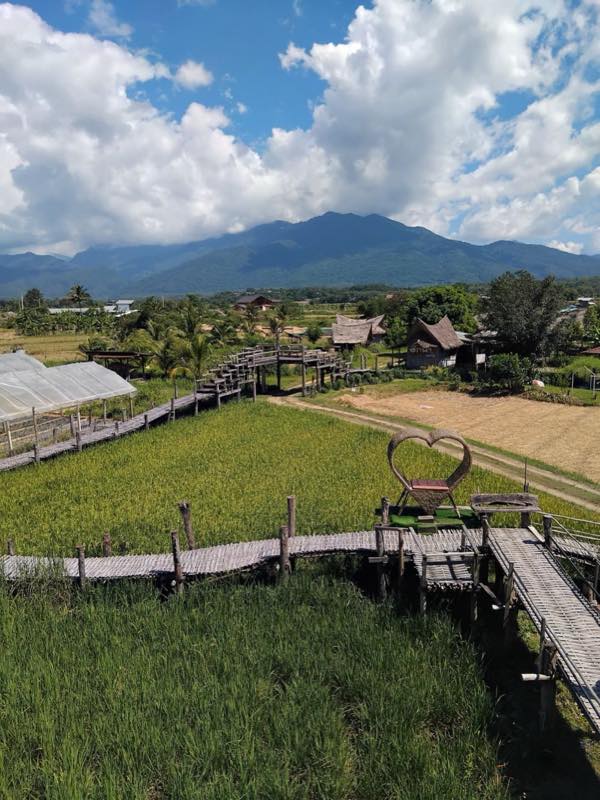 A wooden walkway through green fields below the hills near Pai.
- Late January - Pai Jazz Festival (riverside; free entry)
- February - Pai Flower Festival
- April 13–15 - Songkran water festival (Walking Street)
- November–December - Walking Street night market at peak activity
Budget Tips by Season
Cheapest: May to October. Guesthouses that charge ฿500–1,200 per night in December and January drop to ฿200–600 during the green season. Scooter hire (around ฿150–200 per day) is consistent year-round.
Peak premiums: Christmas and New Year week in Pai is surprisingly expensive for a small mountain town - demand significantly exceeds supply. Book 4–8 weeks ahead for the best options.
Getting around: Most visitors hire a scooter for ฿150–200 per day. This is the only practical way to reach most waterfalls, viewpoints, and hot springs. In green season, check road conditions before riding to remote areas.
Plan your trip: Once you have picked your season, book Pai hotels early for peak months, and compare our Pai hotel guide for the best areas to stay. Reserve Pai tours and activities ahead for the busiest weeks, and cancel-flexible options help if the weather shifts.
Verdict
November to early February is Pai at its best: cool temperatures, misty valleys, full cafe and market scene, and the distinctive northern Thai highland atmosphere that draws visitors back repeatedly. The Pai Jazz Festival in late January adds a pleasant and genuinely local character. Avoid March and April entirely - the combination of burning season smoke and extreme heat removes most of what makes Pai worth visiting. The green season (May to October) is an excellent alternative for budget travellers who want the rice paddy landscape and don’t need cool temperatures - just accept that afternoons are wet and some tracks are muddy.