Bangkok is one of Southeast Asia’s year-round destinations - it has no cold season and no period when the city shuts down. But the difference between visiting in January and visiting in May is significant: you are trading comfortable sightseeing conditions for lower prices and empty temples. Here is an honest breakdown of every month.
Quick Summary
| Season | Months | Temps (°C) | Crowds | Budget |
|---|---|---|---|---|
| Cool season | Nov–Feb | 26–32 | ★★★★ | High |
| Hot season | Mar–May | 33–40 | ★★★ | Mid |
| Rainy season | Jun–Oct | 28–35 | ★★ | Low |
Month-by-Month Breakdown
November - Cool season begins. Temperatures drop to 26–32°C with lower humidity. Loi Krathong (lantern and krathong festival) falls in November - a beautiful, photogenic event on the Chao Phraya River and canals. Crowds: 3/5.
December - Peak tourist season. 27–32°C, clear skies, manageable humidity. Christmas and New Year see large international crowds and higher hotel prices. Crowds: 5/5.
January - The ideal month: 26–31°C, low humidity, clear days. Chinese New Year preparations in Chinatown. High-season hotel prices but extremely pleasant conditions. Crowds: 4/5.
February - Still cool and pleasant (27–32°C). Chinese New Year (lunar calendar, usually Feb) sees Chinatown come alive. Good weather continues. Crowds: 4/5.
March - Temperatures climb quickly: 30–36°C by late March. Crowds thin as the heat builds. Hotel prices moderate. Crowds: 3/5.
April 13–15 - Songkran (Thai New Year). Water festival throughout the city. Extremely crowded with domestic travellers; book transport and accommodation ahead. Between water fights: 34–40°C. Crowds: 5/5.
May - Hot (33–38°C) and the beginning of the rainy season. Afternoon downpours begin. Hotels are notably cheaper. A good month if you are heat-tolerant and budget-conscious. Crowds: 2/5.
June - Rainy season in full swing: heavy afternoon storms, clearing evenings. 29–35°C. Hotel prices at lows. Rooftop bars and river cruises are near-empty. Crowds: 2/5.
July - Similar to June. Khao Phansa (Buddhist Lent) sees candle festivals at temples across the city - atmospheric and under-attended by international tourists. Crowds: 2/5.
August - Heavy rainy season: most rainfall of the year, potential flooding in low-lying areas. Still hot (28–34°C). Rooftop restaurant season - great to have venues to yourself. Crowds: 2/5.
September - Rainy season continues. Budget-friendly; museum visits and food tours are excellent in this weather. Temperatures ease slightly (27–33°C). Crowds: 2/5.
October - End of rainy season. Ok Phansa (end of Buddhist Lent) sees boat processions and Kathina ceremony at temples - a genuinely spiritual event. Temperatures easing to 27–32°C. Good value. Crowds: 2/5.
Festivals and Events Calendar
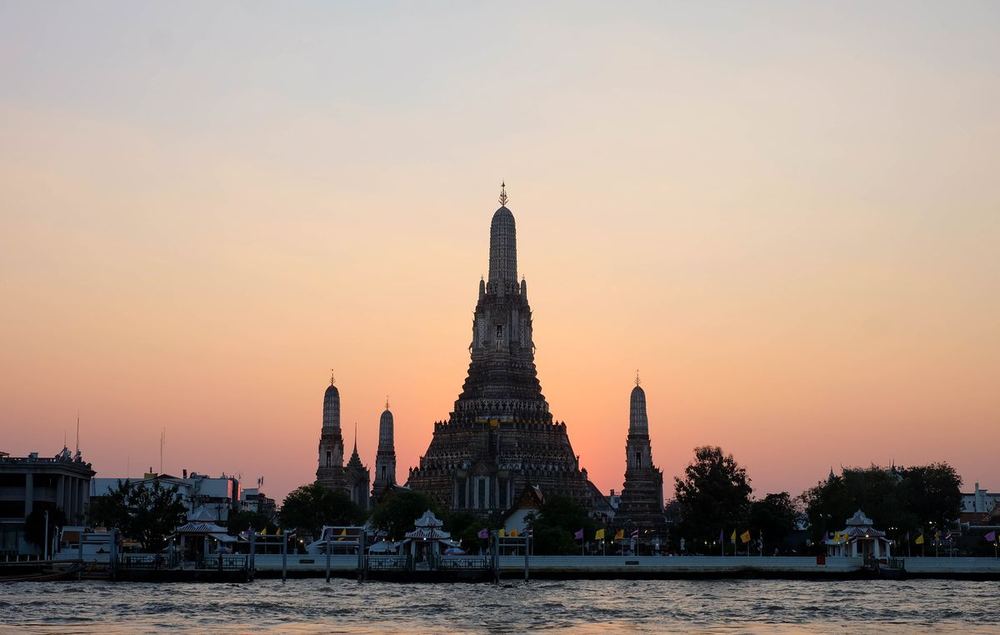 Wat Arun silhouetted at sunset across the Chao Phraya River, Bangkok.
- January - Chinese New Year preparations in Yaowarat (Chinatown)
- February - Chinese New Year (Yaowarat; exact date lunar)
- April 13–15 - Songkran water festival (Silom, Khao San, Siam Square)
- July - Khao Phansa candle processions at temples
- November - Loi Krathong and Yi Peng lantern festival (primarily Chiang Mai but celebrated in Bangkok too)
- December 31 - New Year countdown; Central World and Asiatique
Budget Tips by Season
Cheapest: June–September (rainy season). Hotels near the BTS Skytrain that cost ฿2,500–4,000 per night in peak season often drop to ฿1,200–2,000 during this period.
Best value: October and early November offer transitioning weather (increasingly pleasant) at prices still below peak season - probably the best-value window in Bangkok’s calendar.
Most expensive: December, January, and Songkran week. Book Songkran accommodation 2–3 months ahead.
Year-round savings: Bangkok’s BTS Skytrain and MRT cover most tourist areas efficiently at ฿16–59 per journey. The express boat on the Chao Phraya is even cheaper. Taxis are inexpensive but meter-only (refuse flat-rate offers). Food at street stalls and local restaurants rarely exceeds ฿60–120 per dish regardless of season.
Plan your trip: Once you have picked your season, book Bangkok hotels early for peak months, and compare our Bangkok hotel guide for the best areas to stay. Reserve Bangkok tours and activities ahead for the busiest weeks, and cancel-flexible options help if the weather shifts.
Verdict
November to February is Bangkok at its best: comfortable temperatures, low humidity, and the full city functioning at high gear. January stands out as the single best month for first-time visitors. Songkran in April is worth experiencing specifically - it is unlike any other festival in Asia - but know that you are visiting in peak heat. The rainy season (June to October) is genuinely underrated for budget travellers who do not need beach weather: hotel prices drop significantly, attractions are uncrowded, and Bangkok’s food and temple culture is fully available regardless of weather.