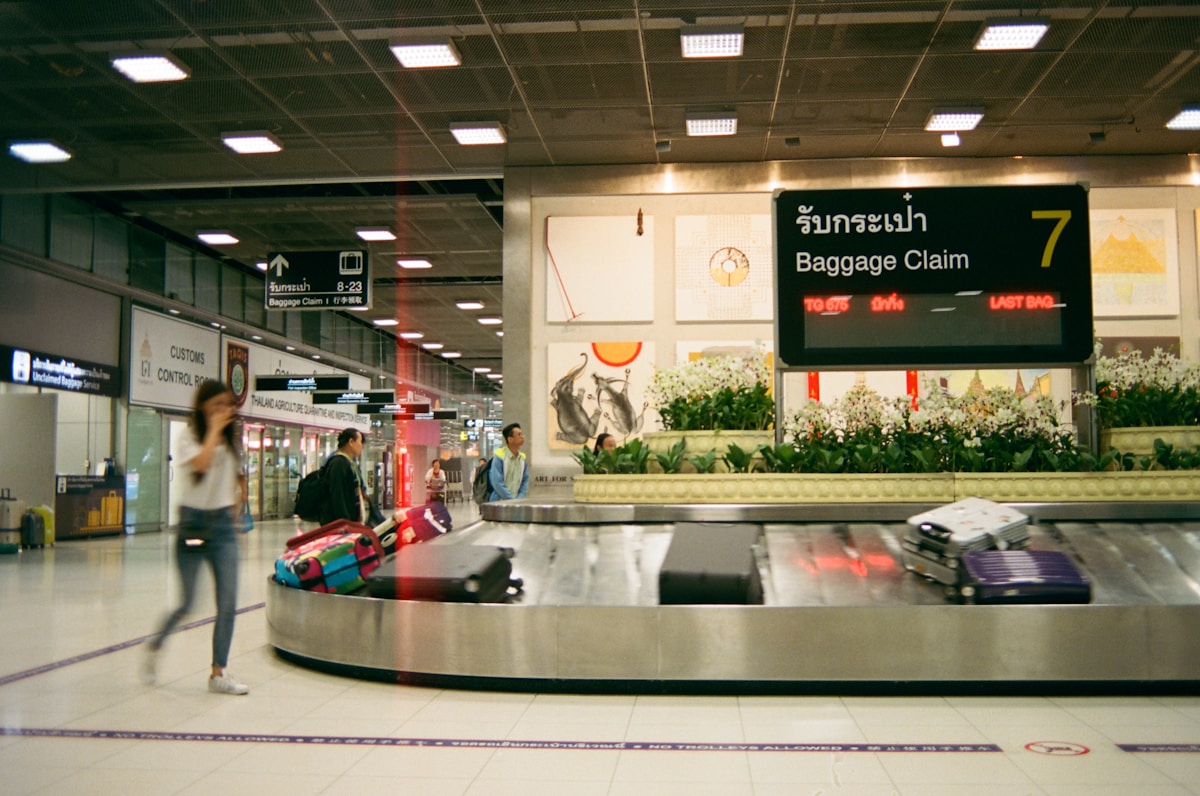
Thailand’s Civil Aviation Authority (CAAT) has introduced updated security procedures for checked baggage at all Thai airports, taking effect on 16 October 2026. The changes bring Thailand’s screening process in line with ICAO standards already applied across Europe, North America, and much of Asia.
What Is Changing
Under the new rules, airport security personnel are authorised to open and inspect checked baggage without the passenger present. Bags may be searched and resealed at any stage of the screening process — at check-in, during transfer, or before loading. A written notice will be placed inside any bag that has been opened.
The update applies at all Thai international and domestic airports, including Suvarnabhumi (BKK), Don Mueang (DMK), Phuket International (HKT), Chiang Mai International (CNX), and Koh Samui (USM).
Padlocks and Travel Locks
Standard padlocks that cannot be opened by security staff will be cut. If you want to secure a checked bag, use a TSA-approved travel lock — these have a universal keyhole that security can open and relock without damaging the bag. Zip ties and branded luggage straps can still be used; if security opens a bag secured with a zip tie, it will be resealed with an airport-provided strap alongside a written notice.
Items That Cannot Travel in Checked Bags
CAAT has signalled stricter enforcement of existing prohibited-item rules alongside the new screening procedures:
- Lithium batteries and portable power banks must go in cabin luggage only
- E-cigarettes, vapes, and heated tobacco devices must also travel in the cabin
- Alcoholic beverages above 70% ABV are prohibited in checked bags
- Flammable aerosols and gas canisters remain banned from all baggage
These rules apply to all airlines operating from Thai airports, including Thai Airways, Bangkok Airways, Thai AirAsia, Thai Lion Air, and Nok Air.
Practical Advice for Your Departure
For the first few months as the new screening workflow beds in, build an extra 20–30 minutes into your airport schedule — particularly at Suvarnabhumi and Don Mueang, which handle the majority of international traffic. Fragile items and valuables are best packed in your carry-on bag regardless, but it matters more now.
Passengers making connections through Bangkok with bags checked all the way to their final destination are not required to collect and re-check at Suvarnabhumi, so most transit travellers are unaffected.
For full guidance on arrivals and departures at Bangkok’s main hub, our Suvarnabhumi airport transfer guide covers transport, terminals, and connections. Our flights to Thailand guide has current route options by region, and our getting around Thailand guide explains domestic transport from each arrival airport.