
Yaowarat Road after dark is the best single street for eating in Bangkok. The neon comes on, the stalls roll out along the pavement, and a couple of kilometres of two-century-old Chinatown turns into one continuous restaurant. The trick is knowing which stalls are the famous ones and what to order at each - so here is the crawl we take people on, stall by stall, with prices as of 2026.
Before you go
- Go Tuesday–Sunday. Many key stalls close Mondays for street cleaning.
- Arrive by MRT. Wat Mangkon station exits straight onto the strip; traffic above ground is gridlocked from 18:00.
- Bring cash (small notes) and patience - the famous stalls queue, and the queue is part of the show.
The essential stops
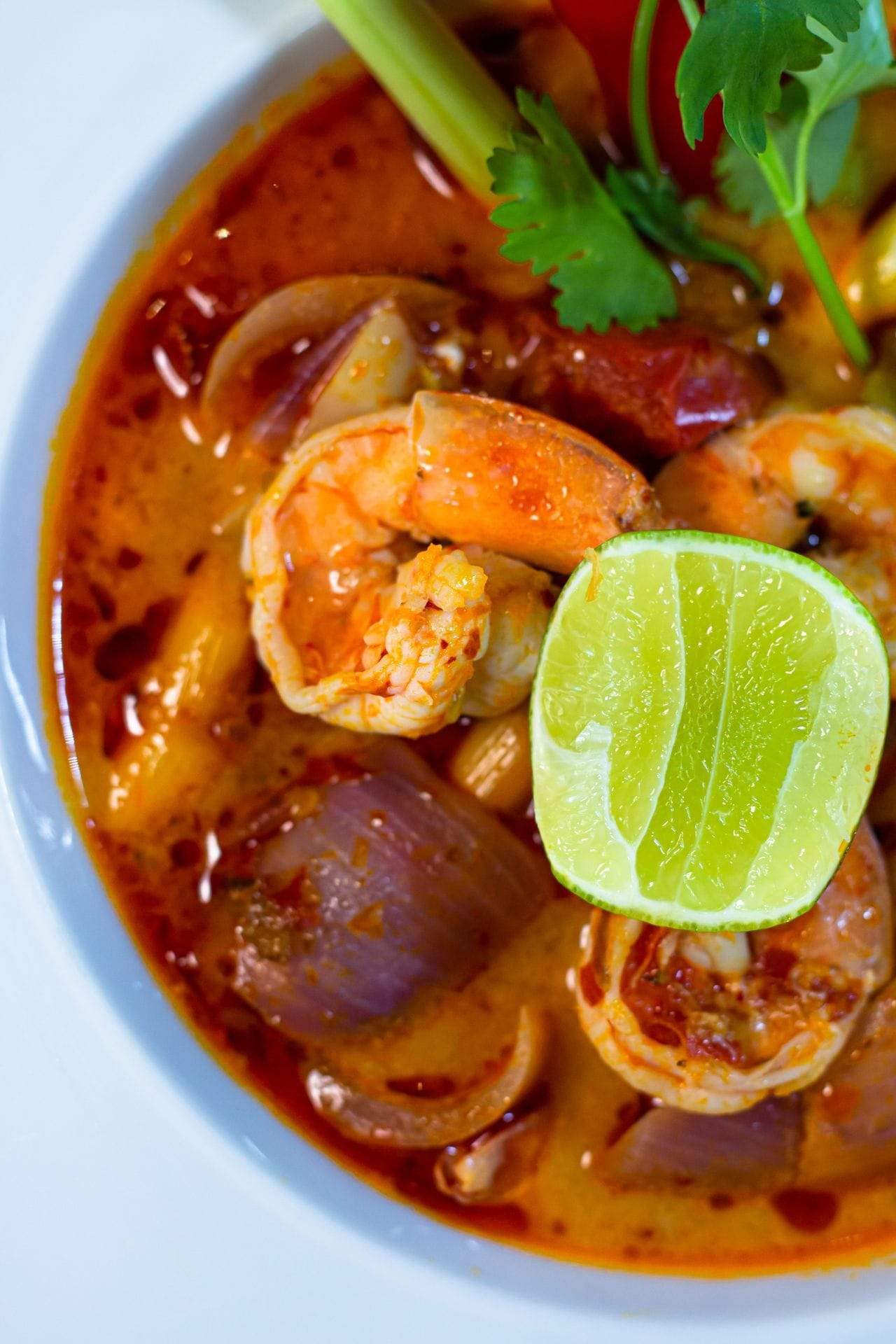 Bowl of tom yum soup with shrimp and herbs.
Nai Ek Roll Noodle (ก๋วยจั๊บนายเอ็ก)
Open since 1960, with the queue to prove it. The dish is kuay jab nam sai - peppery rolled rice noodles in a clear broth with crispy pork belly, approximately ฿60–100 a bowl. The pepper hits harder than it looks. They also do excellent stewed pork offal if you are game. Near the Soi Texas intersection; opens through the day, busiest at night.
Jek Pui curry stools
A Chinatown institution: a curry stall with no tables at all - you eat your plate of kaeng kari gai (Chinese-style yellow chicken curry over rice, approximately ฿50–80) sitting on red plastic stools in a circle on the pavement. Fast, cheap, and one of the oldest operating stalls in the district. Early evening only; when the pots empty, it closes.
The Phadungdao seafood corner
Where Soi Phadungdao meets Yaowarat, the green-shirt and red-shirt seafood crews (T&K Seafood and Lek & Rut) have faced off for decades, grilling river prawns and whole fish on the pavement. Expect approximately ฿200–500 per dish - grilled prawns, curried crab, morning glory - and tourist-heavy but genuinely fun tables. Pick whichever queue is shorter; the rivalry matters more to them than to your dinner.
Yaowarat Toasted Bread
The dessert queue you can see from across the street. Charcoal-toasted buns filled with sangkaya custard, chocolate, or condensed milk and butter - approximately ฿25–40 each. Order two; you will regret ordering one.
Patonggo and soy milk for the finish
Around the Old Market (Talat Kao) end, stalls fry patonggo (Thai-Chinese doughnut crullers, approximately ฿20–40 a bag) to dip in hot soy milk or pandan custard. The classic way to end the crawl - or start the next morning, since the same area does a strong dawn trade.
Beyond the stalls
 Grand Palace roofs, Bangkok.
If you want a table and air-conditioning between rounds:
- Bird’s nest and shark-free alternatives: Yaowarat’s old dessert houses serve bird’s nest soup at wildly varying prices - treat it as a curiosity, not a must.
- Michelin-listed shophouses: Chinatown holds several Bib Gourmand picks; queues for the most famous (the charcoal-wok crab omelette legends among them) can run hours and resale apps have sprung up around them. Our honest advice: the ฿60 noodle stalls deliver more pleasure per minute of queueing.
- Kuay tiew kua gai - chicken noodles flash-fried in pork fat over charcoal - is the district’s other signature; look for the stalls on Soi Phadungdao and around Talat Kao, approximately ฿60–100.
A suggested route
- MRT Wat Mangkon, exit onto Yaowarat Road (18:00–18:30)
- Kuay jab at Nai Ek Roll Noodle
- Jek Pui curry stools (if still open)
- Grilled prawns at the Phadungdao corner - share, don’t fill up
- Toasted buns at Yaowarat Toasted Bread
- Patonggo and soy milk at the Talat Kao end
- Walk it off down Sampeng Lane’s alleys
Total damage: approximately ฿400–700 per person, more with seafood.
Book a Guided Chinatown Food Tour
Yaowarat rewards confidence - knowing which queue is for the stall that’s been there since 1960 and which is a tourist magnet from a recent article makes a real difference to the evening. A guided Chinatown food tour moves faster than navigating solo because the guide speaks to vendors, handles ordering in the language of a regular, and knows which famous stall is closed tonight. Most tours also cover the alleys and backstreets off the main road - where the older Chinese-Thai stalls operate at their own pace, away from the crowds on Yaowarat itself.
Book a Bangkok Chinatown food tour - evening tours typically cover four to six stops and include the essentials above.
Yaowarat is one chapter of the city’s food story - our full Bangkok food guide covers the rest of the map, and if you are new to ordering at stalls entirely, start with our Thai street food guide for the how-to.
Plan Your Trip
Before the trip: travel insurance for Thailand covers medical costs if you have an adverse reaction to anything - street food in Bangkok is generally safe, but cover is cheap and worth having. A Thailand eSIM means data from the moment you land, helpful for navigating Yaowarat’s alley system and pulling up stall reviews mid-crawl. For accommodation, search hotels in Bangkok on Booking.com - staying near MRT Hua Lamphong or MRT Wat Mangkon puts you within a short walk of Yaowarat for evening crawls.