Phuket’s food is not standard Thai food
Most visitors to Phuket eat at beachside tourist restaurants and leave without realising that Phuket has one of the most distinctive food cultures in Thailand. The island’s cuisine is defined by its Hokkien Chinese heritage - descendants of Hokkien-speaking Chinese migrants who came to work in the tin mines from the early 19th century onwards. The result is a Sino-Thai hybrid cuisine that is nowhere near as well-known internationally as it deserves to be.
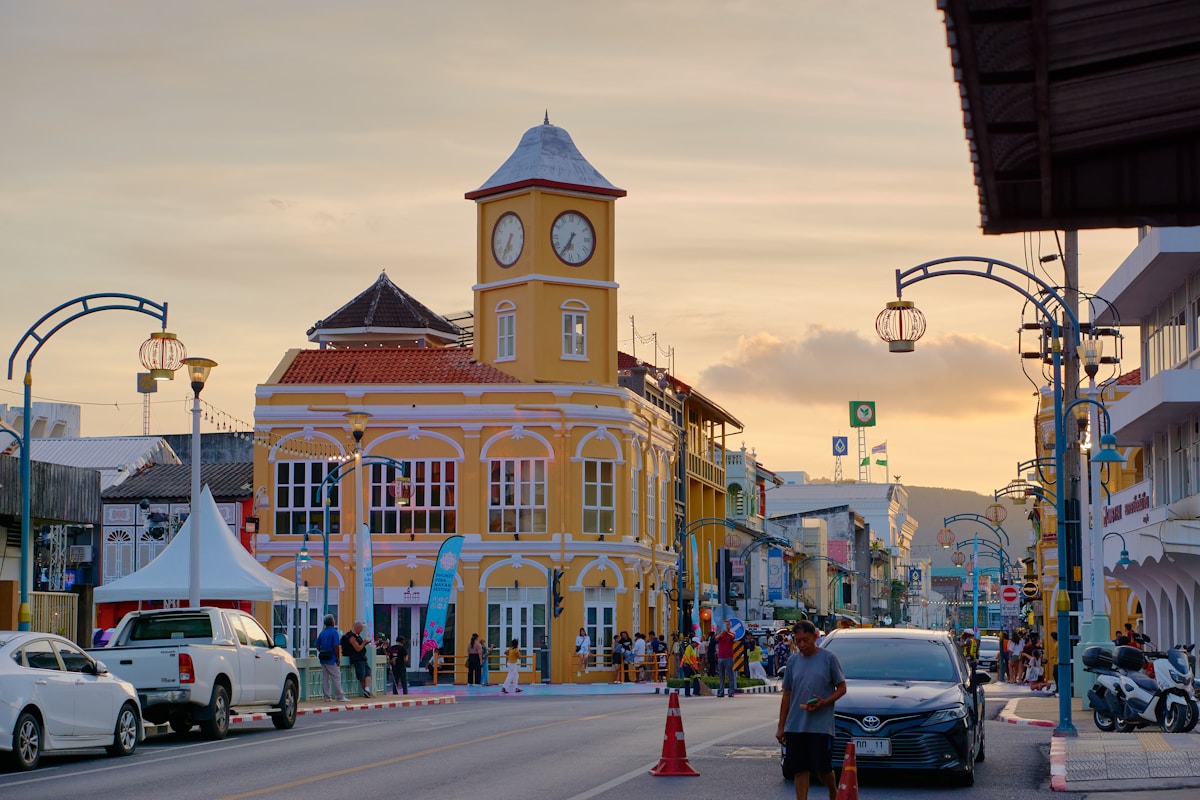
The food conversation in Phuket divides neatly: Phuket Old Town has the authentic local food, the Hokkien-influenced dishes, the best morning markets, and the atmospheric restaurants. Patong, Kamala, and the beach resort areas have tourist-facing food that is convenient but not particularly representative of the island’s culinary identity.
The signature Phuket dishes
Mee Hokkien (หมี่ฮกเกี้ยน) - Thick yellow wheat noodles stir-fried with pork belly, squid, shrimp, bean sprouts, and a dark sauce based on pork lard, soy, and oyster sauce. This is the most specifically Phuket dish in the local repertoire - the Hokkien noodle tradition is distinct from mainland Thai noodle dishes. Found at morning market stalls and specialty shops in the Old Town. Approximately THB 60–80 per plate as of 2026.
Oh Tao (โอ้เต๋า) - Oyster cake: fresh oysters or cockles fried in a batter of rice flour, tapioca starch, and egg, pressed flat in a cast iron pan until crispy on the edges. Served with a sweet chilli dipping sauce. The Phuket version differs slightly from the Chaozhou-Chinese version (or chuan) found elsewhere - the batter is lighter and the edges more caramelised. Found at Phuket Old Town market stalls. Approximately THB 60–80.
Phuket Lobster (กุ้งมังกรภูเก็ต) - Phuket’s waters produce lobster, and the island’s fishing heritage means lobster is more affordable here than in most of Thailand. Grilled over charcoal with garlic butter, or served steamed with seafood sauce. The Rawai Seafood Market (Wiset Road, Rawai) and the seafood stalls along the coast near Chalong are the most consistent options. Market prices for Phuket lobster start from approximately THB 600–900 per kilogram as of 2026 - confirm prices before ordering, as market rates fluctuate with season.
Kanom Jeen Nam Ya (ขนมจีนน้ำยา) - Rice vermicelli noodles served with a rich, slightly spicy fish curry sauce and fresh vegetables. Eaten for breakfast or lunch throughout southern Thailand. In Phuket, the sauce often includes fresh turmeric, making it more aromatic than the central Thai version. Found at the morning markets in Phuket Old Town. Approximately THB 40–60.
Tao Sor (เต่าส่อ) - Sweet mung bean pastry - a Phuket Chinese pastry with a dense, slightly sweet mung bean filling in a short pastry shell. A traditional product of the island’s Chinese heritage. Found at bakeries and sweet shops around Thalang Road in the Old Town. Approximately THB 15–25 per piece.
Sataw (สะตอ) - Stink beans - a southern Thai ingredient with a pungent, almost garlicky flavour. Stir-fried with shrimp, pork, or chilli paste. An acquired taste that many visitors find unexpectedly addictive. Available at local restaurants and markets in the south of the island.
Phuket Old Town restaurants
Kopitiam by Wilai (ตลาดสดชาลอง) - Thalang Road, Phuket Old Town. The most cited destination for traditional Phuket Chinese-Thai food - mee hokkien, oh tao, and local curries. Opens for breakfast and lunch. Arrive early - the most popular dishes sell out. Approximately THB 60–120 per dish as of 2026. No reservations; arrive at opening.
Raya Restaurant (ร้านระยา) - Dibuk Road, Phuket Old Town. A long-running family restaurant in a restored Sino-Portuguese shophouse, specialising in traditional Phuket recipes - moo hong (slow-braised pork belly in soy and spices), kaeng massaman, and local curries. Sit-down restaurant; approximately THB 150–300 per main dish. Reservations recommended for dinner.
Ka Jok See (กาจอกซี) - Takua Pa Road, Phuket Old Town. An atmospheric dinner restaurant in an old shophouse, known for its eclectic decor and Thai food with a local twist. Live music most evenings. Approximately THB 200–400 per main course. Reservations required.
Blue Elephant Restaurant - Krabi Road, Phuket Old Town. In a restored governor’s mansion from 1903. A higher-end option for traditional Thai cuisine, including Phuket specialities. Cooking classes also available. Approximately THB 400–800 for a meal as of 2026.
Suay Restaurant - Takua Pa Road. Contemporary Thai cooking in a relaxed setting. Approximately THB 250–450 per main dish. Strong cocktail list.
Night markets
Lard Yai (Indy Market / Sunday Walking Street) - Thalang Road every Sunday, approximately 5–10pm. The best single opportunity for Phuket street food - oh tao, mee hokkien, kanom jeen, grilled meats, and Thai desserts from local vendors. Also handicrafts and clothing. The most authentically local of Phuket’s markets.
Phuket Weekend Market (Naka Market) - Near the airport on the northern part of the island. Friday and Saturday evenings. Larger in scale than Lard Yai, with more variety in food and goods. Strong for barbecue, fresh juices, and pad thai.
Chillva Market - Yaowarat Road, north of Phuket Town. Open Thursday to Sunday evenings. A newer market popular with local families - som tam, grilled chicken, seafood, and street food from different regions of Thailand. More accessible than Lard Yai for those staying in central Phuket.
Halal food in Phuket
Phuket has a Muslim community concentrated in the south of the island (Rawai, Chalong, Ao Por) and in parts of Phuket Town. Halal food options exist across the island.
Phuket Town - Several halal-certified restaurants operate along Phuket Road and in the areas surrounding the central mosque. Roti canai with curry dipping sauce (a Malaysian-influenced Muslim dish found throughout southern Thailand) is available at breakfast stalls near the mosque.
Rawai - The Rawai Seafood Market has several halal-certified stalls, marked with green Arabic-script certification. Muslim fishing families in this area have their own distinct seafood preparation styles.
Beach areas - Most large hotels have halal options on their menus. Kamala has a notable Muslim community with halal restaurants along the main road.
Seafood
Phuket’s seafood is genuinely excellent and more affordable than its international reputation suggests - the key is avoiding the tourist-facing restaurants with tanks of live seafood at marked-up prices.
Rawai Seafood Market - Choose fresh seafood from the market stalls and have it cooked on-site at one of the adjacent restaurants for a small cooking fee (approximately THB 50–100 per dish). The most direct way to eat excellent Phuket seafood without the markup. Check the catch by season - October to April generally has the widest variety.
Chalong Bay area - Several local seafood restaurants along the waterfront. More consistent quality than Patong’s seafood strip, and lower prices.
Bang Rong Pier (north Phuket) - A quiet fishing community with authentic seafood stalls. Crab, clams, and fresh fish cooked simply - nam prik pao (roasted chilli sauce), steamed, or grilled with garlic.
Food tours
A structured food tour of Phuket Old Town (2–3 hours, typically morning) is one of the most effective ways to cover the key dishes efficiently. Most tours include mee hokkien, oh tao, kanom jeen, and a coffee at one of the traditional kopitiam (coffee shop) cafes. Prices for guided food tours start from approximately THB 1,200–1,800 per person as of 2026. You can browse and book Phuket food tours and experiences to compare options and check availability.
See also: Phuket island guide · Phuket things to do · Thai street food guide · Best Thai dishes · Vegetarian and vegan Thailand