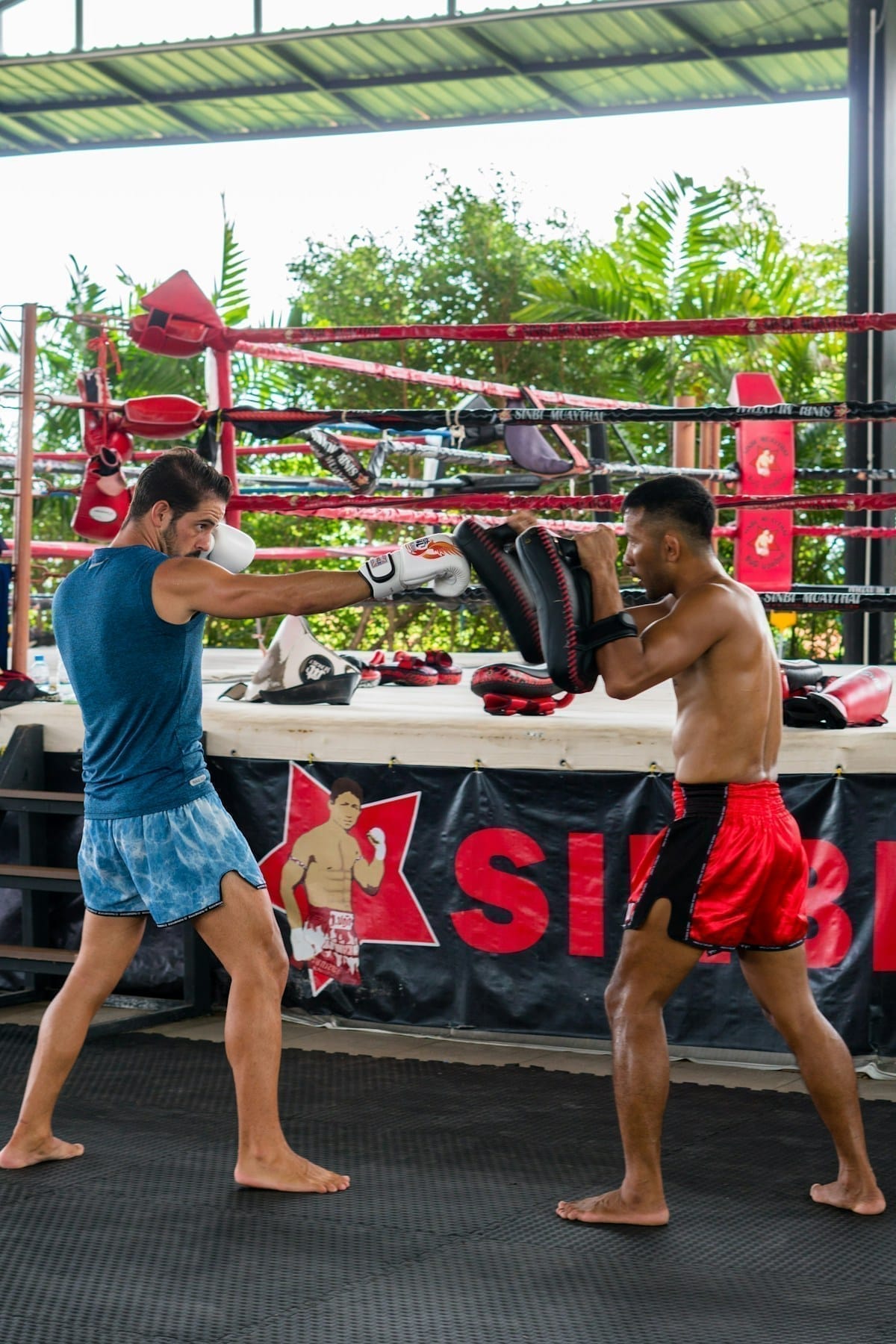
Phuket has one of the densest concentrations of Muay Thai training camps anywhere in the world. With camps ranging from polished, facility-rich gyms catering to international visitors, to smaller neighbourhood spots where Thai fighters train alongside foreign students, the island suits every level and ambition. Whether you have a single afternoon or plan a month-long stay, you will find a gym that fits.
Top Muay Thai Training Sessions at a Glance
| Session | Duration | Price (from) | Group Size | Highlights |
|---|---|---|---|---|
| Sumalee Gym: Muay Thai Group Training Session | 2 hrs | from ฿900 | Small group | Rawai open-air gym, technique drills, one-on-one pad rounds |
| Private Muay Thai Class with Professional Coach | 1 hr | from ฿1,200 | 1-on-1 | Dedicated trainer, tailored to all skill levels |
| Phuket Muay Thai Training Academy | 2 hrs | from ฿800 | Small group | Authentic training camp, conditioning and pad work |
| City Tour with Muay Thai Class | Half day | from ฿1,500 | Small group | Karon Viewpoint, Big Buddha, Muay Thai session combined |
Gloves and wraps are available at most camps. Drop-in sessions need no advance booking at major gyms.
Browse all Phuket Muay Thai classes → GetYourGuide
Patong vs Rawai vs Chalong: Choosing Your Base
The area you base yourself in shapes your entire training experience, so it is worth deciding before you book a gym.
Patong is the tourist heart of Phuket — beach clubs, nightlife, and foot traffic. A handful of gyms operate here, notably Dragon Muay Thai on Soi Sai Nam Yen. Classes run morning and afternoon and welcome drop-ins, making Patong suitable if you want a session or two between beach days. The atmosphere is lighter and less structured than camps further south.
Rawai and Chalong, in southern Phuket, are where serious training happens. The roads are quieter, the expat fitness community is concentrated here, and most of Phuket’s well-known camps sit within a 10-minute drive of each other. If Muay Thai is the main reason you are visiting Phuket rather than a side activity, base yourself in Rawai or Chalong.
Tiger Muay Thai (Chalong)
Tiger Muay Thai is the largest and best-known gym in Phuket, receiving several hundred students on busy training days. The facility includes multiple boxing rings, air-conditioned weight rooms, a pool, and on-site accommodation. For absolute beginners, Tiger’s scale means there is always a trainer free, and group classes are sized appropriately by level.
Pricing (approximately, as of 2026):
- Drop-in morning or afternoon class: THB 600–700
- 10-class pack: THB 4,500–5,500
- Monthly unlimited training: THB 9,000–14,000
- Training + accommodation packages start at approximately THB 18,000/month (private room)
Tiger also runs wrestling, Brazilian jiu-jitsu, and MMA classes alongside Muay Thai, which makes it popular with cross-trainers. The downside is size — it lacks the one-on-one intimacy of smaller camps. Book ahead in high season (November–March) as accommodation fills quickly.
Rawai Muay Thai
Rawai Muay Thai sits closer to the shoreline in the southern tip of the island and operates on a more personal scale than Tiger. The trainers are a mix of former champions and experienced coaches, and the camp actively takes on fighters preparing for competition alongside its recreational student base.
Pricing (approximately, as of 2026):
- Drop-in session: THB 500
- Weekly package (once daily): THB 2,800
- Monthly package (once daily): THB 8,500
- Accommodation on-site from approximately THB 8,000/month (private room)
The gym’s strength is its community — students tend to stay for weeks or months rather than dropping in for a session, and the long-term atmosphere is noticeably more collaborative. Good for intermediate and advanced students who want real sparring and genuine coaching attention.
Sumalee Boxing Gym (Rawai)
Sumalee operates as both a training camp and a fighter management outfit — the gym produces fighters who compete professionally in Thailand and internationally. This does not mean beginners are unwelcome; Sumalee runs structured beginner, intermediate, and advanced tracks simultaneously.
Pricing (approximately, as of 2026):
- Drop-in class: THB 500
- Weekly package (twice daily): THB 3,800–4,200
- Monthly unlimited: THB 10,000–13,000
- Training + room from approximately THB 20,000/month
What distinguishes Sumalee is the quality of technique coaching for students at all levels. Trainers here correct form closely rather than letting beginners go through the motions. If you want to come away from a week’s training with genuinely better technique, this is one of the strongest picks on the island.
Fairtex Phuket (Chalong)
Fairtex is a global Muay Thai brand, and its Phuket camp is a flagship location. The facility is premium — manicured grounds, well-maintained rings, multiple bags and pads stations, swimming pool. The camp attracts professionals from around the world during fight camps.
Pricing (approximately, as of 2026):
- Drop-in session: THB 650–750
- Weekly package: THB 3,500–4,500
- Monthly: THB 12,000–15,000
- Accommodation packages from approximately THB 25,000/month
Fairtex suits experienced students who want access to professional-level sparring partners and high-end facilities. For complete beginners, it works, but you are paying a premium that delivers more value if you already know how to throw a teep.
Sitsongpeenong Phuket (Chalong)
A branch of the respected Bangkok gym, Sitsongpeenong Phuket focuses on producing fighters at the amateur and professional level. The camp takes serious students of all experience levels and offers some of the best technical coaching on the island.
Pricing (approximately, as of 2026):
- Drop-in: THB 500–600
- Weekly (once daily): THB 2,800
- Monthly (twice daily): THB 10,000–12,000
Unlike some larger camps, Sitsongpeenong keeps group classes small enough that trainers can give individual attention throughout a pad session. Students serious about competing find this one of the best environments for preparation.
What a Typical Training Session Looks Like
Regardless of camp, the structure of a standard Muay Thai class follows a similar arc:
- Warm-up: 10–15 minutes of skipping rope, shadow boxing, and light stretching
- Bag work: 3–5 rounds of combinations on heavy bags (2-minute rounds, 1-minute rest)
- Pad work: 3–6 rounds of partner or trainer-held pads — the core of the session
- Clinch drills or technical rounds: Depending on level, grabbing and close-range knee techniques
- Sparring: Optional and typically supervised at the trainer’s discretion for beginners
- Cool-down: Stretching and light shadowboxing
Twice-daily training — morning (typically 7:30–9:30am) and afternoon (4:00–6:00pm) — is the standard for students on weekly or monthly packages. Most beginners find twice daily hard in the first week and adjust by week two.
What Is Included at Most Camps
- Boxing gloves (hire approximately THB 50–100 per session, or included in packages)
- Hand wraps (similar hire cost, or bring your own 4.5m wraps)
- Muay Thai shorts often available for purchase at camp shops (THB 250–500)
- Water and basic post-training supplements at higher-end camps
- Transport from major accommodation areas sometimes included in residential packages
Booking Tips
- Book directly with the camp if staying a week or more — phone or email gets you the best package pricing, often 10–15% lower than third-party booking platforms.
- High season (November–March): Reserve accommodation at least 3–4 weeks in advance. Camp accommodation fills before the main resort hotels because travellers book gym spots well ahead of beach holidays.
- Short stays: Drop-in sessions need no advance booking at Tiger, Dragon, or Rawai. Turn up 15 minutes before the session and pay at reception.
- Medical note: If you have any injury, tell your trainer before the session — experienced trainers will modify pad work to protect problem areas. Do not train through sharp knee or shoulder pain without guidance.
Getting to the Camps
Most camps in Rawai and Chalong are a 15–25 minute drive from Patong or Karon. A Grab from Patong to Rawai costs approximately THB 120–180. Songthaew routes do reach the area but are infrequent; a rented motorbike (approximately THB 200–250 per day) is the most convenient way to move between gym and beach if you are staying nearby.
Phuket International Airport to Rawai/Chalong is approximately 35–40 minutes by Grab (THB 350–450 as of 2026).