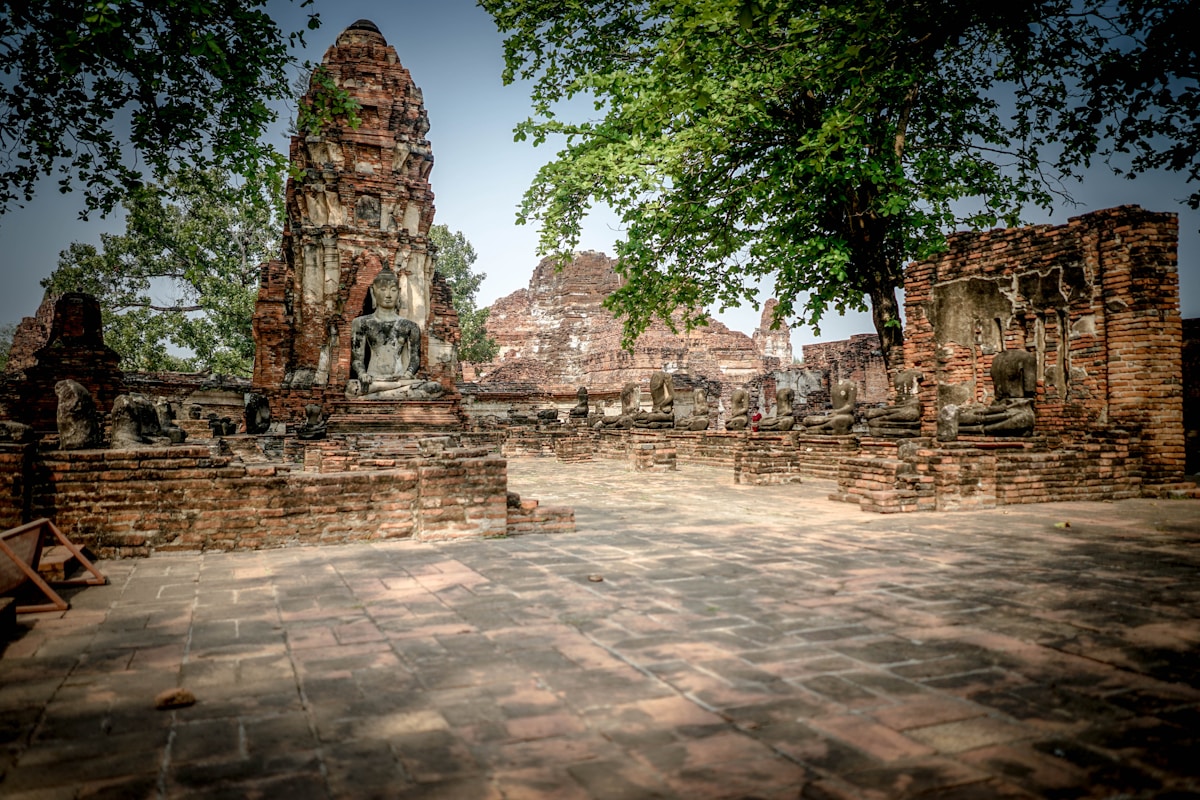
Ayutthaya Travel Guide: Ancient Temples and Royal Ruins
Ayutthaya travel guide: UNESCO World Heritage ruins, the former Thai capital's temples and chedis, and the best day trip from Bangkok for history.
Guides for Ayutthaya
Ayutthaya at a glance
Ayutthaya sits on an island in the middle of the Chao Phraya River, 80km north of Bangkok. It was the capital of the Kingdom of Ayutthaya from 1350 until 1767 - one of the wealthiest trading kingdoms in Southeast Asia during its 400-year existence. The city was deliberately burned by the Burmese army during an invasion, and the ruins that remain are what makes it one of the most significant archaeological sites in Thailand.
Most visitors come from Bangkok as a day trip. The train takes 1.5 hours and runs frequently - it’s one of the best train journeys in the country for the price.
What to see
Wat Phra Si Sanphet - The royal temple that stood at the heart of the palace complex. Three large chedis in classic Ayutthayan style. The most photographed ruins in the park.
Wat Mahathat - Famous for the sandstone Buddha head entwined within tree roots - the result of a tree growing around a fallen statue over centuries. The image is one of the most reproduced in Thailand. Visit in the morning before the heat.
Wat Ratchaburana - Adjacent to Wat Mahathat. A large, relatively well-preserved prang (Khmer-style tower). Gold artefacts discovered here during excavation are now in the Chao Sam Phraya National Museum.
Wat Yai Chai Mongkhon - On the east side of the island, away from the main cluster. A large reclining Buddha and an impressive chedi you can climb. Less crowded than the central sites.
Wat Phu Khao Thong - The ‘Golden Mount’ - a large white chedi built to commemorate a 16th-century military victory. Located just north of the island, accessible by bicycle. Good views from the top.
Chao Sam Phraya National Museum - The best context for what you’re seeing in the ruins. Gold votive objects, Buddha images, and artefacts from Ayutthaya period excavations. Entry: ฿150 as of 2026. Open Wednesday–Sunday, 9am–4pm. Worth an hour before starting the temple circuit.
Wat Chaiwatthanaram - On the west bank of the Chao Phraya River, outside the island. A Khmer-style temple complex built in 1630, one of the most complete and atmospheric ruins in the park. The riverside setting makes it particularly good at sunset. Entry: ฿50. Reachable by bicycle from the island (cross the bridge, 15 minutes) or by boat tour.
See our full Ayutthaya accommodation guide for hotel picks across every budget.
Where to eat
Eating: The boat noodle restaurants along the river near the U-Thong Road area serve Ayutthaya’s signature dish - kway teow ruea (boat noodles), small bowls of rich pork or beef broth noodles at approximately ฿15–20 per bowl (you order multiple). The night market near Chao Phrom market has standard Thai dishes (฿30–60 per plate). Malakor Kitchen near the ruins serves good Thai food in a garden setting (mains ฿70–150).
Practical information
Temple entry fees - Individual temples charge ฿50 each. The six-temple pass costs ฿220 as of 2026, which covers Wat Mahathat, Wat Ratchaburana, Wat Phra Si Sanphet, Wat Chaiwatthanaram, Wat Maheyong, and Wat Phra Ram. The pass is good value if you plan to visit four or more sites.
Getting there from Bangkok - Train from Hua Lamphong is the most reliable option. Third-class (฿20, no reservation needed) works fine. First trains depart around 5:30am; last trains back around 8pm. Minivan from Mo Chit: approximately 75 minutes, ฿70–100.
Best time - Early morning or late afternoon. The ruins at golden hour are significantly different from midday in the heat. Many visitors arrive at 10am and leave by 2pm - going earlier or staying overnight changes the experience substantially.
Bicycle - Most guesthouses near the station rent bicycles (฿50/day). The main temple cluster is 15–25 minutes by bike from the station bridge. Bring water. An electric bicycle is also available from some shops near the station (approximately ฿200/day) and makes the heat more manageable.
Overnight stay - Worth it if you have time. The ruins are illuminated at night and significantly less crowded at dawn. Easily combined with Lopburi (60km north) for a two-day trip from Bangkok.
If you would rather leave the logistics to someone else, browse guided Ayutthaya tours and day trips - most include transport from Bangkok, a guide at the key sites, and lunch, which removes the need to navigate the island’s scattered ruins on your own.
Book your Ayutthaya trip: Hotels in Ayutthaya · eSIM for Thailand
See also: Things to do in Ayutthaya · Bangkok travel guide · Lopburi travel guide · Sukhothai travel guide · One week in northern Thailand · Getting around Thailand · Best tours in Thailand
Upcoming Events in Ayutthaya
- Wonderfruit Festival
Wonderfruit 2026: 17-21 December near Pattaya. Arts, music, and sustainability festival with international artists, food markets, and wellness activities.
Book an experience
Top experiences in Ayutthaya
Explore the best tours and activities in Ayutthaya , with instant confirmation and free cancellation on most bookings.