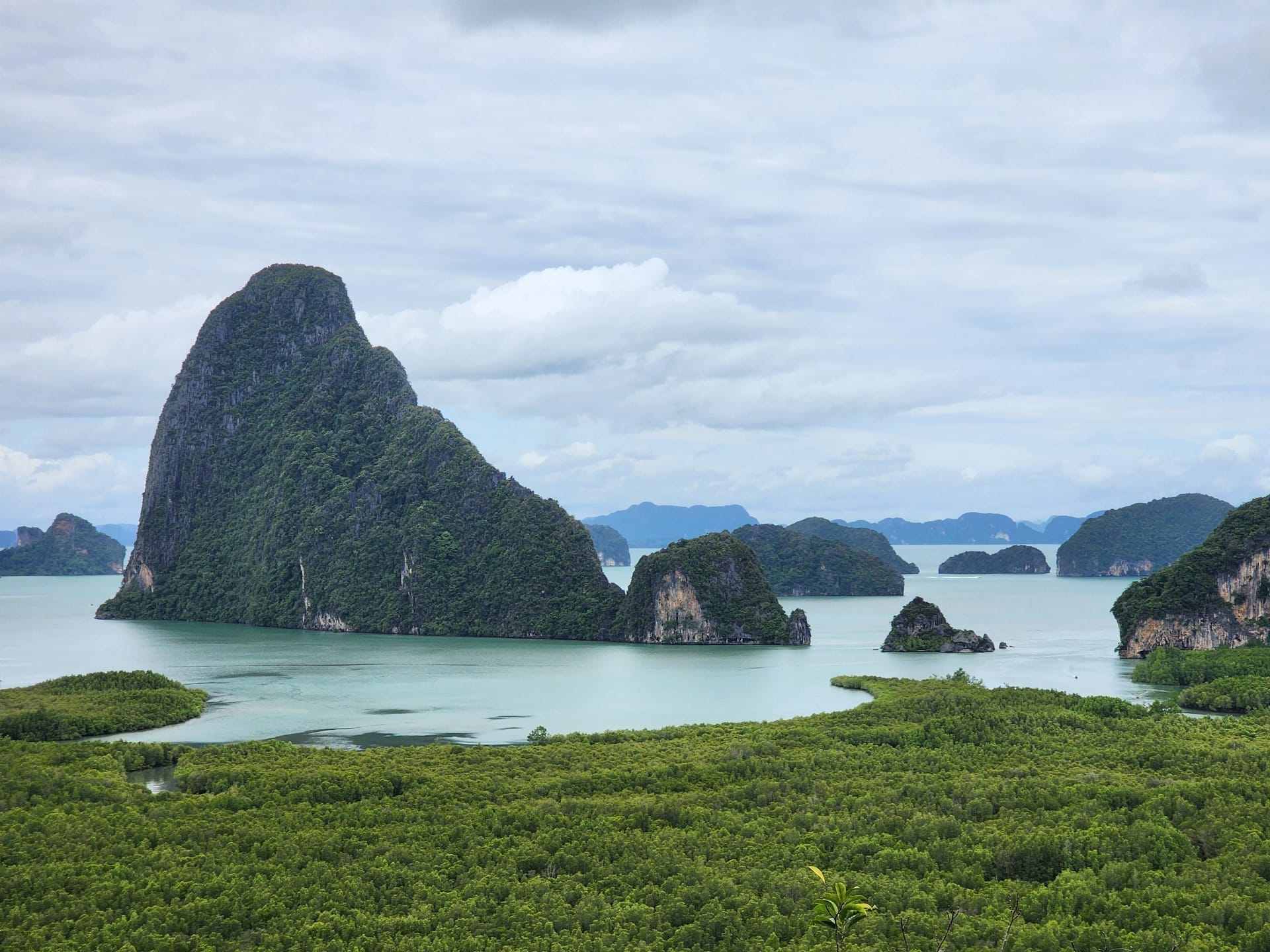
November through February is the window that most experienced Thailand travellers plan around. The north is cool and clear, the Andaman coast is in its best beach and diving conditions, Bangkok is dry and comfortable, and the humidity that makes the green season sapping is at its annual minimum. This 14-day itinerary runs the classic north-to-south route, timed for cool-season conditions.
Total transport: Bangkok (fly in) → Chiang Mai (overnight train or 1h20m flight) → fly to Krabi → island day trips or extension → fly home from Krabi or Phuket.
Days 1–3: Bangkok
 Wat Arun rises above the Chao Phraya River in Bangkok, best visited in the cooler, clearer months.
Arrive Bangkok and establish a base. Suvarnabhumi (BKK) handles most international arrivals; Don Mueang (DMK) handles budget flights within Southeast Asia. Both are 30–60 minutes from the city depending on traffic.
Day 1 - Recover, orient, and explore the Rattanakosin area on foot in the evening. Cool-season Bangkok is pleasant for walking - 26–32°C in December and January is far more manageable than the March–May heat. Dinner at Chinatown (Yaowarat Road): T&K Seafood for grilled prawns (from THB 200) or any of the open-fronted stalls running from 18:00.
Day 2 - Grand Palace and Wat Pho. Arrive at the Grand Palace by 08:30 before coach tour groups (entry THB 500, includes Wat Phra Kaew). Allow 2.5–3 hours. Cross to Wat Arun (THB 100) for the river view from the steps - particularly good at this time of year with clear cool-season skies. Lunch near Pak Klong Talat. Evening: rooftop bar at Octave (Marriott Sukhumvit 57, cocktails from THB 350) or Vertigo (Banyan Tree, THB 400+) for the city view.
Day 3 - Chatuchak Weekend Market if visiting Saturday or Sunday (BTS Mo Chit, 08:00–18:00 - the largest weekend market in the world). Otherwise: Damnoen Saduak or Amphawa floating market (2 hours from Bangkok by bus or tour). Cool-season is excellent for the markets as heat isn’t a problem. Evening: Chinatown again, or a canal longtail tour.
Bangkok Hotels
| Tier | Hotel | From (per night, 2026) |
|---|---|---|
| Budget | NapPark Hostel (Khao San area) | THB 500 / USD 14 |
| Mid-range | Riva Surya Bangkok (Riverside) | THB 3,500 / USD 101 |
| Upscale | Capella Bangkok (Riverside) | THB 18,000 / USD 521 |
Browse Bangkok hotels on Booking.com
Days 4–7: Chiang Mai and the North
 Festival lanterns hang beside the golden chedi at Wat Phra That Doi Suthep above Chiang Mai.
The cool season makes Chiang Mai genuinely excellent - clear skies, cool mornings perfect for trekking and temple visits, and air quality at its annual best (burning season doesn’t begin until February at the earliest). This is the most dramatic difference between visiting in cool season versus hot season.
Getting there: Overnight train from Hua Lamphong or Krung Thep Aphiwat Station (9–11 hours, sleeper from THB 900) is a classic experience - arrive rested and having saved a night’s accommodation. Alternatively, fly from Suvarnabhumi or Don Mueang (1h20m, from THB 800–2,000 depending on airline and booking lead time).
Day 4 - Arrive Chiang Mai morning (train) or day (flight). Check in, rent a bicycle or scooter (THB 60–200/day), and explore the Old City on the first afternoon. Wat Phra Singh and Wat Chedi Luang in the late afternoon when the light is warm. The Saturday or Sunday Walking Street on Wualai Road / Tha Phae Gate area runs from 16:00 - the best street food night market in the city.
Day 5 - Doi Suthep and the mountain. Songthaew from Tha Phae Gate area (THB 50 per person). Wat Phra That Doi Suthep (entry THB 30) sits at 1,073m with clear cool-season views over the Chiang Mai valley. Early morning is best - the mist in the valley below burns off by 09:00–10:00. Afternoon: Nimmanhaemin Road area for coffee and the co-working cafe scene. Evening: Khao Soi at Khao Soi Khun Yai (from THB 60) or Khao Soi Mae Sai on Chang Puak Road - the curried noodle soup that defines northern Thai cuisine.
Day 6 - Half-day or full-day Elephant Nature Park sanctuary (from THB 2,500–3,800 per person). The cool season is particularly good for this visit as the elephants and guides are both more active in lower temperatures. Alternatively: Chiang Mai Cooking Class (from THB 1,000–1,500 per person, morning session including market visit). The morning market-to-kitchen format is excellent in cool-season temperatures.
Day 7 - Extension option: Mae Kampong mountain village (50km east of Chiang Mai, accessed by minivan or hired driver, approximately THB 800–1,200 return). A traditional wooden village at 1,300m with tea plantations, a waterfall, and a local community homestay option. In January, the village is cool enough to require a light jacket in the morning. Alternatively: use Day 7 for the Doi Inthanon summit drive (2 hours from the city) for sea-of-clouds views and the twin royal pagodas.
Chiang Mai Hotels
| Tier | Hotel | From (per night, 2026) |
|---|---|---|
| Budget | Stamps Backpackers (Old City) | THB 500 / USD 14 |
| Mid-range | Rachamankha Hotel (near Wat Phra Singh) | THB 5,500 / USD 159 |
| Upscale | Dhara Dhevi Chiang Mai (Mae Rim) | THB 18,000 / USD 521 |
Browse Chiang Mai hotels on Booking.com
Days 8–14: Andaman Coast - Krabi, Koh Lanta, or Koh Phi Phi
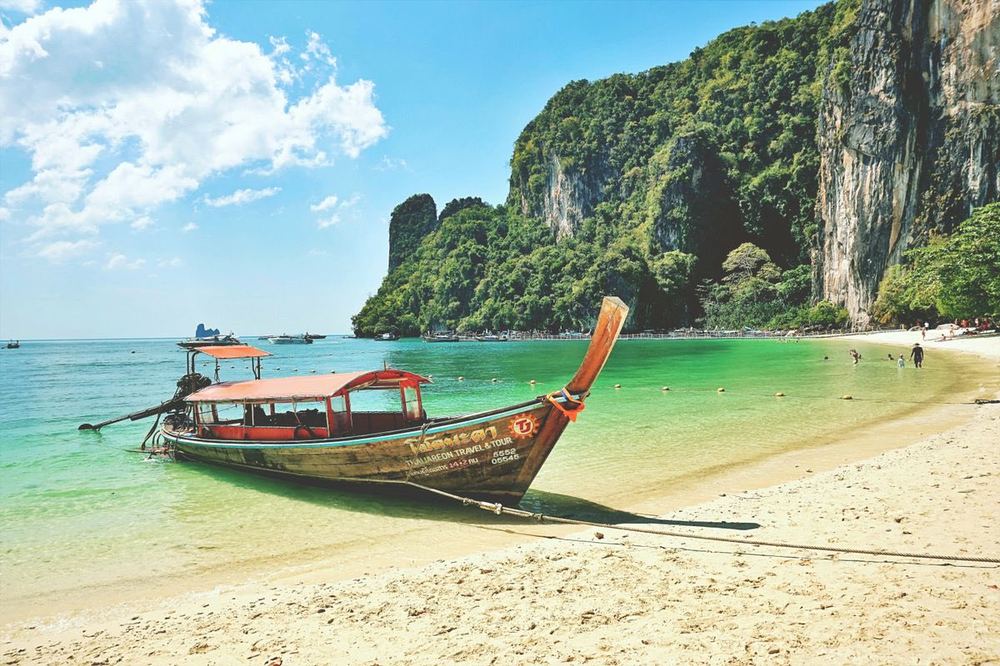 A longtail boat rests on a Krabi beach beneath limestone cliffs, typical of the Andaman coast in cool season.
The cool season’s second major advantage is the Andaman coast in full dry season. November through April is peak beach and diving season here - calm seas, 28–29°C water, and visibility of 20–25 metres at the dive sites. This is the best-timed meeting of good conditions: the north in cool season and the Andaman coast in dry season coincide perfectly.
Getting there: Fly from Chiang Mai to Krabi (approximately 1h45m, from THB 1,500–3,000 one-way). Direct flights operate on Bangkok Airways and AirAsia. Alternatively, fly to Phuket and base there.
Day 8 - Arrive Krabi. Transfer to Ao Nang (songthaew from Krabi Airport, THB 150 per person, 30 minutes) and check in. Afternoon: settle in and walk Ao Nang Beach. Evening: seafood along the beachfront - Krua Tha Wang and Carnivore Steak and Grill are both well-regarded.
Day 9 - Railay Beach. Long-tail from Ao Nang (15 minutes, THB 120 per person). Spend the day between Railay West Beach and Phra Nang Beach (20-minute walk or short long-tail around the headland). Bring snorkelling gear - the water off Phra Nang headland has good visibility in cool season. Return to Ao Nang by long-tail before 19:00.
Day 10 - Four Islands snorkelling tour or Koh Phi Phi day trip. The Four Islands (Koh Mor, Chicken Island, Tup Island, Koh Poda) runs from THB 1,200 per person including a basic lunch. The Koh Phi Phi speedboat day trip (THB 1,400–1,800) includes Maya Bay - best before 10:00 when day-trippers arrive.
Day 11 - Move to Koh Lanta (ferry from Ao Nang or Krabi Town, 2–2.5 hours, THB 600–700). The island’s long beach is at its absolute best in cool season - calm Andaman water, clear visibility, and temperatures maintained at 30–32°C. Check in and spend the afternoon at Long Beach (Khlong Dao) or the quieter Klong Nin Beach further south.
Day 12 - Koh Lanta Marine National Park diving or snorkelling. Day trip to Hin Daeng and Hin Muang (approximately 45 minutes by dive boat from Ban Sala Dan pier) - the best dive sites accessible from Koh Lanta. Manta ray season runs November through April; January is one of the most reliable months for sightings. Full-day dive trip from approximately THB 3,500–4,200 including equipment.
Day 13 - Koh Lanta at leisure. Old Town (Ban Ko Lanta) on the east coast is a wooden Malay fishing village with a Wednesday and Saturday walking street. In the afternoon: Kantiang Bay, the most secluded beach on the island (approximately 20km south of Ban Sala Dan by scooter). Evening: sunset drinks at Mango House above Lanta’s Old Town.
Day 14 - Return to Krabi for onward flight, or continue to Phuket (ferry or speedboat, approximately 2–2.5 hours from Koh Lanta via Ao Nang). Fly home from Krabi (KBV) or Phuket (HKT).
Krabi and Koh Lanta Hotels
| Tier | Hotel | Area | From (per night, 2026) |
|---|---|---|---|
| Budget | Greenery Guesthouse | Ao Nang | THB 700 / USD 20 |
| Mid-range | Lanta Pavilion Resort | Koh Lanta Long Beach | THB 2,800 / USD 81 |
| Upscale | Rayavadee Resort | Railay Beach | THB 22,000 / USD 637 |
Browse Krabi hotels on Booking.com
Browse Koh Lanta hotels on Booking.com
Cool Season Transport Summary
| Route | Best Option | Duration | From |
|---|---|---|---|
| Bangkok → Chiang Mai | Overnight sleeper train | 9–11 hours | THB 900 |
| Bangkok → Chiang Mai | Flight | 1h20m | THB 800 |
| Chiang Mai → Krabi | Flight via Bangkok or direct | 1h45m–4h | THB 1,500 |
| Krabi → Koh Lanta | Ferry | 2–2.5 hours | THB 600 |
| Koh Lanta → Phuket | Speedboat | 2 hours | THB 1,600 |
Cool Season Packing
Unlike the rest of Thailand’s tourist calendar, the cool season in the north genuinely requires layers:
- Chiang Mai city evenings: light jacket or hoodie (15–20°C nights)
- Mountain trekking/viewpoints: mid-layer fleece + warm hat (8–14°C pre-dawn at altitude)
- Bangkok and Andaman coast: standard T-shirt and shorts throughout; a light layer for air-conditioned restaurants and transport
The Andaman portion (Days 8–14) needs only beach and diving gear - bring a rash guard for sun protection while snorkelling and light reef shoes if planning on Phra Nang or rocky snorkel spots.