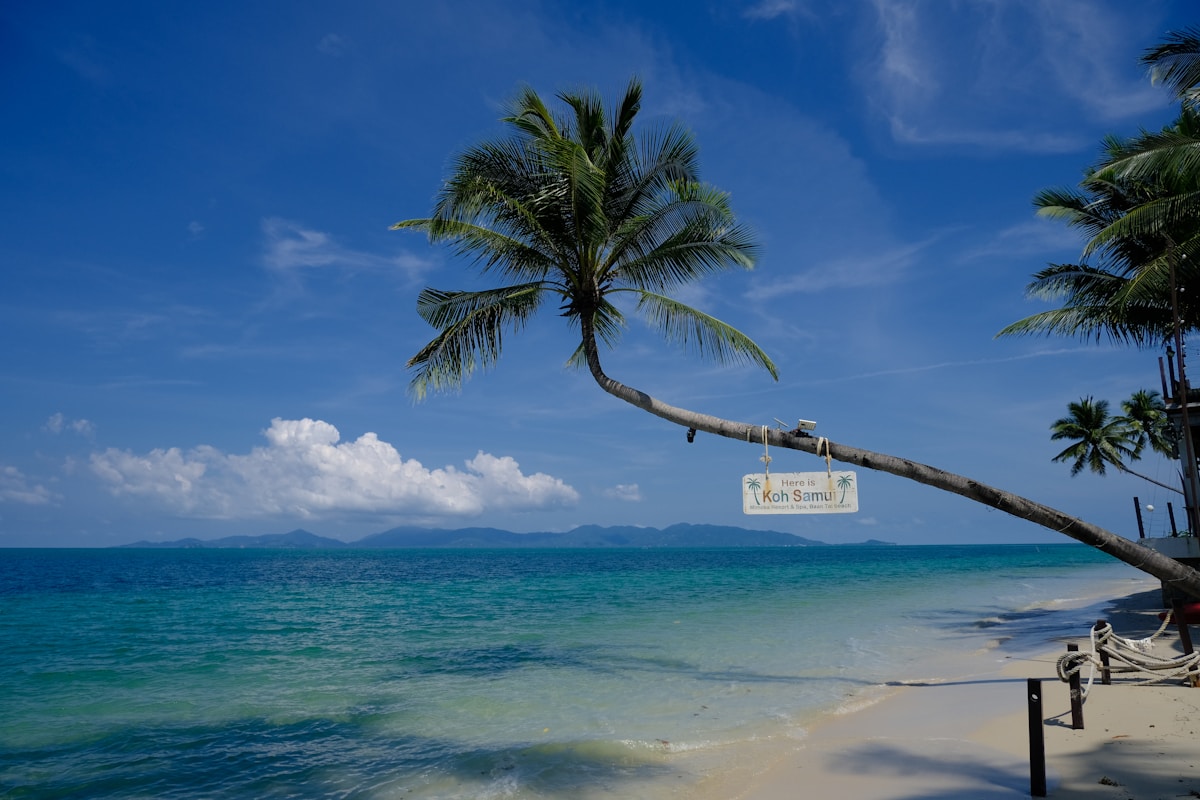
How beaches work on Koh Samui
Koh Samui has a circumference road connecting all the main beaches. The east coast (Chaweng, Lamai) is the most developed and gets the most sun. The north coast (Bophut, Maenam, Choeng Mon) is calmer and less commercialised. The west coast faces the mainland and has the best sunsets but less appealing beaches. The south coast is largely undeveloped.
East Coast
Chaweng Beach
The main beach - 6km of sand that runs along the east coast. The longest beach on the island and the one with the most infrastructure: rows of sunbeds, a long strip of restaurants and bars, watersport hire, and the island’s main nightlife strip running parallel. Good swimming in the northern and central sections; the southern end gets choppier.
Right choice for those who want everything within walking distance and don’t mind crowds. Wrong choice for those who want a quiet beach experience.
Lamai Beach
4km south of Chaweng. The second most developed beach - similar infrastructure but less crowded and slightly cheaper. The beach has more character than Chaweng with some rocky outcrops at the northern and southern ends. The Grandmother and Grandfather Rocks (Hin Ta and Hin Yai) - naturally shaped limestone formations with anatomical resemblances - are the local landmark at the south end. Reasonable swimming.
North Coast
Choeng Mon Beach
In the northeast corner, slightly off the main circuit. A small, sheltered bay with calm, clear water - among the best swimming on the island. Upscale hotels and villas behind the beach with a quieter resort atmosphere. Good for families. Some watersports available.
Bophut Beach and Fisherman’s Village
The north coast’s most characterful area. The beach is less impressive than Chaweng but the Fisherman’s Village - a street of wooden shophouses converted into boutique restaurants, bars, and shops - is the most atmospheric strip on the island. The Friday Night Walking Market (5pm–11pm) on the main village street is excellent: local food, craft stalls, and a relaxed crowd. Worth basing yourself here if the beach is less important than atmosphere. Browse Koh Samui tours and activities including Ang Thong Marine Park day trips departing from the north coast piers.
Maenam Beach
5km along the north coast west of Bophut. The longest single stretch of relatively undeveloped beach on the island. Wide, quiet, lined with budget guesthouses and local restaurants. The road behind runs through a Thai village rather than a resort zone. Recommended for longer stays or those who want to avoid the tourist circuit entirely.
West Coast
Na Thon
The administrative capital and main car ferry pier. Not a swimming beach — the water faces the mainland and the shore is shallow and muddy. Worth visiting for the town market and as a departure point for ferries.
Taling Ngam
The quietest area of the island. A few upscale resorts on a hillside above a less impressive beach. The sunsets facing back toward the mainland are the main draw.
Quieter Alternatives
Silver Beach (Ao Thong Takian)
A small cove between Chaweng and Lamai, accessible via a steep path from the main road. Around 300 metres of sand with significantly fewer people than either of its neighbours. Clear water, some coral close to shore, and no sunbed operators crowding the beach. The road access is poor, which keeps the crowds away — arrive by scooter and carry your own water.
Bang Rak Beach (Big Buddha Beach)
On the northeast coast near the Big Buddha temple. A wide, gentle beach popular with Thai families rather than resort tourists. Shallow, calm water suitable for children. The working fishing harbour at one end adds local character. Not the prettiest beach on the island but one of the most authentic, with seafood restaurants serving the day’s catch at local prices (grilled fish from ฿150).
Choeng Mon (additional detail)
The most family-friendly beach on Koh Samui — a small, sheltered bay with shallow water, excellent for children. The road dead-ends here, so the atmosphere is calmer than beaches on the main circuit. Several upscale resorts and boutique hotels line the back of the bay. Watersport hire available: kayaks from ฿200/hour, stand-up paddleboards from ฿350/hour.
Practical notes
- Sunbed hire on Chaweng and Lamai: ฿100–200 per bed per day (often two minimum); prices negotiable out of season
- Circling the island by scooter takes 1.5–2 hours without stops — the circumference road is sealed throughout; scooter hire from ฿250/day in Chaweng
- The best swimming is in the mornings before the afternoon wind picks up on the east coast
- Jellyfish can be a problem October–November — check locally on arrival; Portuguese man-o-wars also appear after rough weather
- Water taxi from Chaweng to Bophut: approximately ฿400–600 per person; faster than driving during traffic on Ring Road
- Chaweng’s north end has the calmest water and the best sand — the further south you walk, the choppier and rockier it gets
Search hotels in Koh Samui on Booking.com
See also: Koh Samui travel guide · Things to do in Koh Samui · Best hotels in Koh Samui