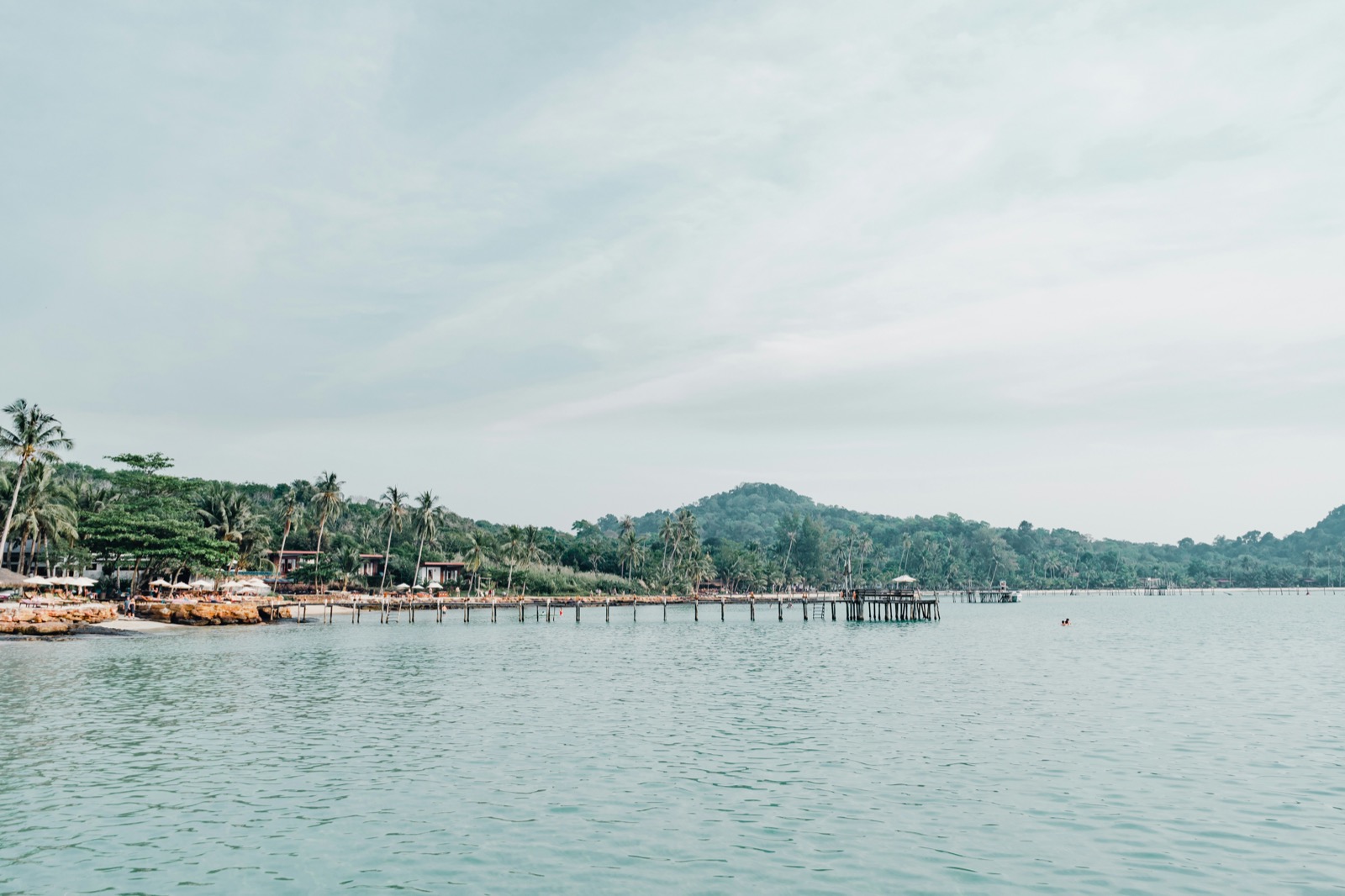
Bang Bao Beach
The largest and most accessible beach on Koh Kood - a curved bay approximately 2.5km long on the northwest coast. The sand is white and the water is shallow for a long distance from the shore, making it the best beach on the island for families with children. The sea is typically calm in the morning before the afternoon wind picks up.
Bang Bao village at the northern end of the beach has several restaurants, a market, the main speedboat pier, and motorbike rental. The village gives the beach a settled, local atmosphere that the more isolated southern beaches lack.
Swimming: The entire length of the beach is swimmmable. The water is warmest and calmest in the mornings. Watch for the marked longtail boat lanes at the northern end near the pier - boats move at speed through these channels.
Snorkelling: Limited directly off the main beach - sandy bottom with sparse coral coverage. Walk or take a longtail to the rocky headland at the southern end of Bang Bao Bay for the nearest accessible reef.
Best time: Mornings for swimming, late afternoons for the light on the sand and the sunset view across the bay.
Khlong Hin Beach
A mid-length bay midway along the west coast, sheltered by a small headland at each end. Khlong Hin is the best-balanced beach on the island - good sand, reasonable swimming, and better snorkelling from shore than Bang Bao. The beach is lined with casuarina trees that provide natural shade in the afternoons.
The village of Baan Klong Hin backs the beach with a small cluster of restaurants and shops. Access from the main coastal road takes approximately 5 minutes by motorbike from the road junction.
Swimming: Clear water and gradual depth. The central section of the bay is the best for unobstructed swimming. Less boat traffic than Bang Bao.
Snorkelling: The rocky southern point extending into the sea has coral coverage from 1 to 4 metres. Parrotfish, triggerfish, and small reef sharks visible on calm days. This is accessible from shore - mask and fins from any rental operator on the beach road.
Best time: Morning to early afternoon. The casuarina shade makes midday comfortable. A reliable all-day beach.
Klong Chao Beach
A broad bay at the mouth of the Klong Chao river, convenient for visitors staying near the waterfall or those wanting access to both beach and river environments. The beach is wide and well-maintained, with the clearest sand on the west coast.
The estuary where the river meets the sea creates a unique environment - brackish water near the river mouth, sea water further out. Kayaking upriver through the mangroves starts from the beach. Several mid-range resorts face this bay.
Swimming: Good in the sea section of the bay. The river mouth area is not recommended for swimming due to freshwater mixing and occasional debris after rain. Move further south along the beach for cleaner saltwater swimming.
Best time: Morning for the beach; afternoon for a kayak up the river before returning in time for sunset.
Ao Phrao (Phrao Bay)
The southernmost of the main west coast bays - a sheltered curved bay with two small resorts and no village development. The most secluded of Koh Kood’s accessible beaches.
Getting there requires either riding the coastal road to the end or taking a longtail from Bang Bao (approximately 20 minutes). There are minimal facilities - no restaurants beyond the resort properties, no shops, no rental operators. Self-sufficient visits (bring water and food) are the norm for day visitors.
Swimming: The water is the clearest on the island - the isolation means no boat traffic and no runoff from village development. Excellent visibility and a clean sandy bottom.
Snorkelling: Coral visible from the rocky edges of the bay, best at the northern headland. Less fish density than Khlong Hin but higher water clarity.
Best time: Full day. The seclusion makes this worth a dedicated trip rather than a quick visit.
The East Coast
Koh Kood’s east coast faces Malaysia and receives the morning sun. The coastline is less developed, with mangroves and fishing villages instead of resort beaches. The fishing communities at Baan Ao Salat and the working harbour are the main points of interest on this side of the island - not swimming beaches.
The northeast coast around Baan Ao Salat is the base for traditional Koh Kood fishing boats. This is worth a morning visit on a motorbike for those interested in the working life of the island that the resort beaches don’t reveal.
For day snorkel and boat tours from Koh Kood, book a Gulf of Thailand island tour - departures typically cover Koh Mak, Koh Rayang, and the outer reef.
Search hotels in Koh Kood on Booking.com
See also: Koh Kood island guide · Things to do on Koh Kood · Where to stay on Koh Kood