Top Khao Sok Tours at a Glance
| Tour | Duration | Price (from) | Group Size | Highlights |
|---|---|---|---|---|
| Khao Sok National Park Full-Day Jungle Tour | Full day | from $45 | Small group | River tubing, bamboo rafting, jungle trail, lunch |
| Cheow Lan Lake Overnight Floating Bungalow | 2 days | from $95 | Small group | Lake kayaking, cave tour, floating raft house |
| Khao Sok Half-Day Jungle Trek | 4 hrs | from $28 | Small group | Rainforest trail, wildlife spotting, guide |
| Khao Sok Night Safari & Elephant Encounter | 3 hrs | from $35 | Small group | Nocturnal wildlife, headlamp trail, jungle sounds |
Browse all Khao Sok tours → GetYourGuide
Khao Sok National Park’s 739 square kilometres contain some of the oldest rainforest in Southeast Asia, a vast artificial lake surrounded by limestone karsts, and several cave systems that can only be explored by wading through underground rivers. It sits between the Andaman and Gulf coasts, which means it works as a stop between Phuket or Krabi and Koh Samui or Koh Phangan. This is what to do once you arrive.
Day Tours on Cheow Lan Lake
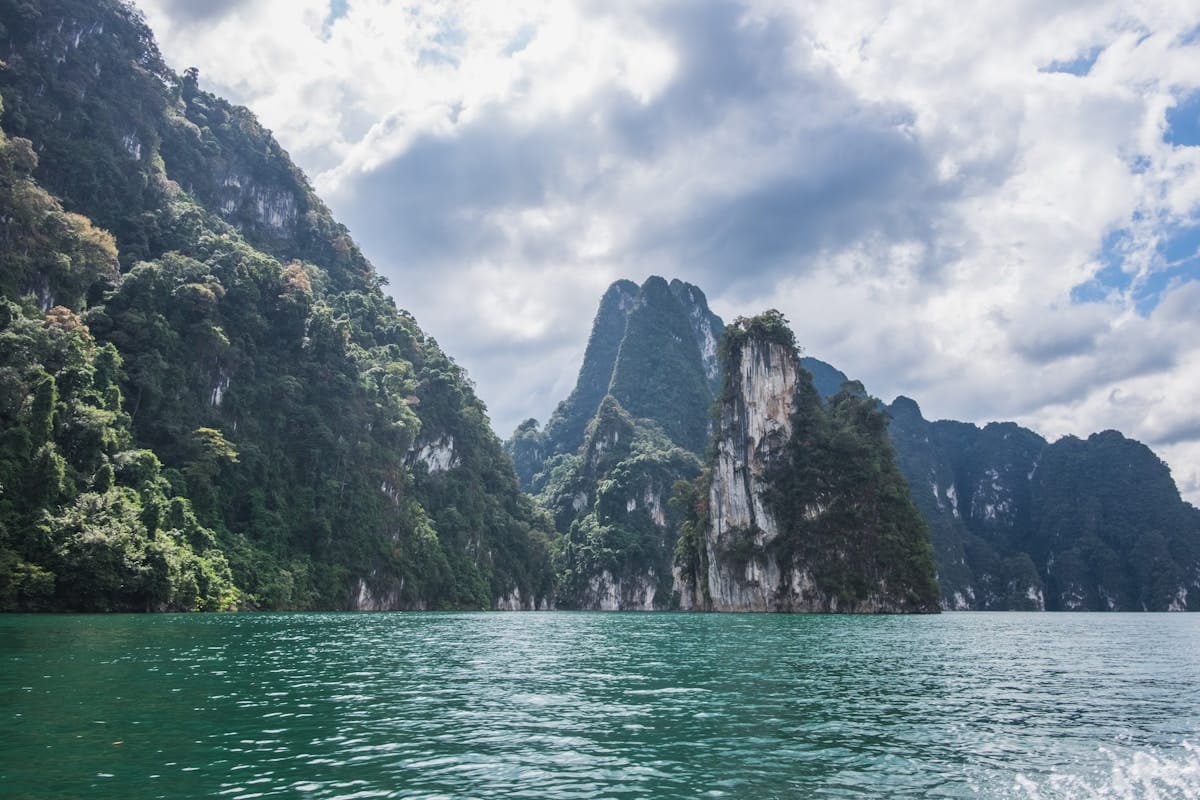
The lake - created by the Ratchaprapha Dam in 1982 - is the visual centrepiece of the park. Limestone karsts rise vertically from the water surface; the scenery is routinely compared to Halong Bay and Phang Nga Bay.
Half-day lake tour (฿800–1,200) - A 3–4 hour boat trip on the lake, typically including a floating village stop, views of the main karst formations, and a short jungle walk near the shore. This is the entry-level way to see the lake if you have limited time.
Full-day tour with Nam Talu Cave (฿1,500–2,500) - The classic Khao Sok experience. Browse Khao Sok lake and jungle tours to book in advance. A boat takes you across the lake to a trailhead; a 30-minute walk through secondary jungle reaches the entrance to Nam Talu Cave. Inside, the route continues by wading through an underground river - waist-deep in the dry season, chest-deep after rain - for approximately 700 metres through a cave system with stalactites and bat colonies overhead. Guides lead groups by headlamp. The exit emerges in daylight on the other side. Swimwear and waterproof bags are required; most operators provide headlamps.
Overnight lake programme (฿2,000–4,500/person including accommodation) - A boat to the lake, full-day activities including the cave tour, night safari on the water, and one or two nights on a floating raft house. This is the most complete way to experience Cheow Lan and is what most travellers who spend two nights at Khao Sok do.
Floating Raft Houses
Accommodation on the lake is built on pontoons moored at the water’s edge or anchored in the middle of the reservoir. Basic raft houses (฿400–800/person/night, meals and boat transfer included) are functional rather than luxurious - wooden platforms, simple bedding, shared facilities - but waking to the lake in the morning before the day-trip boats arrive is an experience that well-appointed resort rooms rarely match. More comfortable options run ฿1,500–3,500/person/night for en suite facilities and better beds.
Book raft houses through guesthouses or tour operators in the park village (Ban Ta Khun) - walk-in availability is rare in peak season (December–February). Most raft houses are accessible only by boat; transfers are included in the package.
Night Safari
Boat-based night safaris on the lake are offered by most tour operators (approximately ฿500–800/person, usually combined with an afternoon lake tour). A spotlight sweeps the shoreline looking for nocturnal animals - barking deer, civets, and occasionally tapir are seen coming to the water’s edge to drink. Owls are regular. Snakes are sometimes visible on branches overhanging the water. The experience is unhurried and significantly less crowded than safari parks.
Jungle Trekking
The trail network around the village runs from easy river walks to serious multi-day expeditions.
Riverside trail (1–2 hours, no guide required) - The Bang Hua Rat trail follows the Sok River from the village through primary forest. The forest around the river is home to hornbills, long-tailed macaques, and in the early morning, the calls of gibbons. The best wildlife window is 6–9am.
Guided half-day trek (฿400–800) - A park guide takes you further from the river into forest where the canopy closes overhead. Leeches are present in all seasons (leech socks are useful; most guesthouses sell or rent them). The guides are knowledgeable about forest species and this is a genuinely instructive few hours for anyone interested in tropical biodiversity.
Multi-day trekking (฿1,500–3,000/day including guide, camp, and food) - 2–4 day treks traverse the park interior with overnight camping or raft house stops. These move through areas where encounters with wild boar, tapir, and giant squirrels are realistic. The elusive tigers that remain in the park are documented by camera trap but seen by almost nobody.
Wildlife Spotting
Khao Sok has one of the highest concentrations of large mammals in mainland Thailand. Most are nocturnal or secretive - sightings on day treks are rewarding when they happen but not guaranteed.
Reliably seen: Long-tailed macaques (near the river), Dusky langur (black-and-white leaf monkey), monitor lizards, hornbills (several species - the Great Hornbill is the most impressive), kingfishers, and various eagles.
Sometimes seen: Barking deer (river banks at dawn), civets (night safari), large pythons, and the rare smooth-coated otter.
Very rarely seen: Asian elephant (camera-trapped in the park interior), sun bear, clouded leopard, Malayan tiger.
Rafflesia flower - The world’s largest flower, a parasite with no leaves, stems, or roots, blooms unpredictably January–May. The flower reaches 80cm in diameter and smells of decay. Park rangers know where the current blooms are - ask at the visitor centre. If one is blooming, it’s worth rearranging a morning for.
Kayaking and Swimming
The Sok River near the village has calm stretches suitable for kayaking (฿200–400/hour rental). The river also has freshwater pools used for swimming - ask guesthouses for the current safe swimming spots, as levels and currents vary with rainfall.
Practical Notes
- Getting there: Minivan from Surat Thani (1.5 hours, approximately ฿150) or from Phuket (3.5–4 hours, approximately ฿250–350). A direct minivan from Krabi town takes approximately 2 hours (฿200–300).
- Base: Stay in Ban Ta Khun village for treks and day access; stay on the raft houses for the lake experience.
- What to bring: Leech socks, long-sleeved shirt, insect repellent with DEET, headlamp, dry bag, sandals that can get wet.
- Entry fee: ฿200 for foreigners (as of 2026). Keep the ticket - rangers check at the cave and lake trailheads.
See also: Surat Thani guide · Krabi guide · best time to visit Thailand