Ubon Ratchathani Travel Guide: Candle Festival and Mekong
Ubon Ratchathani travel guide: the Candle Festival, Pha Taem cliff paintings, the Mekong River, and Cambodia and Laos border crossings.
Guides for Ubon Ratchathani
Ubon Ratchathani at a glance
Ubon Ratchathani is the largest city in Isan’s eastern corner, near the point where Thailand, Laos, and Cambodia approach each other - sometimes called the Emerald Triangle. The city has a well-preserved temple culture and hosts one of Thailand’s most impressive provincial festivals. It’s the furthest major city from Bangkok in the northeast (650km) and sees relatively few foreign visitors outside festival season.
Candle Festival (Hae Thian)
The defining event of Ubon Ratchathani. Every year at the start of Buddhist Lent, the city’s craftspeople spend months carving enormous wax candles - 3–5 metres tall - into elaborate sculptures depicting mythological figures, temple scenes, and floral patterns. These are loaded onto decorated floats and paraded through the city’s main streets before being donated to local temples, where they will burn during the three-month Lent period.
The parade itself takes several hours and draws crowds of 50,000+. The exhibition at Thung Si Mueang park (the week before) displays the candles close up before the parade. Accommodation books out months in advance for this period.
Pha Taem National Park
100km north on the Mekong border. The main cliff face contains prehistoric paintings - handprints, fish, giant catfish, and geometric shapes etched in red ochre and estimated to be 3,000–4,000 years old. A boardwalk runs below the cliff for close viewing.
The Hat Chom Dao viewpoint looks across the Mekong into Laos. At the right water level, the river exposes a series of mushroom-shaped rock formations (Sao Chaliang). Sunrise here is a worthwhile early start.
Entry: ฿100. Best by rented vehicle or tour from Ubon Ratchathani.
Temples in the city
Wat Thung Si Mueang - Built in the Rattanakosin period, with a wooden ho trai (scripture library) built on stilts over a pond to protect manuscripts from ants and moisture. One of the most beautiful small temple structures in Isan. Free entry. Open during daylight hours.
Wat Jaeng - The most important temple in the city. Houses the Phra Kaew Buraphat - a revered Buddha image. The temple compound is active with worshippers. Free entry.
Wat Phra That Nong Bua - Built to commemorate the 2,500th anniversary of Buddhism, modelled on the Mahabodhi Temple in Bodh Gaya, India. Visible from some distance - the white stupa rises 55 metres. Free entry. The surrounding grounds are quiet and worth a slow walk.
See our full Ubon Ratchathani accommodation guide for hotel picks across every budget.
Where to eat
Eating: The Ratchathani Night Market along the river serves Isan specialities - som tam (papaya salad), gai yang (grilled chicken), larb (minced meat salad), and sticky rice. Most dishes ฿30–60. For sit-down meals, Indochine Restaurant near the Mekong serves Thai-Lao fusion food with river views (mains from approximately ฿100–200). Khao Piak Sen (Lao-style noodle soup) is a local breakfast staple available from street vendors throughout the city centre for approximately ฿30–40.
Practical information
Getting there - Flights from Bangkok (1 hour, from ฿900). Overnight train from Bangkok Hua Lamphong (10–12 hours). Bus from Bangkok’s northeastern terminal (8–9 hours, ฿400–600).
Best time - The Candle Festival (July/August) is the main draw. The dry season (November–March) is pleasant for national park visits. The Mekong is highest and most dramatic September–October.
Getting around - Songthaews and tuk-tuks operate within the city (฿20–40 per ride). For Pha Taem and the Mekong border sites, rent a car or motorbike - public transport does not reach these areas reliably. Compare car hire in Thailand - from approximately ฿800–1,200/day through agencies near the airport.
Book a tour - GYG inventory for Ubon Ratchathani is very limited. For Pha Taem guided visits, Candle Festival tours, and Mekong day trips, browse Ubon Ratchathani tours on Viator — they have better coverage for Isan destinations than the major platforms. The GYG national search for northeastern Thailand occasionally returns relevant options.
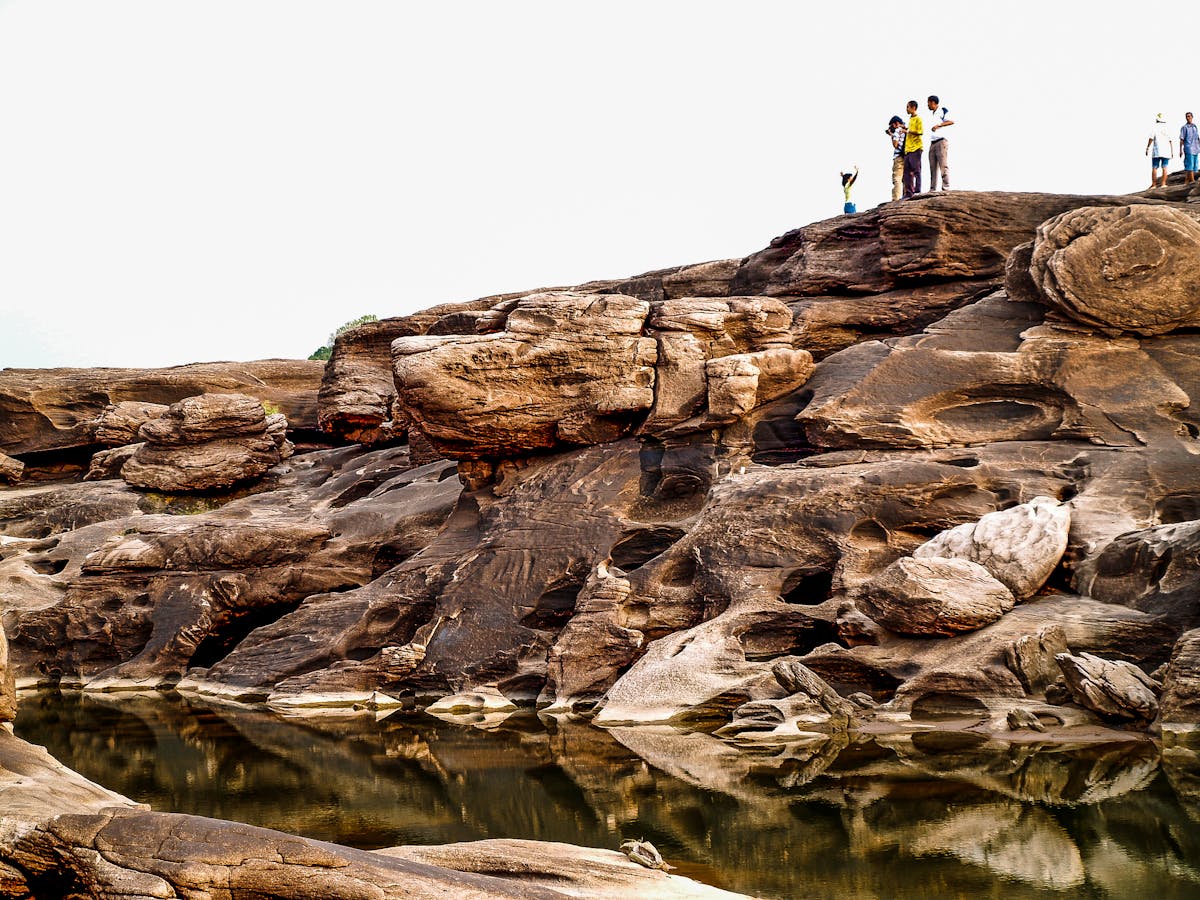
Sam Phan Bok (Grand Canyon of Thailand) - 115km north, near the Mekong. A dramatic rock formation of thousands of potholes carved into the riverbed, exposed when the water is low (December–May). The scale is impressive - some holes are several metres deep. Best reached by rented vehicle. Combine with Pha Taem for a full-day Mekong loop.
Book your Ubon Ratchathani trip: Hotels in Ubon Ratchathani · eSIM for Thailand
See also: Things to do in Ubon Ratchathani · Three weeks in Thailand · Getting around Thailand · Best tours in Thailand
Upcoming Events in Ubon Ratchathani
- Wonderfruit Festival
Wonderfruit 2026: 17-21 December near Pattaya. Arts, music, and sustainability festival with international artists, food markets, and wellness activities.
Book an experience
Top experiences in Ubon Ratchathani
Explore the best tours and activities in Ubon Ratchathani , with instant confirmation and free cancellation on most bookings.