Kanchanaburi Travel Guide: The River Kwai and WWII History
Kanchanaburi travel guide: the Bridge on the River Kwai, the Death Railway, WWII museums, Erawan Falls, and day trips from Bangkok.
Guides for Kanchanaburi
Kanchanaburi at a glance
Kanchanaburi is a province and town on the Kwae Noi and Kwae Yai rivers, about 130km northwest of Bangkok. It’s primarily visited for two reasons: the WWII history connected to the Death Railway and the Bridge on the River Kwai, and the natural attractions - waterfalls, national parks, and river scenery - in the surrounding region.
The town itself is relaxed and low-key. Most of the raft house accommodation sits directly on the river. The pace is noticeably slower than Bangkok.
What to see
Bridge on the River Kwai - The steel spans of the original bridge still stand. The round-arched sections are the originals; the square-lattice sections replaced those bombed by the Allies in 1945. You can walk across the bridge (be alert for the daily tourist train crossing - there are passing bays along the length). Free access. The bridge is about 4km north of the town centre.
Thailand–Burma Railway Centre - The more comprehensive and thoughtfully curated of the two main war museums. Covers the full history of the Death Railway with artefacts, testimony, interactive maps, and context about both the POW and Asian labourer experience. Approximately ฿140 entrance fee as of 2026. Open daily 9am–5pm. Allow 1.5–2 hours. Located opposite the Kanchanaburi War Cemetery on Jaokannun Road.
JEATH War Museum - A recreation of the bamboo prison camps built by the Japanese, containing documents, photographs, and personal accounts from POWs. Smaller and more dated than the Railway Centre but worth a quick visit. Approximately ฿40 entrance. Located near the bridge on the river bank.
Kanchanaburi Allied War Cemetery (Don Rak) - 6,982 graves of Allied POWs who died during construction of the railway. Maintained by the Commonwealth War Graves Commission. Quiet and well-maintained. Free entrance. The Chungkai War Cemetery, about 3km south, is smaller (1,740 graves) and less visited.
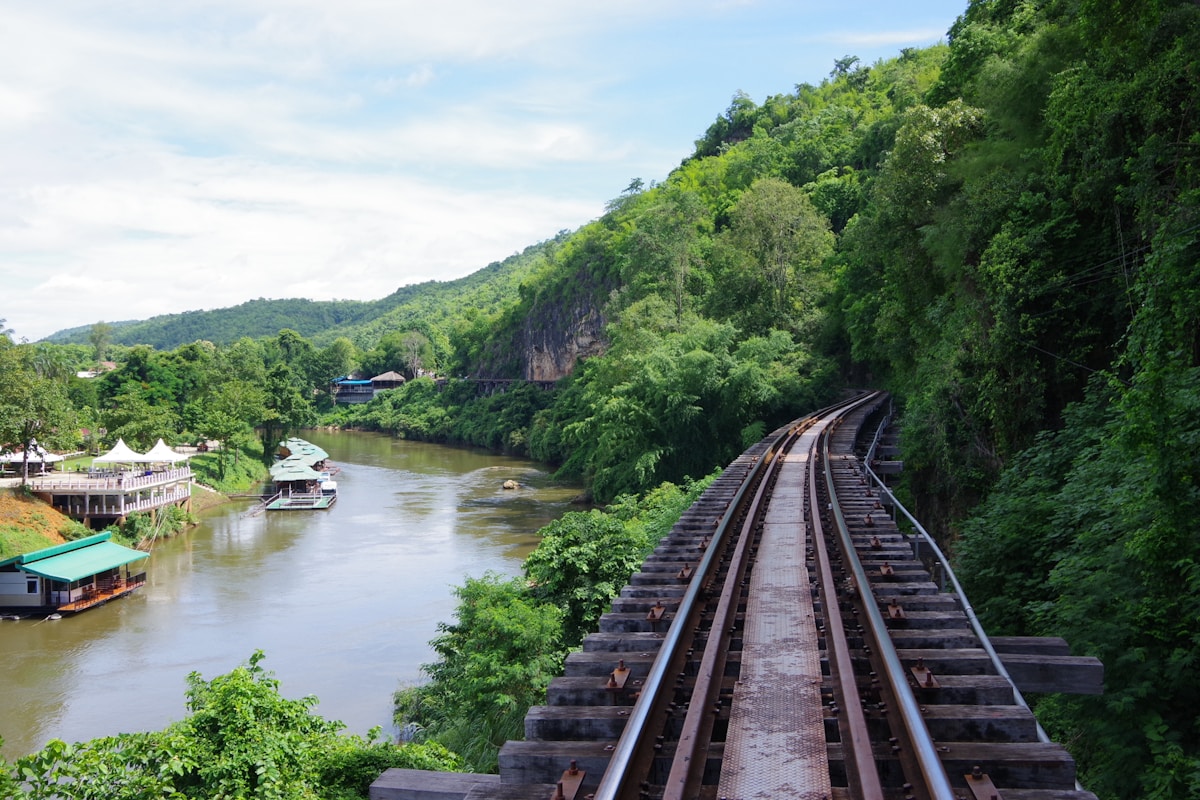
The Death Railway scenic train - A tourist train runs from the Kanchanaburi station through the scenery to Nam Tok station, crossing the famous Wampo Viaduct built out over the cliff face. The 2-hour journey is the most atmospheric way to see sections of the original line. Trains depart at 6:07am and 10:35am. Third-class fare approximately ฿100 as of 2026.
Erawan National Park - 65km from Kanchanaburi town. Seven-tiered waterfall with emerald-green pools. Swimming is possible at the lower tiers (tiers 1–3 are the easiest to reach). The walk to the top tier takes about 2 hours with stops. Entrance approximately ฿300 for foreign visitors as of 2026. Open daily 8am–4:30pm. Best on weekdays - busy on weekends and Thai public holidays. Songthaew from the bus terminal: approximately ฿100, departing every 50 minutes from 8am.
Hellfire Pass Memorial Museum - 80km northwest of Kanchanaburi on the road to Three Pagodas Pass. An Australian-funded museum at the site of a particularly brutal section of the railway cutting. The walking trail follows the old railway bed through the original cuttings in the rock. Free entrance. Open daily 9am–4pm. This is the most moving WWII site in the region and is often less crowded than the Kanchanaburi town museums.
See our full Kanchanaburi accommodation guide for hotel picks across every budget.
Where to eat
Blue Rice Restaurant - On the main tourist strip along Mae Nam Kwai Road. Thai and Western food, popular with backpackers. Mains from approximately ฿100–200. Known for their pad thai and river views from the terrace.
Keeree Tara - A floating restaurant on the river near the bridge. Thai food with good presentation. Mains approximately ฿150–300. The setting is the main draw - tables sit directly on the water.
On’s Thai-Isaan - Local restaurant near the bus station with Isan and central Thai food. Less touristy, lower prices. Mains from approximately ฿60–100. The som tum and grilled chicken are reliable.
Night Market (Pak Phraek Road) - Evening market with street food stalls, grilled meats, noodle soups, and fresh fruit. Dishes from approximately ฿30–60. Runs nightly from around 5pm.
Practical information
Getting there - Train from Bangkok Thonburi (not Hua Lamphong) at 7:45am, arrives around 10:30am. Return at 2:45pm and 4:30pm. Third-class fare approximately ฿100. Minivan from Bangkok Southern Bus Terminal (Sai Tai Mai), about 2 hours, approximately ฿120. Private taxi from Bangkok approximately ฿2,000–2,500 one way.
Getting around - Rent a bicycle from guesthouses (approximately ฿50–100 per day) for the town and bridge area. Motorbikes available from approximately ฿200 per day. For Erawan and Hellfire Pass, hire a songthaew, join a tour, or rent a car in Thailand. Organised tours from Bangkok are a practical option - browse Kanchanaburi day tours and historical experiences covering the bridge, museums, and Death Railway scenic route.
How long to stay - One day covers the bridge, one museum, and the war cemetery. Two days adds Erawan National Park. Three days allows Hellfire Pass and a river trip. Most visitors stay 1–2 nights.
Best time to visit - November to February for cooler weather (highs around 30–32°C). Erawan waterfall is at its fullest from August to November during and just after the rains. March–May is very hot (35°C+).
Book your Kanchanaburi trip: Hotels in Kanchanaburi · eSIM for Thailand
See also: Things to do in Kanchanaburi · Bangkok travel guide · Ayutthaya travel guide · Getting around Thailand · 1 week Thailand itinerary · Best tours in Thailand
Upcoming Events in Kanchanaburi
- Wonderfruit Festival
Wonderfruit 2026: 17-21 December near Pattaya. Arts, music, and sustainability festival with international artists, food markets, and wellness activities.
Book an experience
Top experiences in Kanchanaburi
Explore the best tours and activities in Kanchanaburi , with instant confirmation and free cancellation on most bookings.