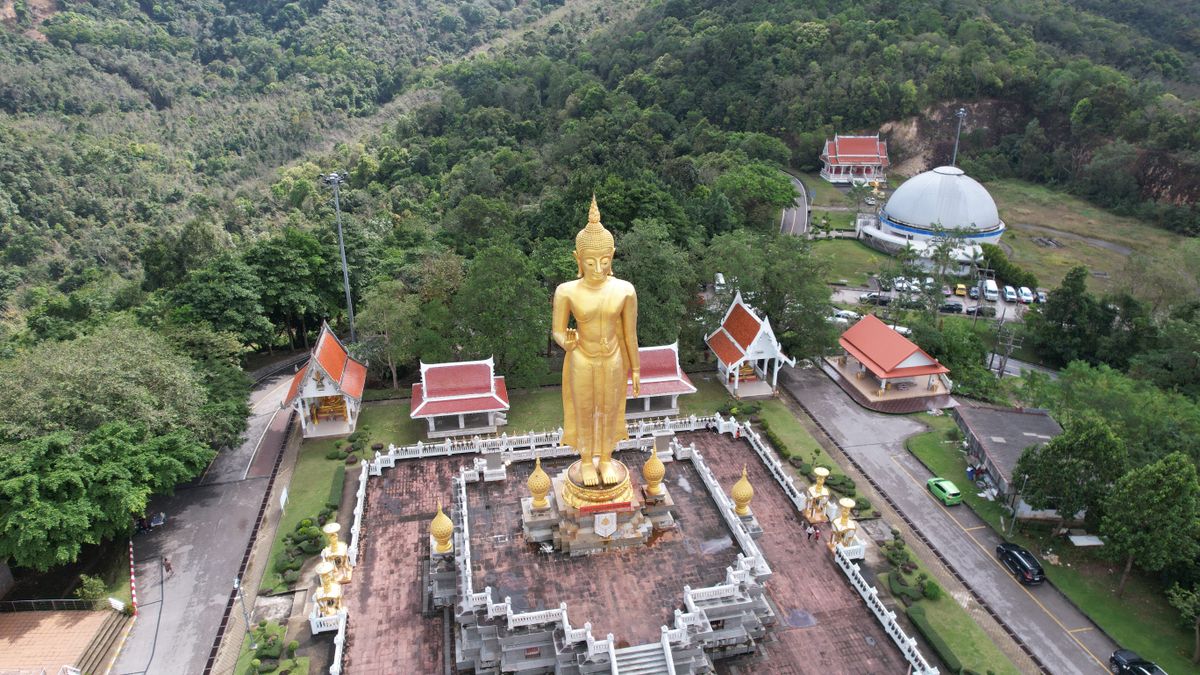
Hat Yai Travel Guide: Southern Thailand's Commercial Hub
Hat Yai travel guide: border crossings to Malaysia, Songkhla province day trips, seafood markets, and the commercial hub of Thailand's deep south.
Guides for Hat Yai
Hat Yai at a glance
Hat Yai is Thailand’s fourth-largest city and the commercial capital of the south. It’s not a typical tourist destination - there’s no beach, no major temple, and the city was built for commerce rather than sightseeing. But it has one of Thailand’s best street food scenes, a well-developed transport network connecting to Malaysia, and serves as a base for the less-visited Songkhla province.
The city has a large Chinese-Thai population and a significant Muslim community - the mix shapes the food scene considerably, with halal restaurants alongside Chinese dim sum shops and Thai hawker food.
Food
The primary reason to spend time in Hat Yai. The street food scene is exceptional: Chinese-Muslim roti mataba (stuffed flatbread), dim sum from early morning, kanom jeen (fermented rice noodles with southern Thai curry), fried chicken (khao mok gai/Thai biryani), and fresh seafood from the southern coast.
Kim Yong Market - The central covered market is the best all-purpose food destination. Dim sum from 5am (approximately ฿30–50 per basket as of 2026), noodle stalls throughout the day, fresh fruit vendors. The best time is early morning when the selection is widest and the heat is manageable.
Night Market (Asean Trade Fair area) - Evening market on Niphat Uthit 3 Road with a mix of Chinese, Thai, and Muslim stalls. Most dishes ฿40–80. The roast duck rice stalls here are particularly good.
Khua Khun Yai - A well-known local restaurant near the clock tower serving southern Thai curries and stir-fries. Try the gaeng som (sour curry with fish) or the stir-fried crab with yellow curry powder. Mains from approximately ฿80–150.
Saneha Dim Sum - One of Hat Yai’s oldest dim sum restaurants on Phetkasem Road, open from early morning. Known for har gow (shrimp dumplings) and siu mai. A full dim sum breakfast runs approximately ฿100–200 per person.
Songkhla Lake and Old Town
30km north of Hat Yai. Songkhla is Songkhla province’s original capital - Hat Yai only grew into prominence in the 20th century. The old town has a well-preserved Sino-Portuguese shophouse district along Nakhon Nok Road, a small beach on the Gulf of Thailand side, and a hilltop temple.
The Thale Sap Songkhla (Songkhla Lake) is one of Southeast Asia’s largest brackish water lakes. The Thale Noi waterbird reserve at the lake’s northern end hosts migratory birds (peak: December–March). Boat trips on the lake can be arranged from the Songkhla waterfront.
See our full Hat Yai accommodation guide for hotel picks across every budget.
Day trips
Ton Nga Chang Waterfall - 24km west of Hat Yai in a national park. A 7-tiered waterfall with swimmable pools at the base tiers. Entry approximately ฿100 for foreign visitors as of 2026. Accessible by songthaew or taxi (approximately ฿300–400 one way). The lower tiers are easy to reach; the upper tiers require a moderate hike.
Padang Besar border market - 60km north. A large market at the Malaysia–Thailand border town, popular for goods flowing both directions. Easily reached by train (฿15, 1 hour) or minivan.
Samila Beach, Songkhla - 30km north. A white sand beach with a mermaid statue landmark on the Gulf of Thailand side. The beach is swimmable and has seafood restaurants along the promenade. Combine with the Songkhla Old Town for a full day trip. Songthaews from Hat Yai bus station run regularly (approximately ฿30, 45 minutes).
Practical information
Getting there - Flights from Bangkok Don Mueang and Suvarnabhumi (1h20m, from ฿800). Train from Bangkok (14–16 hours overnight). Bus from Bangkok (12–14 hours, ฿500–700). Hat Yai is on the main rail line to Malaysia - direct trains to Butterworth (Penang, 5 hours) and Kuala Lumpur (13 hours via ETS).
Malaysia crossing - Minivans to Penang (3 hours, ฿350–450) depart from near the train station. Padang Besar crossing by train is the simplest option.
Getting around - Songthaews and tuk-tuks operate throughout the city centre (฿20–50 per ride). Grab is available in Hat Yai and works reliably for longer journeys to Songkhla or the waterfalls.
Best time - November to February is the driest period, though Hat Yai receives rain year-round as part of the southern monsoon belt. The wettest months are October and November. The Songkhla Lantern Festival (around Chinese New Year in January/February) brings colourful street celebrations to both Hat Yai and Songkhla. For day trips and organised activities in the region, browse tours and experiences available from Hat Yai.
Book your Hat Yai trip: Hotels in Hat Yai · eSIM for Thailand
See also: Things to do in Hat Yai · One week in southern Thailand · Getting around Thailand · Best tours in Thailand
Upcoming Events in Hat Yai
- Wonderfruit Festival
Wonderfruit 2026: 17-21 December near Pattaya. Arts, music, and sustainability festival with international artists, food markets, and wellness activities.
Book an experience
Top experiences in Hat Yai
Explore the best tours and activities in Hat Yai , with instant confirmation and free cancellation on most bookings.